
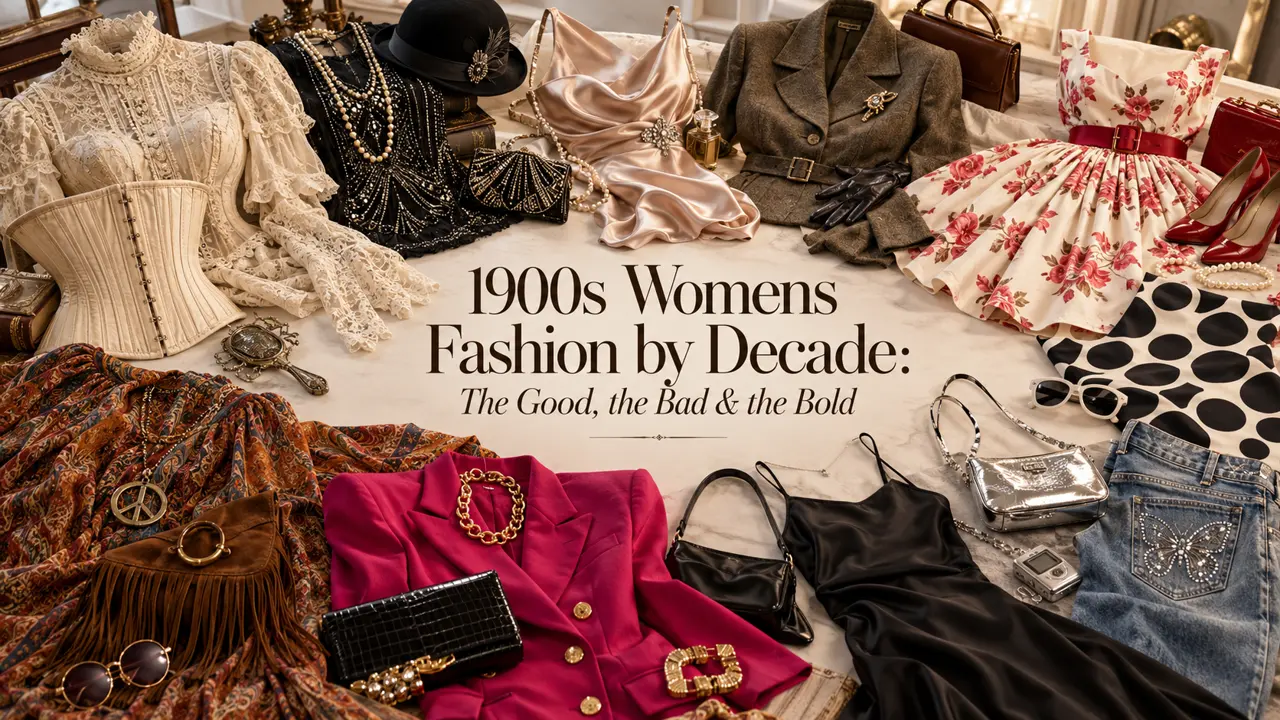
If you’ve ever stared at a photograph from the early 1900s and wondered, “How did anyone move comfortably in that dress?”, you’re not alone.
Between the elaborate corsets of the Edwardian era and the relaxed silhouettes of the 1990s, women’s clothing underwent an extraordinary transformation. Skirts became shorter, trousers became everyday essentials, fashion houses challenged conventions, and styles once considered rebellious eventually became ordinary.
But 1900s womens fashion wasn’t simply a journey from corsets to comfort. It reflected changing ideas about femininity, work, class, beauty, independence, and personal expression. Every decade introduced something new, borrowed something old, and left behind a few questionable trends.
Some designs were beautiful. Others were impractical. And some were bold enough to change fashion forever.
In this guide, we’ll explore women’s fashion from the 1900s to the 2000s, beginning with Edwardian elegance and moving through flapper dresses, wartime utility, Hollywood glamour, miniskirts, disco, power dressing, and grunge.
Along the way, we’ll revisit each decade through three perspectives:
- The Good: What the decade contributed to fashion.
- The Bad: Its limitations, excesses, or less successful ideas.
- The Bold: The innovations and statements that challenged expectations.
This is a journey through the memorable, the uncomfortable, and the unforgettable.
Table of Contents
How Women’s Fashion Changed Throughout the 20th Century
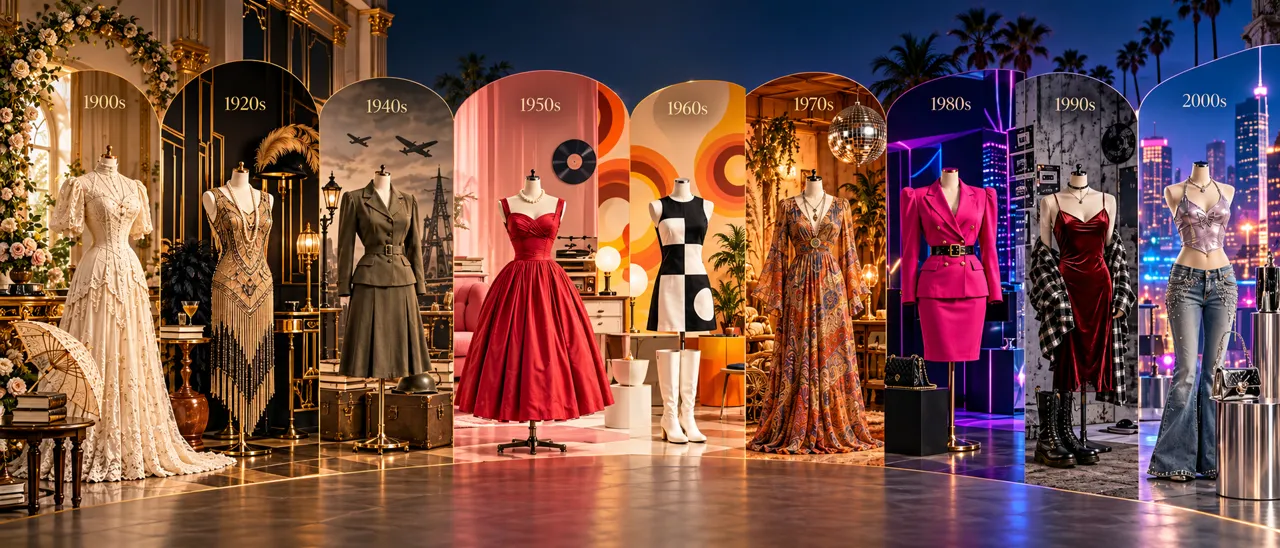
At the beginning of the 20th century, fashionable women in Europe and North America were still heavily influenced by Victorian dress traditions. Structured bodices, long skirts, elaborate hats, and shaped undergarments helped define the fashionable silhouette.
By the end of the century, wardrobes included everything from tailored suits and denim jeans to slip dresses, athletic leggings, and oversized streetwear.
The transformation was not instant or universal. Women of different social classes, occupations, cultures, and regions experienced fashion differently. A Parisian couture client, an American factory worker, and a woman living in rural Asia did not necessarily follow the same clothing trends.
Still, the major fashion movements of the century reveal how clothing responded to broader social changes.
From Corsets to Comfort: The Evolution of Women’s Silhouettes
During the early 1900s, the S-curve corset was an important element of the fashionable silhouette. It encouraged a forward-tilting bust and backward-curving hips, creating the distinctive Edwardian profile.
Yet fashion was already changing.
Designers such as Paul Poiret experimented with looser dresses and different proportions. Over the following decades, clothing gradually adapted to changing lifestyles, new fabrics, evolving beauty ideals, and women’s expanding participation in public life.
The journey wasn’t a straight line toward freedom, however. The 1950s revived structured waists, the 1980s emphasized powerful shoulders, and the 1990s introduced new pressures surrounding body image.
Fashion repeatedly moved between structure and softness, decoration and simplicity, conformity and individuality.
How Society Shaped Style
Women’s fashion never developed separately from history.
World wars influenced fabric availability and practical clothing. Cinema promoted glamorous silhouettes. Youth movements challenged established dress codes. Music and television spread new styles across international audiences.
By the late 20th century, fashion was no longer shaped exclusively by couture houses. Streetwear, subcultures, musicians, and individual consumers had become powerful influences.
The story of 20th century women’s fashion is therefore about more than dresses and accessories. It is also about who could wear certain clothes, who influenced trends, and how ideas of acceptable dress changed.
Women’s Fashion by Decade: A Quick Overview
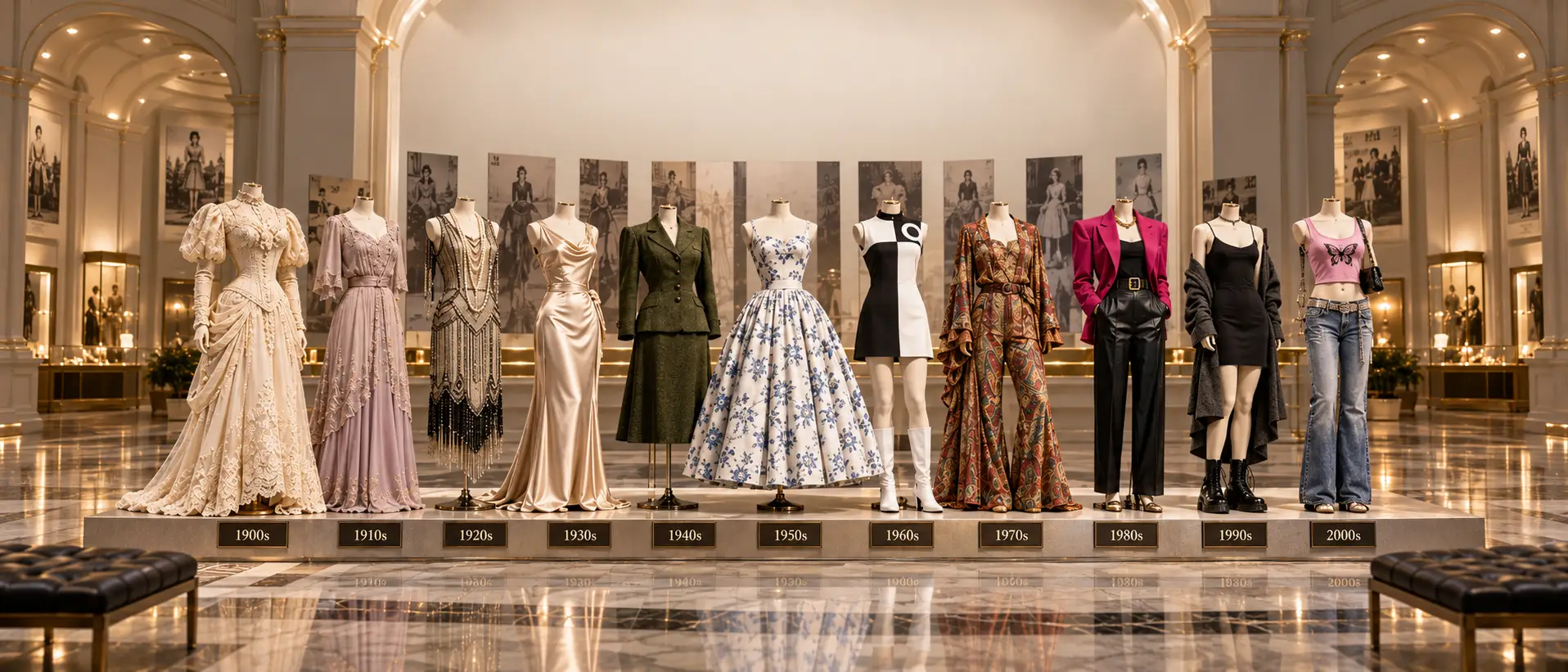
| Decade | Defining Women’s Fashion | Major Influence |
|---|---|---|
| 1900s | S-curve silhouettes, lace blouses, long skirts | Edwardian society and formal dress |
| 1910s | Softer silhouettes, tailored suits, practical clothing | Design reform and World War I |
| 1920s | Drop-waist dresses, cloche hats, shorter hemlines | Jazz Age and changing social life |
| 1930s | Bias-cut gowns, elegant tailoring, feminine draping | Hollywood and the Great Depression |
| 1940s | Utility dresses, tailored jackets, practical trousers | World War II and material restrictions |
| 1950s | Cinched waists, full skirts, fitted separates | Postwar couture and consumer culture |
| 1960s | Miniskirts, shift dresses, bold prints | Youth culture and social change |
| 1970s | Maxi dresses, flared trousers, disco clothing | Bohemian culture, feminism, and music |
| 1980s | Power suits, shoulder pads, colorful activewear | Corporate dressing, television, and fitness |
| 1990s | Slip dresses, oversized denim, grunge, minimalism | Streetwear, hip-hop, and alternative culture |
Each decade had several competing looks. The following sections explore the styles that became especially influential.
1900s Womens Fashion: Edwardian Elegance and the Start of Modern Silhouettes
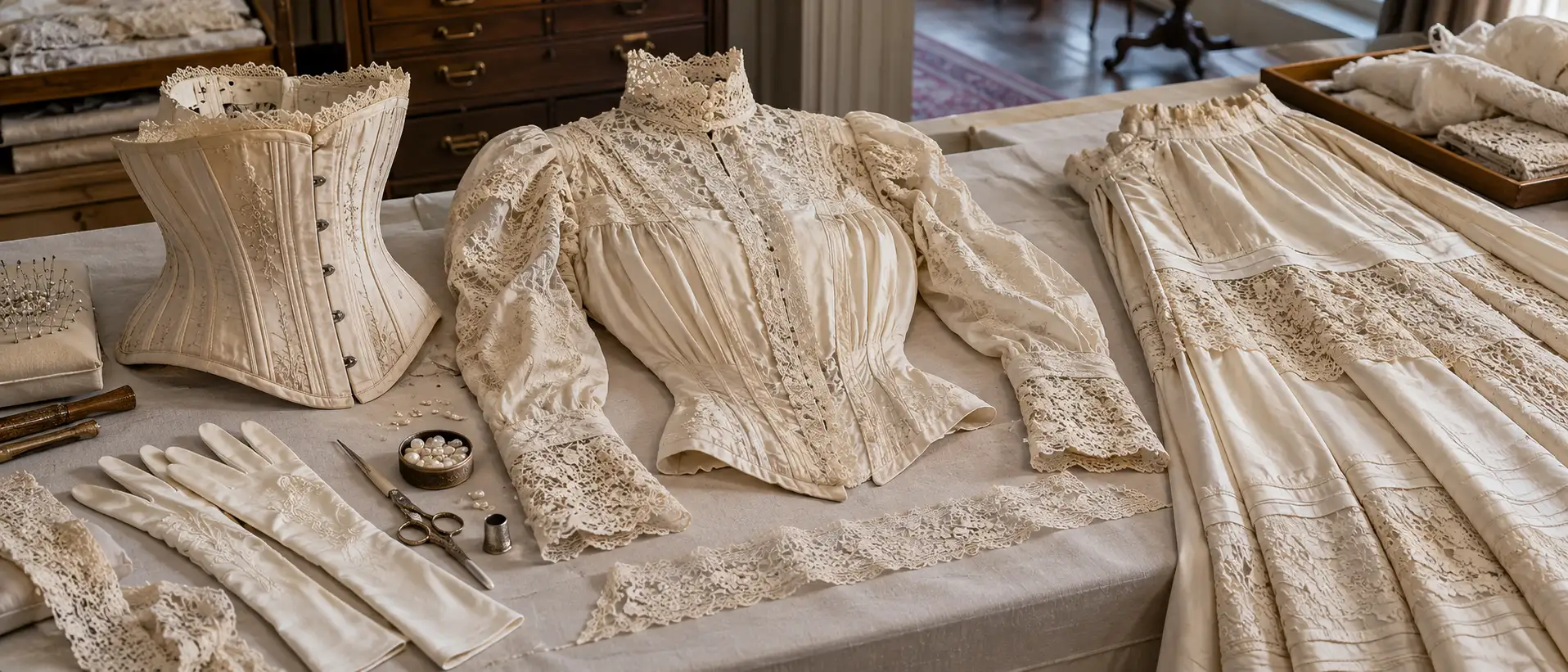
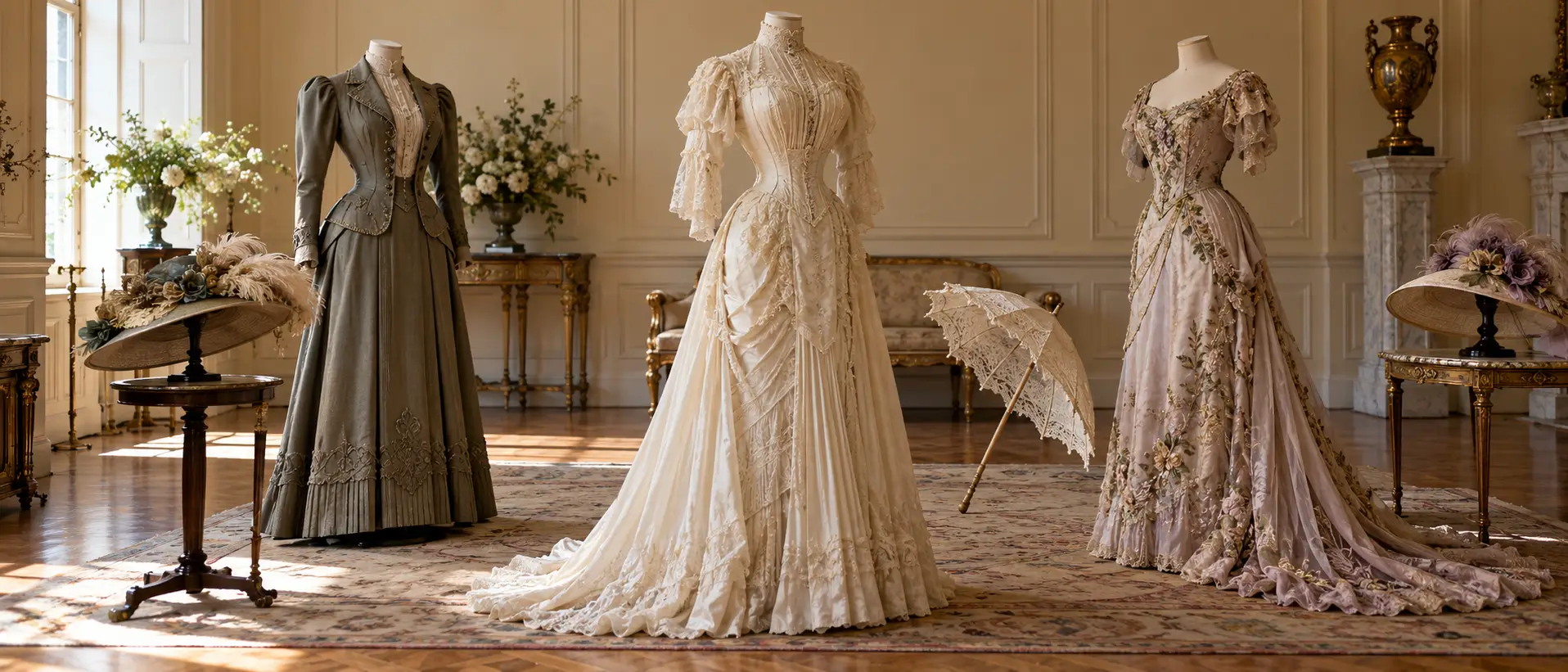
The opening decade of the 20th century belonged to the Edwardian era, a period associated with formal dressing, decorative craftsmanship, and carefully constructed silhouettes.
The fashionable ideal was strongly influenced by the Gibson Girl, an illustrated image of an elegant, confident young woman with upswept hair, a full bodice, and a narrow waist.
Women’s daytime outfits often featured high-necked blouses, long skirts, lace details, and elaborate hats. Wealthier women wore tailored walking suits, decorated dresses, and evening gowns made with luxurious fabrics such as silk, satin, and fine lace.
Construction mattered as much as decoration. Corsets and fitted bodices shaped the figure, while the cut of skirts helped create the desired outline.
The celebrated S-curve corset contributed to the distinctive fashionable posture. Its appearance was dramatic, although experiences of wearing corsets differed depending on their fit, construction, and use.
By the later years of the decade, silhouettes were gradually becoming straighter and less heavily decorated.
The Fashion History Timeline’s overview of 1900-1909 documents these changes, including the continued influence of the Gibson Girl and the emergence of simpler silhouettes.
The Good
Exceptional tailoring, decorative craftsmanship, and carefully considered garment construction. Many surviving examples reveal sophisticated fabric work and finishing techniques.
The Bad
Fashionable silhouettes could require expensive clothing, substantial maintenance, and restrictive undergarments.
The Bold
The gradual move away from exaggerated Edwardian shaping established the foundation for the next generation of women’s fashion.
1910s Womens Fashion: From Edwardian Formality to Practical Modern Dress
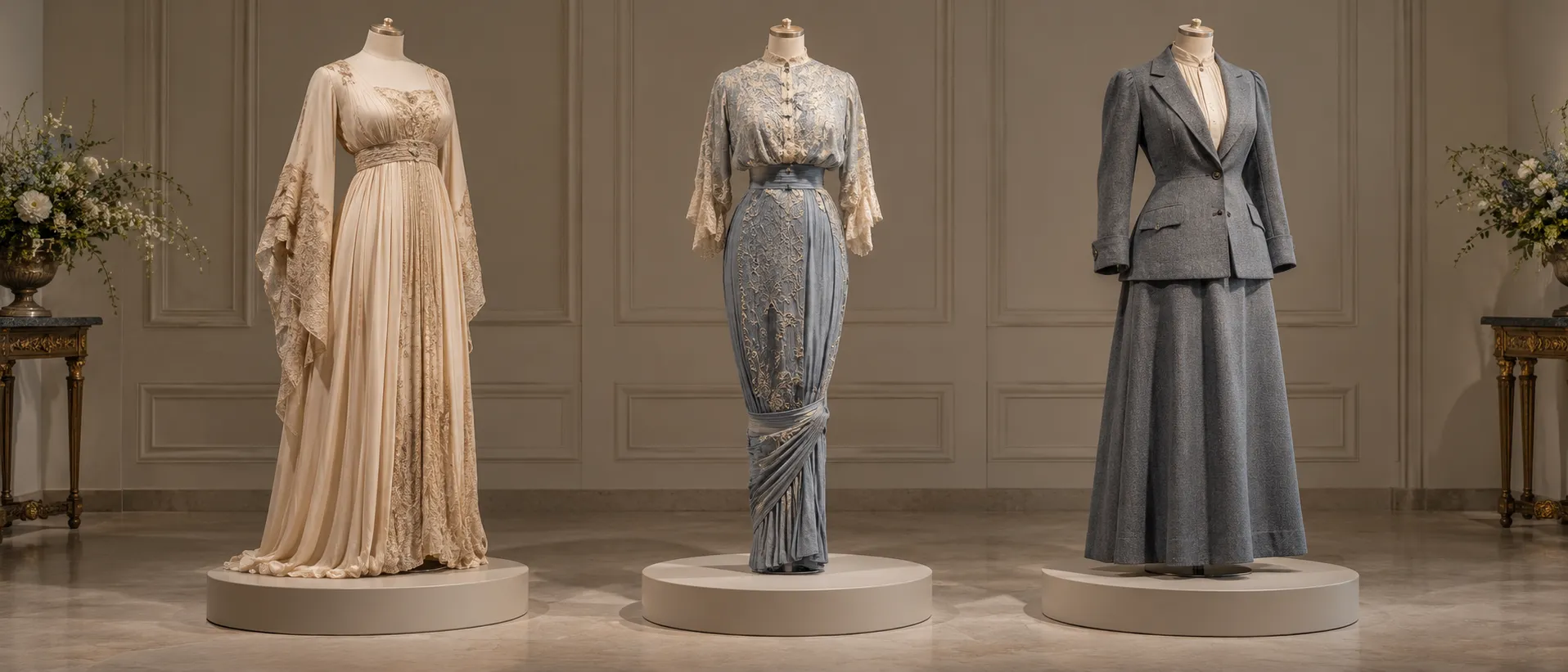
The 1910s were a crucial transitional decade, connecting Edwardian elegance with the more relaxed clothing that would become popular during the 1920s.
Early in the decade, designers experimented with straighter silhouettes, softer waistlines, flowing fabrics, and less complicated dress construction.
Paul Poiret became especially associated with this transformation. His draped garments, bold colors, and alternative silhouettes offered fashionable women something different from the heavily structured clothing of the previous decade.
Not every experiment improved comfort. The notorious hobble skirt, fashionable during part of the early 1910s, narrowed around the ankles and could make walking difficult.
Then World War I changed everyday life.
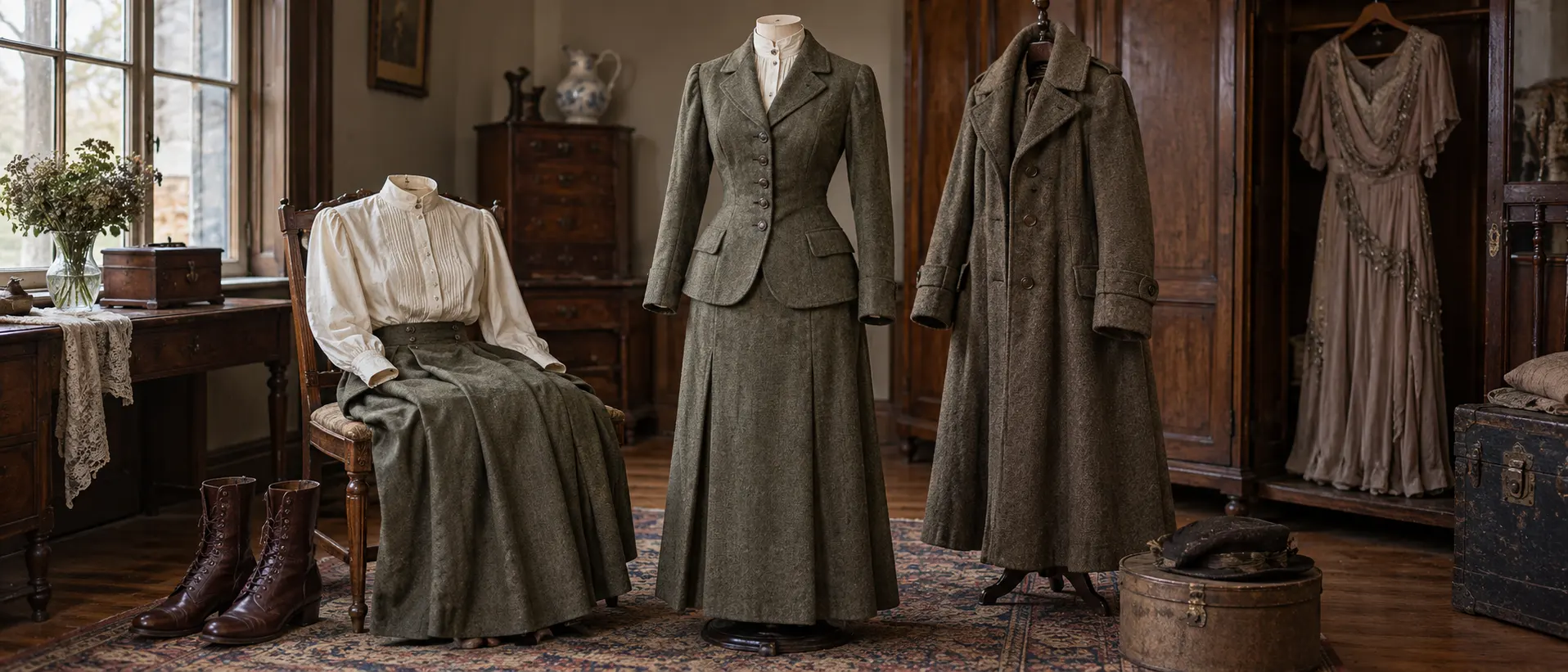
As women entered or expanded their roles in nursing, transportation, offices, agriculture, and industrial work, practical clothing became increasingly important. Tailored suits, simpler skirts, service uniforms, and functional garments gained visibility.
These changes were influenced by wartime necessity, but many had already begun before the war.
The 1910s fashion history overview traces the shift from the Edwardian S-shaped silhouette toward straighter lines and explains how wartime conditions influenced clothing.
The Good
Clothing began adapting more visibly to practical needs, simpler construction, and changing roles.
The Bad
Some fashionable experiments, particularly the hobble skirt, restricted movement rather than improving it.
The Bold
The departure from Edwardian proportions and the growing visibility of women in practical work clothing helped prepare the way for the 1920s.
1920s Womens Fashion: Flappers, Fringe, and Feminine Rebellion
If the early 1900s whispered change, the 1920s announced it with jazz music, shorter hairstyles, and a completely different silhouette.
1920s womens fashion is remembered for the flapper, an image associated with youthful independence, social experimentation, and changing ideas of femininity.
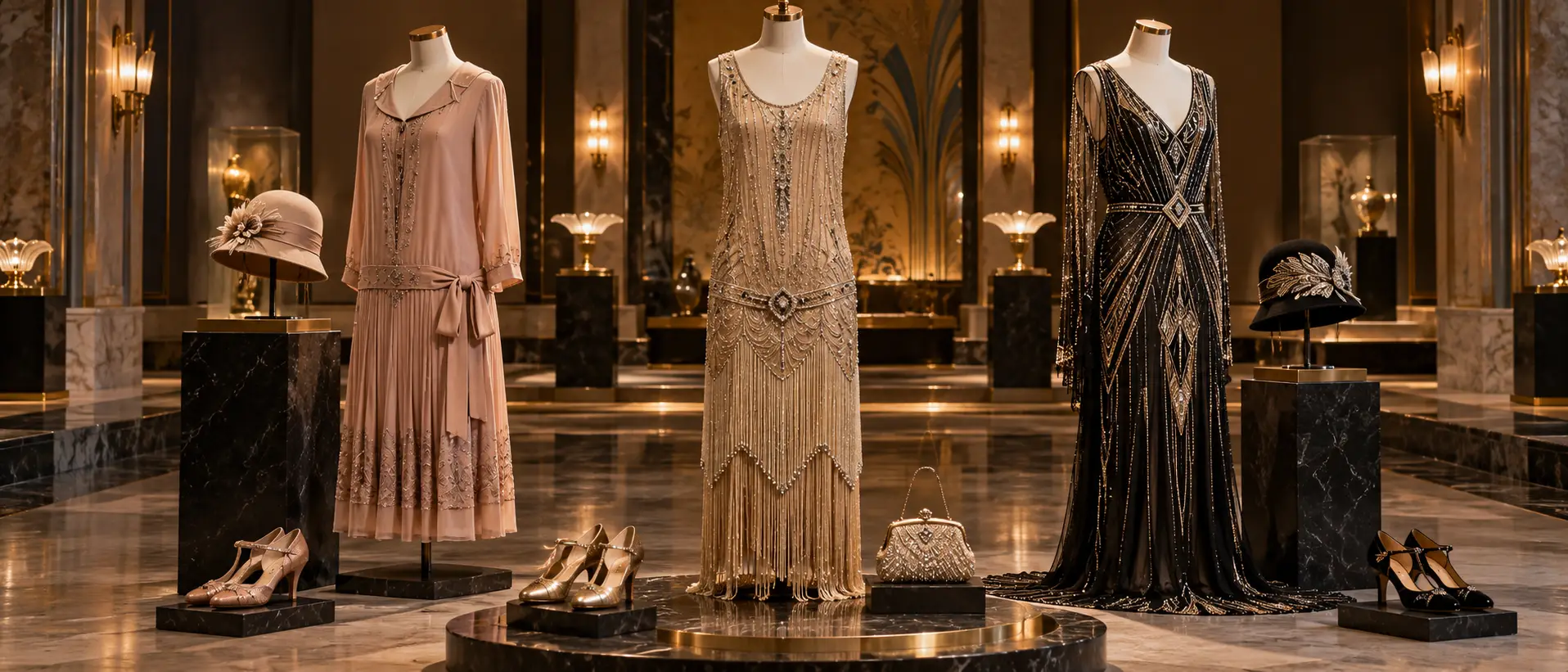
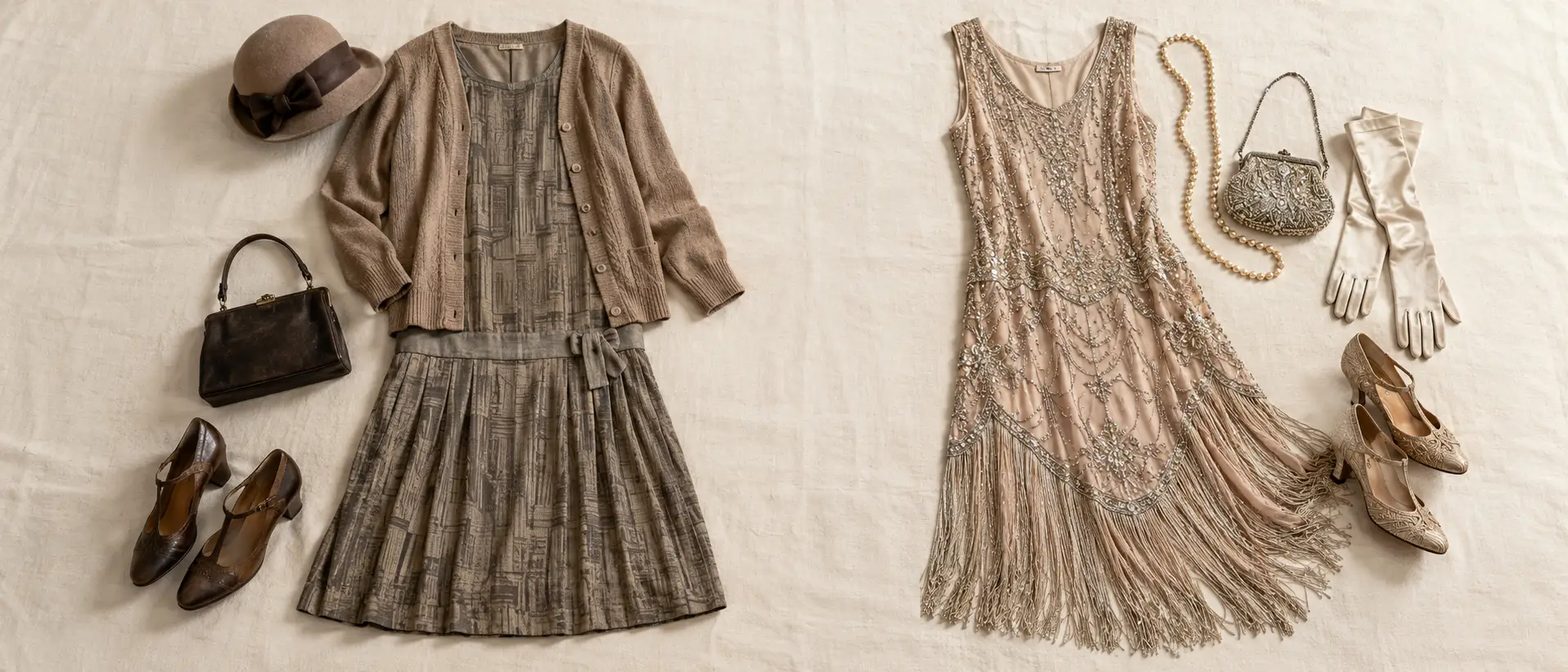
Drop-waist dresses, straighter shapes, cloche hats, bobbed hairstyles, and increasingly shorter hemlines became defining features of the decade.
Evening clothing could be spectacular. Beads, sequins, metallic decoration, and embroidery gave dresses movement and shine, particularly in fashionable urban nightlife.
But not every woman dressed like a flapper.
Ordinary wardrobes also included practical day dresses, cardigans, tailored coats, and simpler garments made from accessible fabrics.
The decade’s visual transformation was gradual. Hemlines generally rose toward the middle of the decade before beginning to fall again near its end. Corsets did not disappear universally, although foundation garments and fashionable body shapes changed considerably.
Women’s public freedoms also developed unevenly. Voting rights, employment opportunities, and social expectations differed by country, race, and class.
Still, the decade’s cleaner silhouette represented an important shift from Edwardian dress.
The Good
Simpler dress construction, greater ease of movement, and increased variety in fashionable everyday clothing.
The Bad
The fashionable ideal could still be exclusive, favoring a particular youthful, slender body shape.
The Bold
The combination of shorter skirts, bobbed hair, and jazz-age glamour challenged established ideas about how respectable women should look.
1930s Womens Fashion: Hollywood Glamour and Depression-Era Practicality

The 1930s walked a delicate line between economic hardship and visual extravagance.
The Great Depression placed financial pressure on households, yet Hollywood offered audiences glamorous images of beautifully dressed stars.
Actresses such as Greta Garbo and Jean Harlow became influential style references, helping popularize flowing evening gowns, carefully styled hair, and elegant accessories.
One of the decade’s most important technical developments was the growing popularity of bias-cut garments. Cutting woven fabric diagonally across the grain allowed certain materials to drape and follow the body’s curves differently from conventional straight-grain construction.
Designers including Madeleine Vionnet were associated with this sophisticated approach to garment design.
The clean silhouettes of the 1930s also included longer skirts, defined waists, shaped shoulders, and beautifully constructed suits.
Yet practical clothing remained essential.
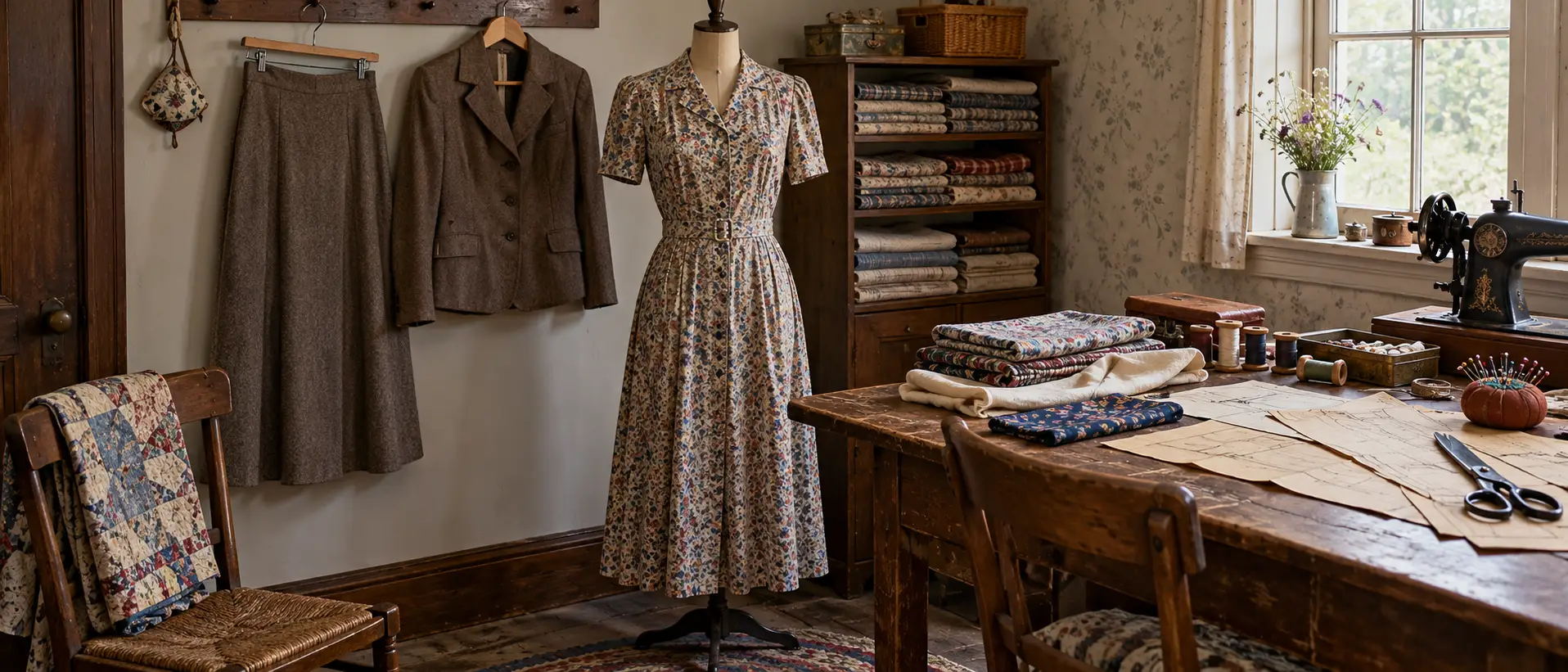
Women who could not afford couture adapted fashionable styles through home sewing, garment alterations, and more economical fabrics. Pattern-making and dressmaking skills allowed some fashionable ideas to become accessible beyond wealthy customers.
The decade’s contrast between glamour and restraint remains one of its most interesting characteristics.
The Good
Sophisticated draping, graceful tailoring, and silhouettes that continue to influence modern eveningwear.
The Bad
Hollywood glamour could create unrealistic expectations during a period when many women faced serious financial hardship.
The Bold
Bias-cut construction and cinematic styling transformed the relationship between fabric, movement, and fashionable body shape.
1940s Womens Fashion: Wartime Utility Meets Feminine Strength
The 1940s brought enormous social change, and women’s clothing reflected it.
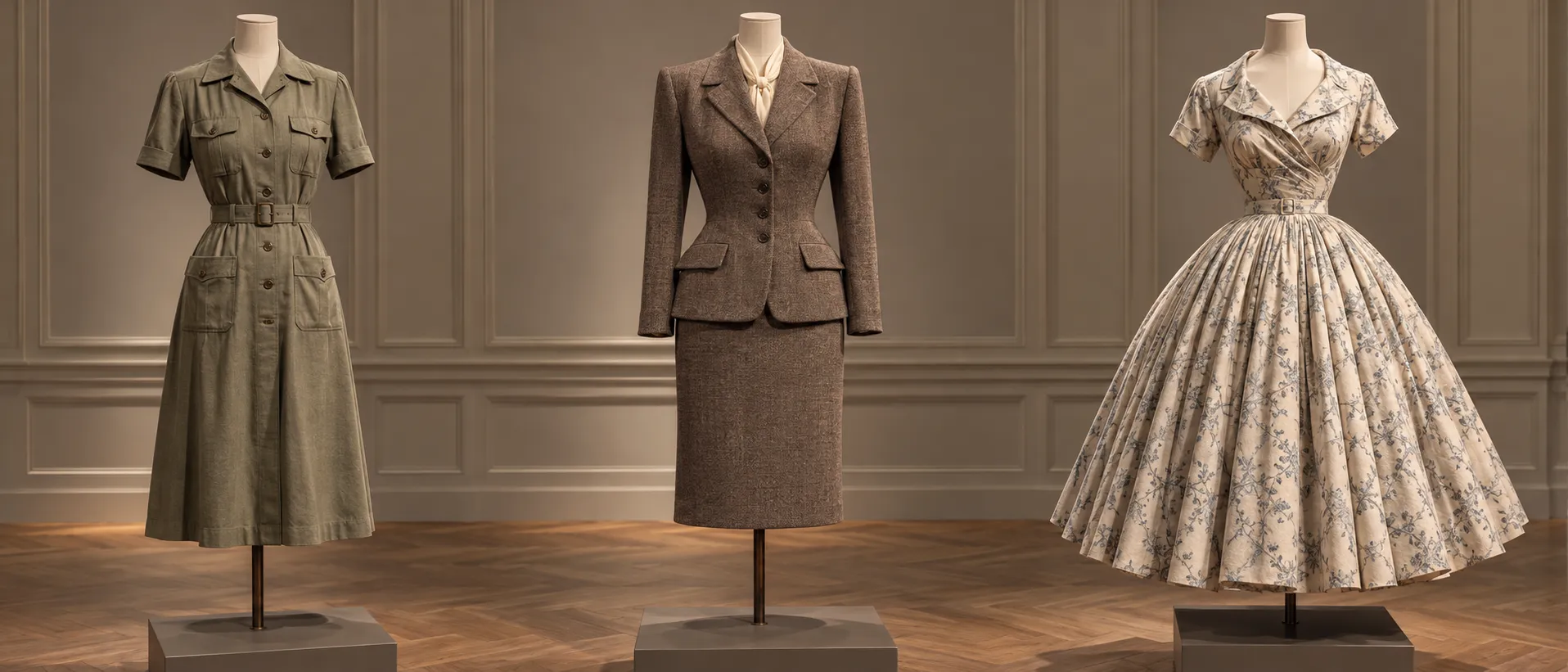
During World War II, material restrictions, labor demands, and changing work responsibilities influenced garment design in many countries. 1940 womens fashion is often associated with utility fashion, including tailored jackets, practical dresses, stronger shoulder lines, and simplified silhouettes.
In Britain, clothing restrictions and utility schemes encouraged economical use of fabric and standardized construction. Decorative details were often reduced, and garments were designed with limited material resources in mind.
Women working in factories, agriculture, and other physically demanding roles wore clothing suitable for their tasks, including trousers and overalls. Although women had worn trousers in certain settings before the 1940s, wartime work made practical trouser-based clothing more visible.
Rosie the Riveter became an enduring symbol of women’s industrial contributions, with rolled sleeves, headscarves, and workwear forming part of the popular visual memory of the period. Yet fashion retained elegance. Tailored suits, shirtwaist dresses, hats, gloves, and neatly shaped garments remained important.
Then, in 1947, Christian Dior introduced the collection that became known as the New Look, featuring rounded shoulders, narrow waists, and dramatically full skirts.
The Metropolitan Museum of Art’s 1947 Dior dress illustrates how these new proportions contrasted with wartime restrictions and influenced the following decade.

The Good
Practicality, durable tailoring, resource-conscious construction, and greater visibility for women’s functional clothing.
The Bad
Material shortages, rationing, and wartime hardship limited clothing choices for many people.
The Bold
Women’s workwear became a powerful visual symbol, while Dior’s late-decade silhouette dramatically redirected postwar fashion.
1950s Womens Fashion: The Hourglass Ideal and Postwar Domesticity
Welcome to the decade of the cinched waist and full skirt.
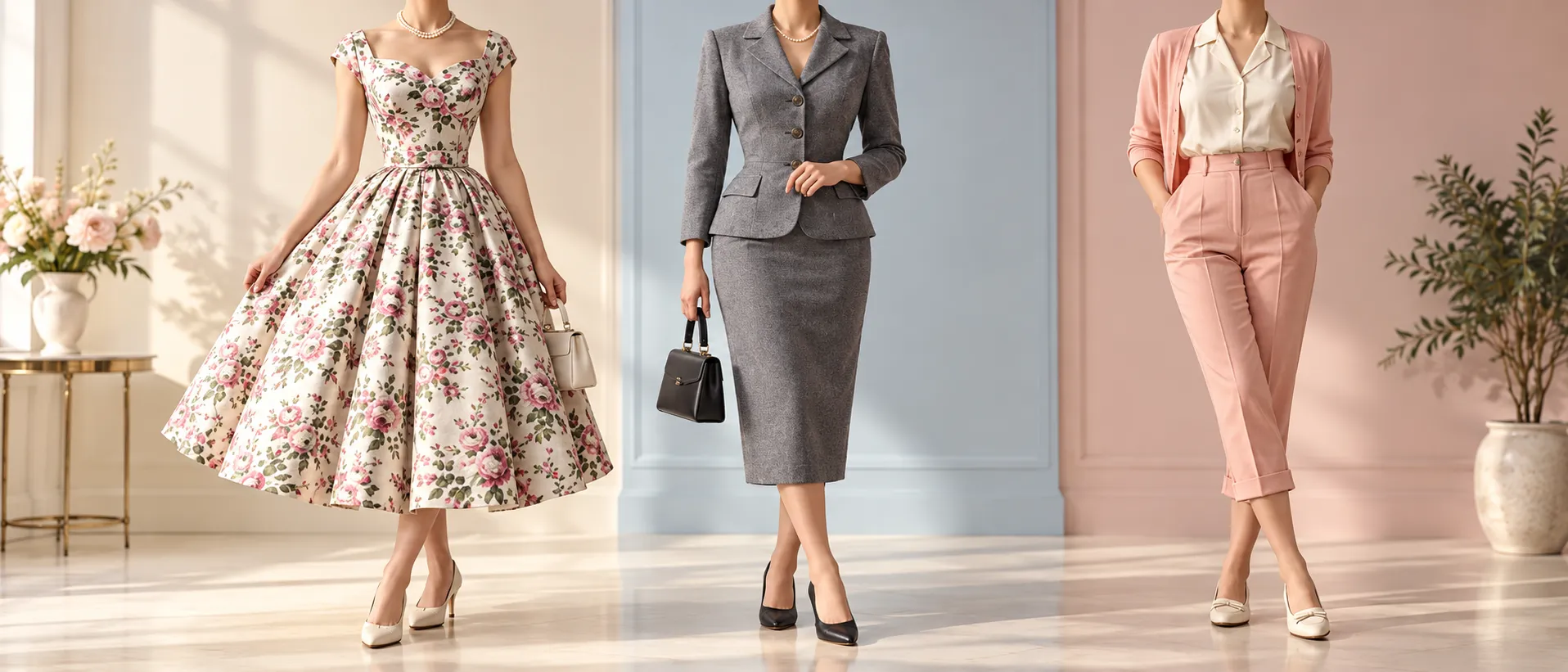
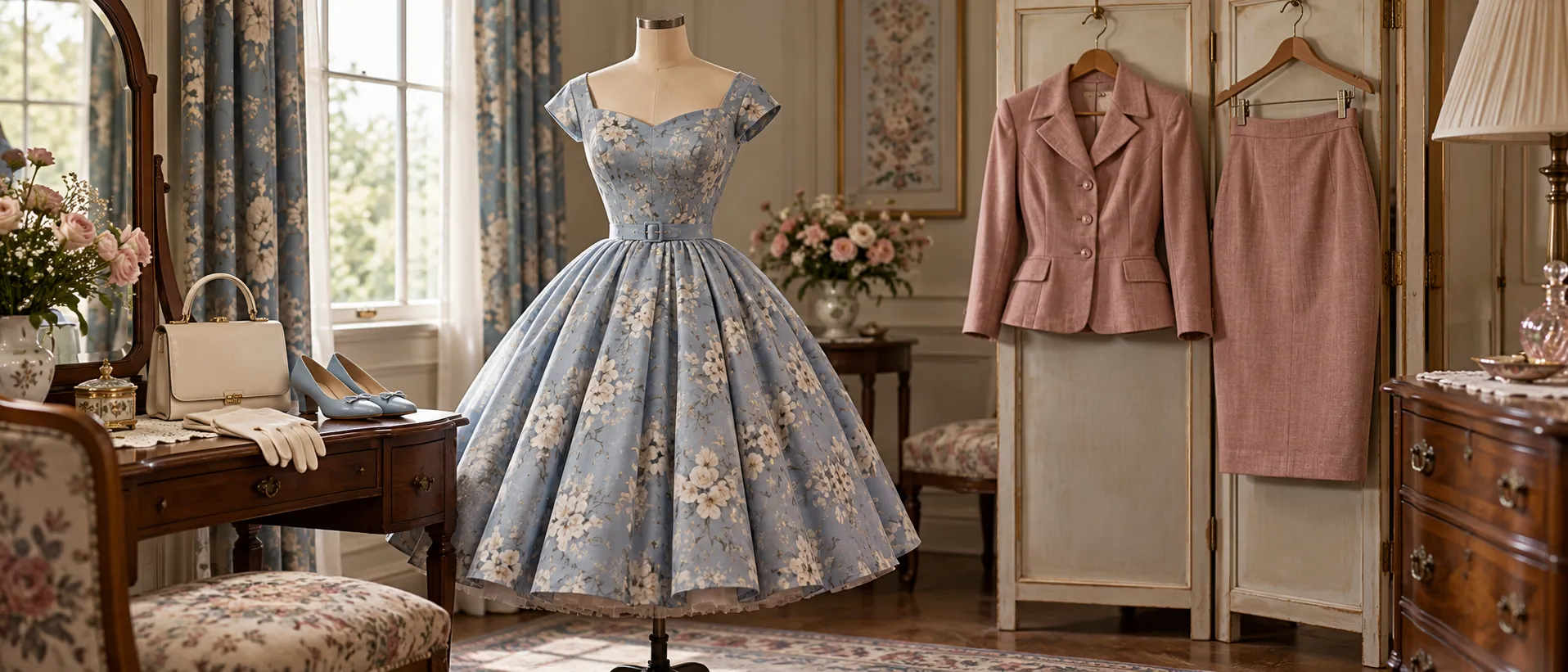
Influenced by Dior’s 1947 New Look, fashionable 1950s clothing often emphasized fitted bodices, rounded hips, full skirts, and carefully shaped waists.
Petticoats added volume, while fitted jackets, elegant dresses, gloves, and coordinated accessories helped create a polished appearance.
In popular Western fashion imagery, the ideal was often graceful, feminine, and meticulously dressed.
But 1950s women’s fashion was more varied than its most famous hourglass silhouette suggests.
Pencil skirts, tailored trousers, sweater sets, shirtwaist dresses, pedal pushers, and comfortable casual separates also became familiar elements of women’s wardrobes.
Teenage consumers were increasingly influential, while ready-to-wear clothing helped fashionable styles reach more people.
Fabrics and garment construction supported this variety. Cotton prints suited casual dresses, wool provided structure for suits, and synthetic materials became increasingly important in everyday clothing.
The polished domestic ideal associated with the decade was not the experience of every woman. Employment, class, culture, and individual preferences produced much more diverse wardrobes than period advertisements sometimes suggest.
The Good
Strong garment construction, flattering tailoring options, versatile separates, and memorable dress silhouettes.
The Bad
Narrow beauty ideals and social pressure to conform to highly polished feminine presentation.
The Bold
Dramatic skirt volume and structured hourglass styling created one of the century’s most recognizable fashion identities.
1960s Womens Fashion: Mod Culture, Rebellion, and Swinging London
The 1960s turned fashion into a more visible expression of youth culture.
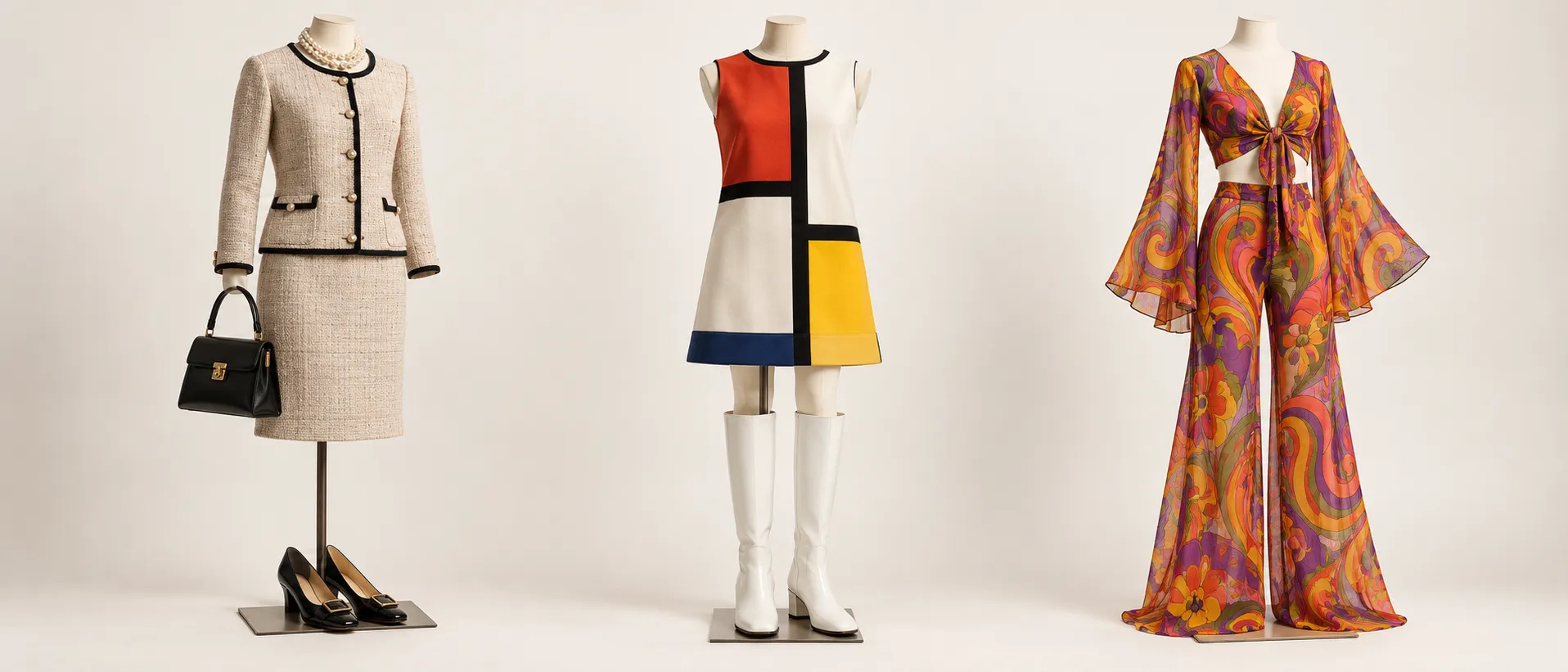
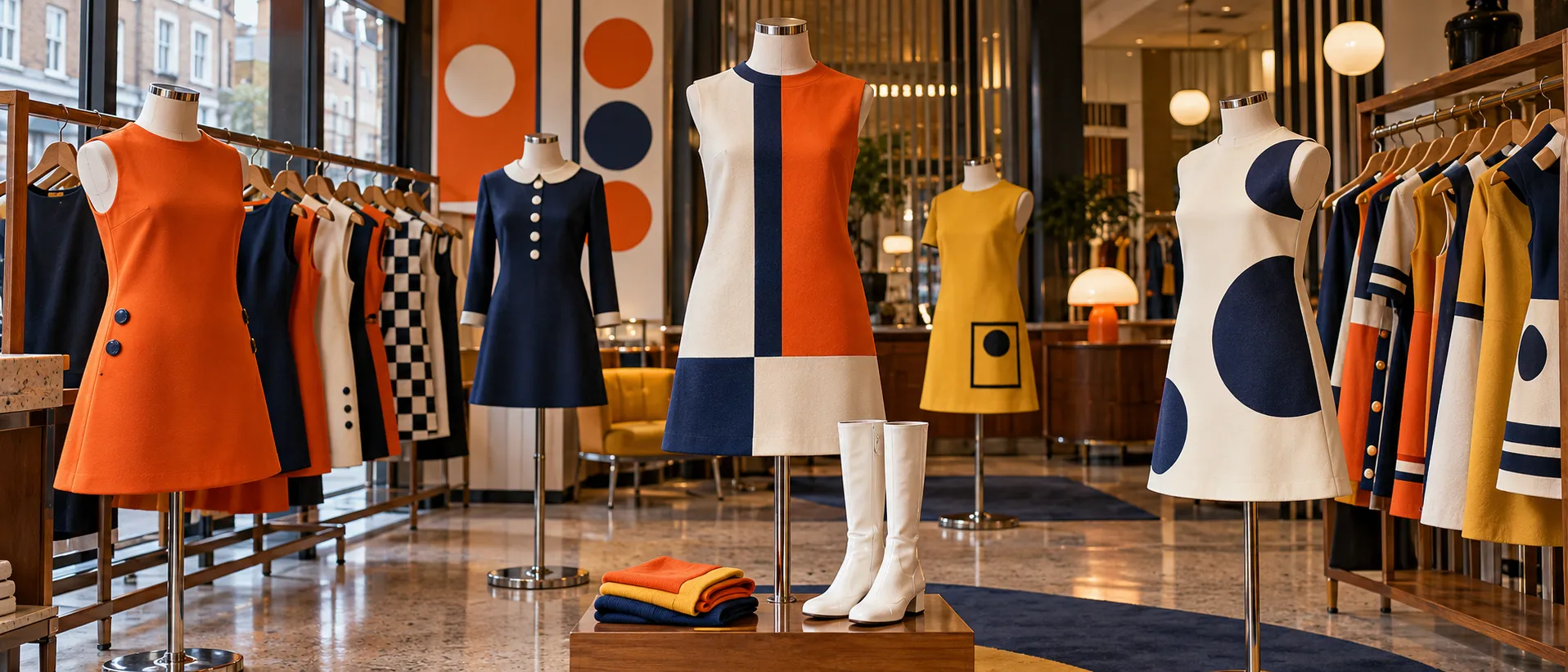
Instead of simply following established couture traditions, younger consumers increasingly influenced what was fashionable. Womens 60s fashion included bright geometric prints, simple shift dresses, shorter skirts, bold accessories, and experimental fabrics.
London became especially influential through boutiques, music culture, and designers who favored youthful, accessible clothing. Mary Quant helped popularize the miniskirt and the playful mod aesthetic. However, the shorter hemline did not emerge from one designer alone. It developed through broader changes in street style, dressmaking, and cultural expectations.
The Victoria and Albert Museum explores this history in The Miniskirt Myth, showing how fashionable hemlines became progressively shorter during the decade.
From Twiggy’s mod mini dresses to Jackie Kennedy’s Chanel-style suits, the decade offered contrasting visions of femininity: playful rebellion on one side, polished refinement on the other.
By the later 1960s, psychedelic prints, colorful tights, go-go boots, and increasingly unconventional materials became part of fashionable dressing. Synthetic fabrics and new manufacturing techniques also supported experimentation with easy-care garments and unusual shapes. Not everyone adopted the same trends, but 60s womens fashion helped demonstrate that personal style could challenge longstanding conventions.
The Good
Youthful creativity, greater experimentation, and increasingly accessible fashion options.
The Bad
Rapid trend turnover and restrictive new beauty ideals could create pressures of their own.
The Bold
Miniskirts, go-go boots, bold prints, and unconventional materials turned clothing into a symbol of cultural change.
1970s Womens Fashion: Bohemian Freedom, Disco Shine, and Androgyny
By the 1970s, women’s fashion had become a remarkable mixture of competing styles.
There was no single dominant look that could represent the entire decade.
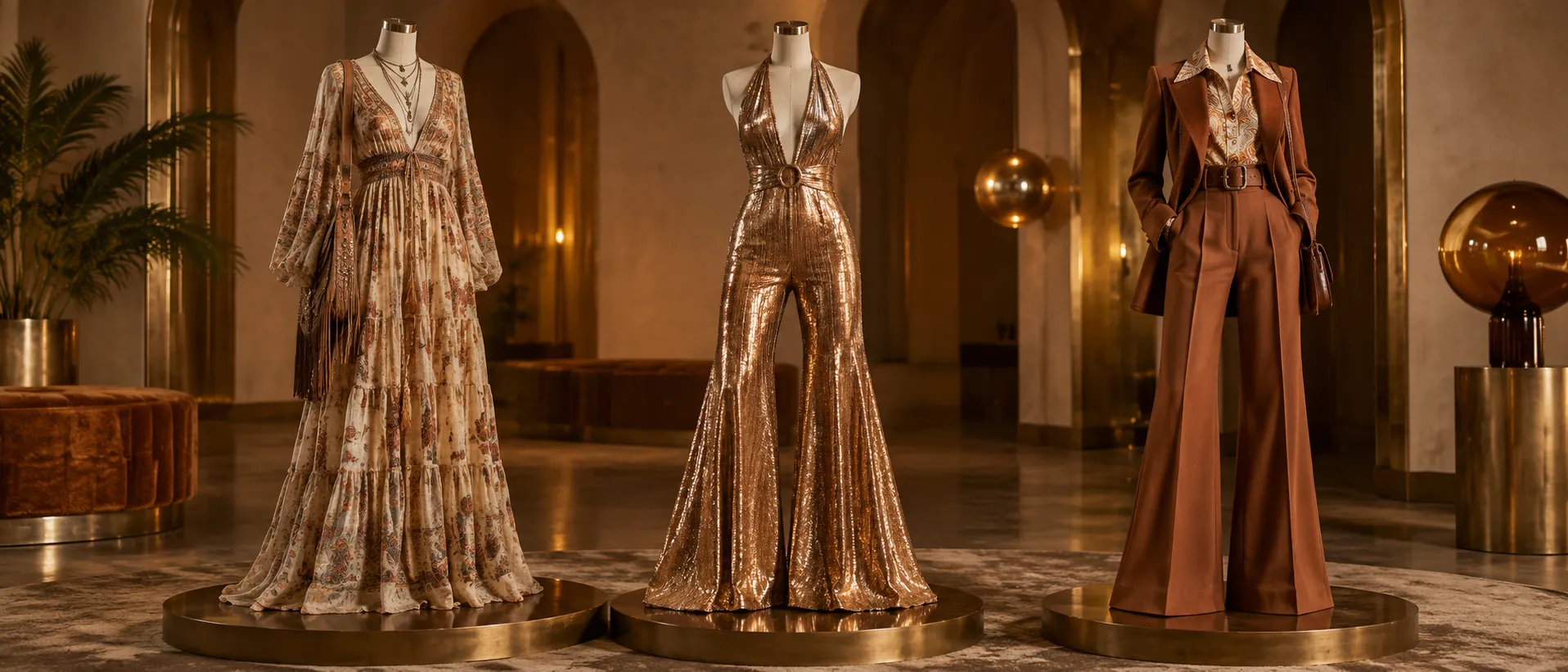
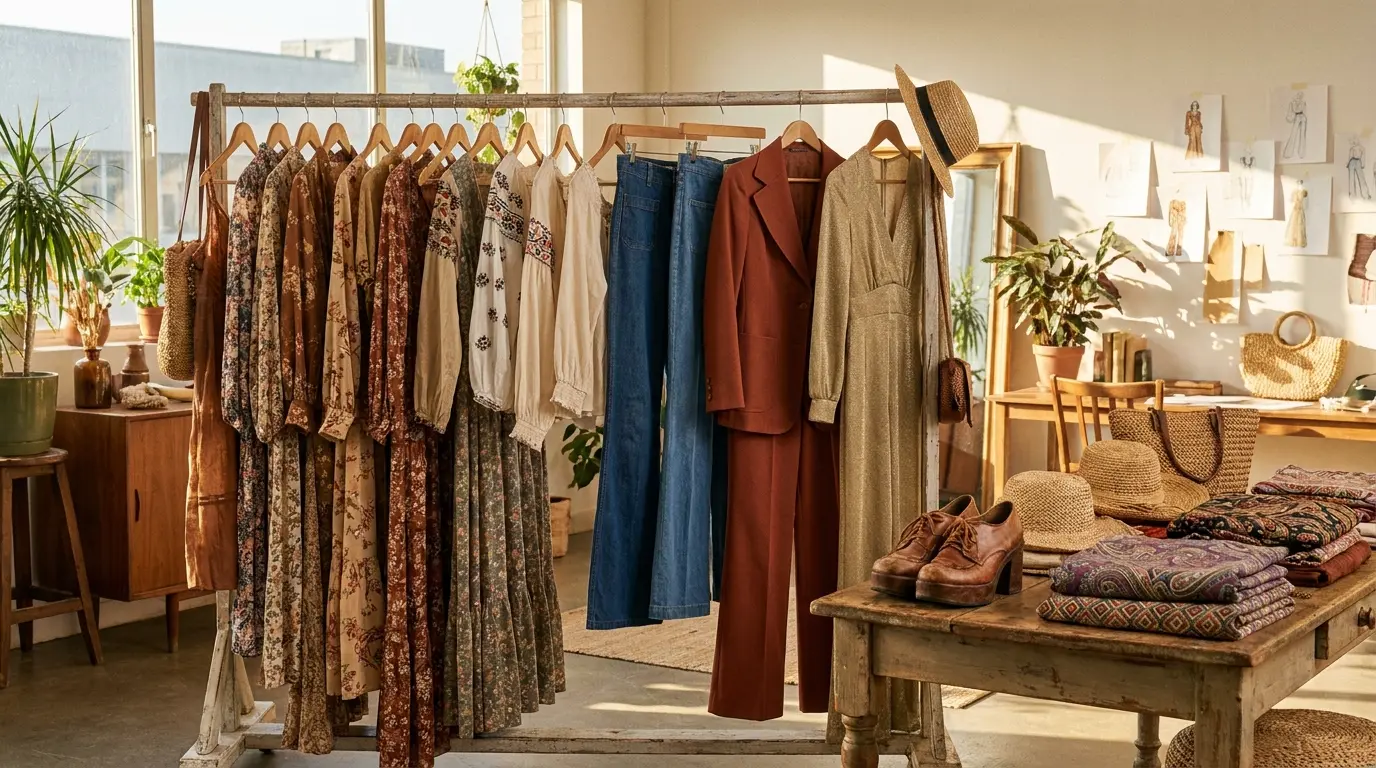
At one end was boho fashion, characterized by flowing maxi dresses, peasant blouses, embroidered details, earthy colors, and relaxed silhouettes.
At the other end was disco fashion, where sequins, shimmering fabrics, halter tops, jumpsuits, and platform shoes reflected the glamour of nightlife.
Between these extremes, everyday clothing increasingly embraced flared trousers, denim jeans, knitted tops, coordinated separates, and practical casualwear.
Androgynous styling also became more visible. Pantsuits, unisex garments, and clothing inspired by traditionally masculine tailoring offered alternatives to conventional feminine dress.
Second-wave feminism, changing workplace expectations, music, and youth culture all contributed to the period’s varied fashion identities.
Fabric choices were equally diverse. Denim and cotton suited casualwear, flowing materials supported bohemian clothing, and polyester became associated with easy-care garments and some of the decade’s more flamboyant styles.
The resulting combination was sometimes chaotic, but it gave consumers a broad range of ways to express themselves.
The Good
Variety, individuality, and the growing acceptance of relaxed, practical, and unconventional styling.
The Bad
Some synthetic fabrics, extreme platform shoes, and highly elaborate trends presented comfort and practicality challenges.
The Bold
Dramatic flares, disco shine, and increasingly visible androgynous styling made fashion a celebration of experimentation.
1980s Womens Fashion: Power Dressing and Maximalist Energy
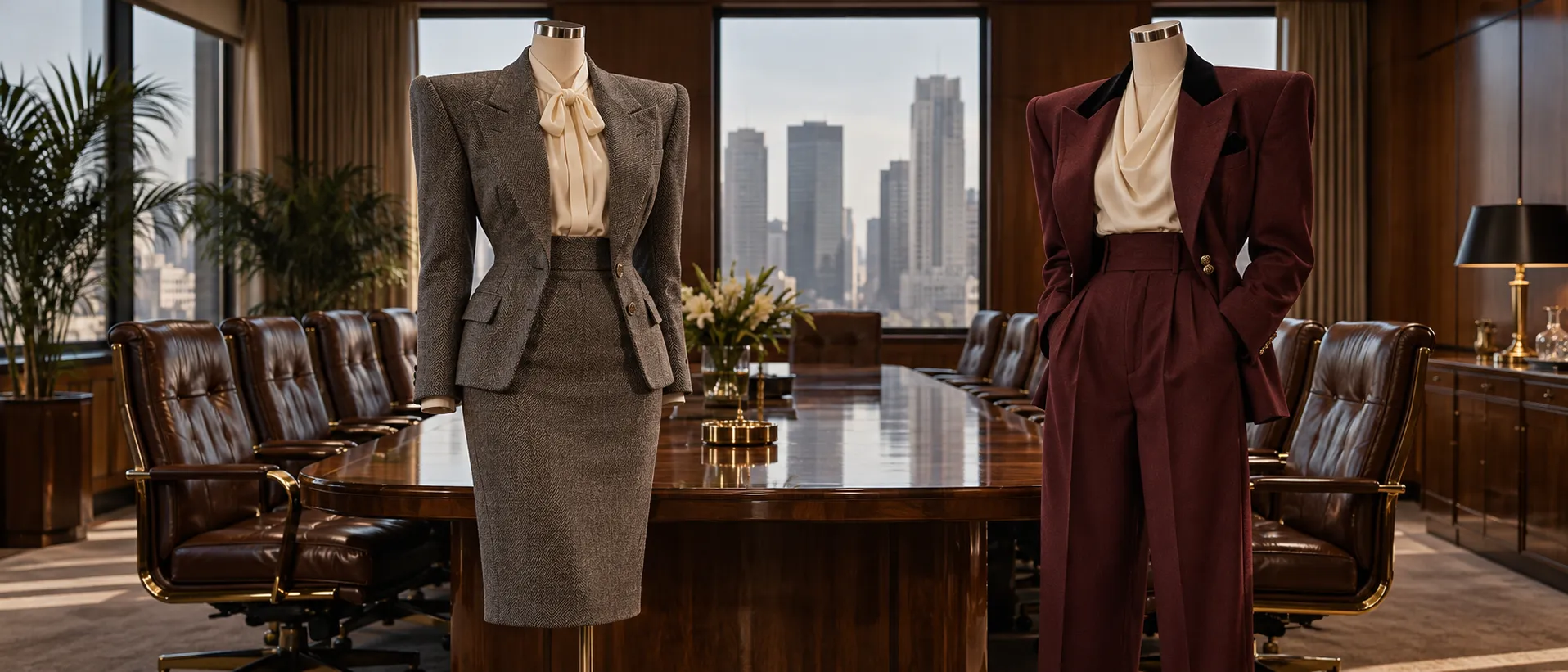
There are two kinds of people when discussing 1980s womens fashion: those who loved the shoulder pads and those who would rather forget them.
The decade embraced boldness. Structured blazers, sharply defined shoulders, high-waisted trousers, fitted skirts, and coordinated suits became associated with professional confidence. The bold power suits of the 1980s represented an image of authority at a time when women were increasingly visible in many professional environments.
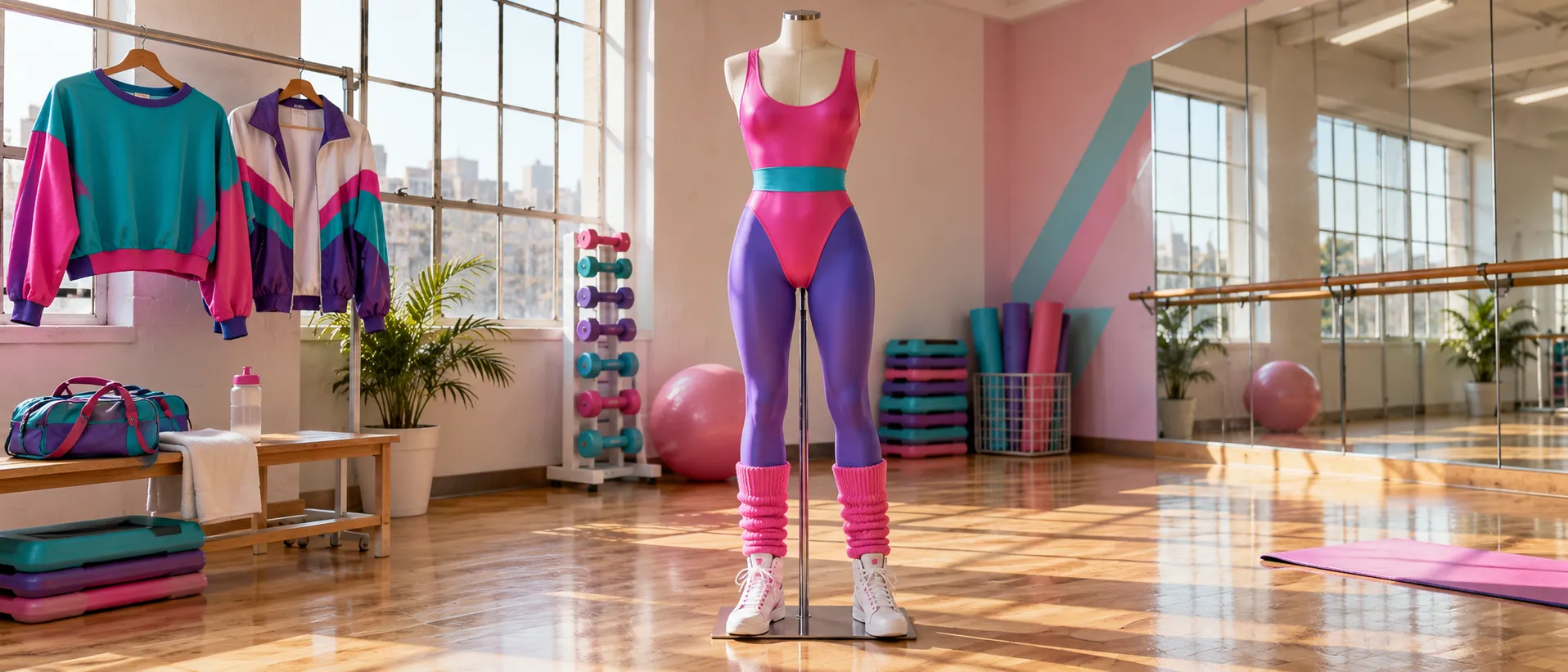
But not every fashionable woman wore a corporate suit. Music television, popular performers, youth subcultures, and colorful ready-to-wear clothing encouraged experimentation with oversized garments, bright colors, dramatic accessories, and unusual combinations. Fashion often followed a more is more philosophy. The decade also witnessed an important connection between fitness and everyday clothing.
Aerobics culture helped popularize leggings, leotards, headbands, sweatshirts, and leg warmers. These garments gradually moved beyond exercise spaces and influenced casual wardrobes. This change was part of a broader shift toward sportswear-inspired fashion, combining stretch, comfort, and visual expression.
The 1980s fashion overview by Fashion History Timeline documents the influence of power dressing and fitness culture, including the increasing visibility of stylish sportswear in everyday life.
The Good
Confident professional dressing, creative self-expression, and greater integration of comfortable sportswear into everyday wardrobes.
The Bad
Excessive shoulder shaping, conspicuous branding, and some exaggerated trends could overwhelm the wearer.
The Bold
Power suits, neon color combinations, and unapologetic fashion experimentation made the decade impossible to ignore.
1990s Womens Fashion: Hip-Hop, Grunge, and Minimalist Cool
The 1990s were full of contradictions. While the previous decade celebrated excess, much of 1990s women’s fashion embraced either relaxed rebellion or deliberate simplicity.
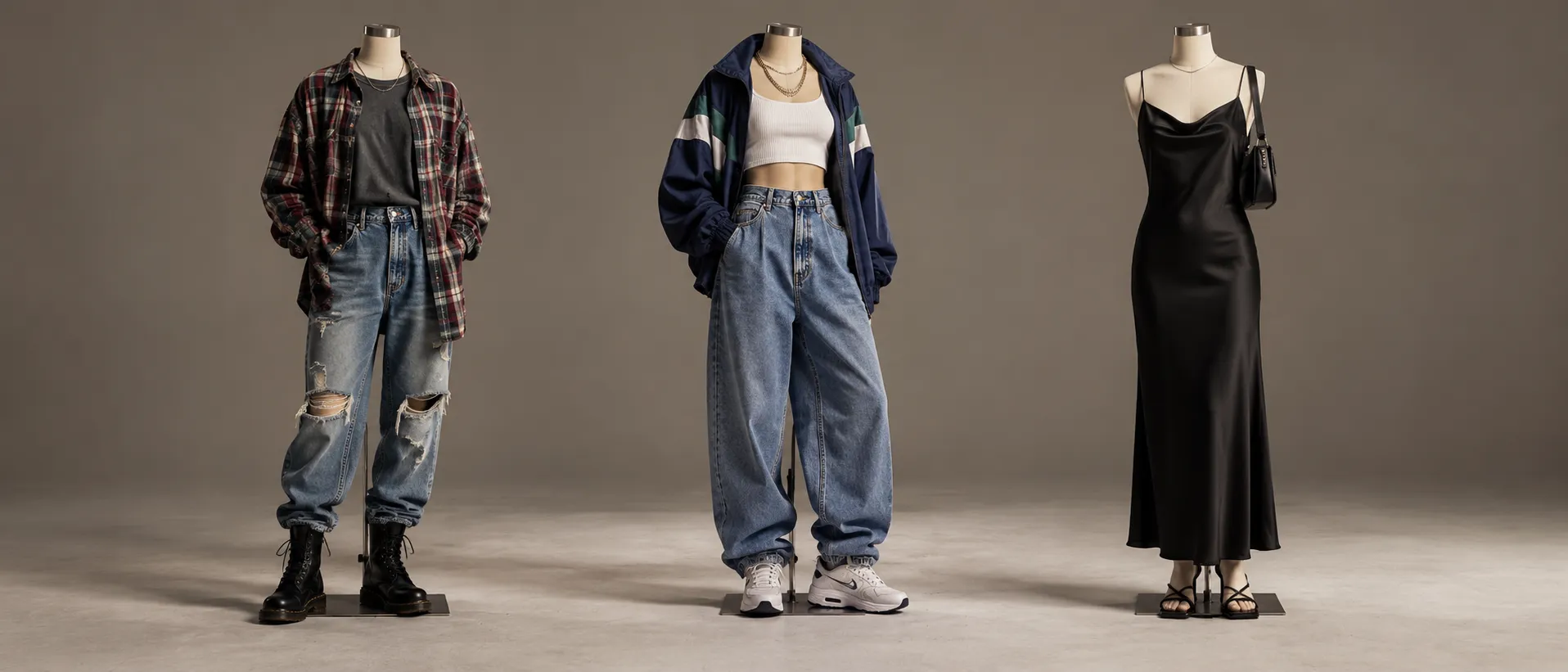
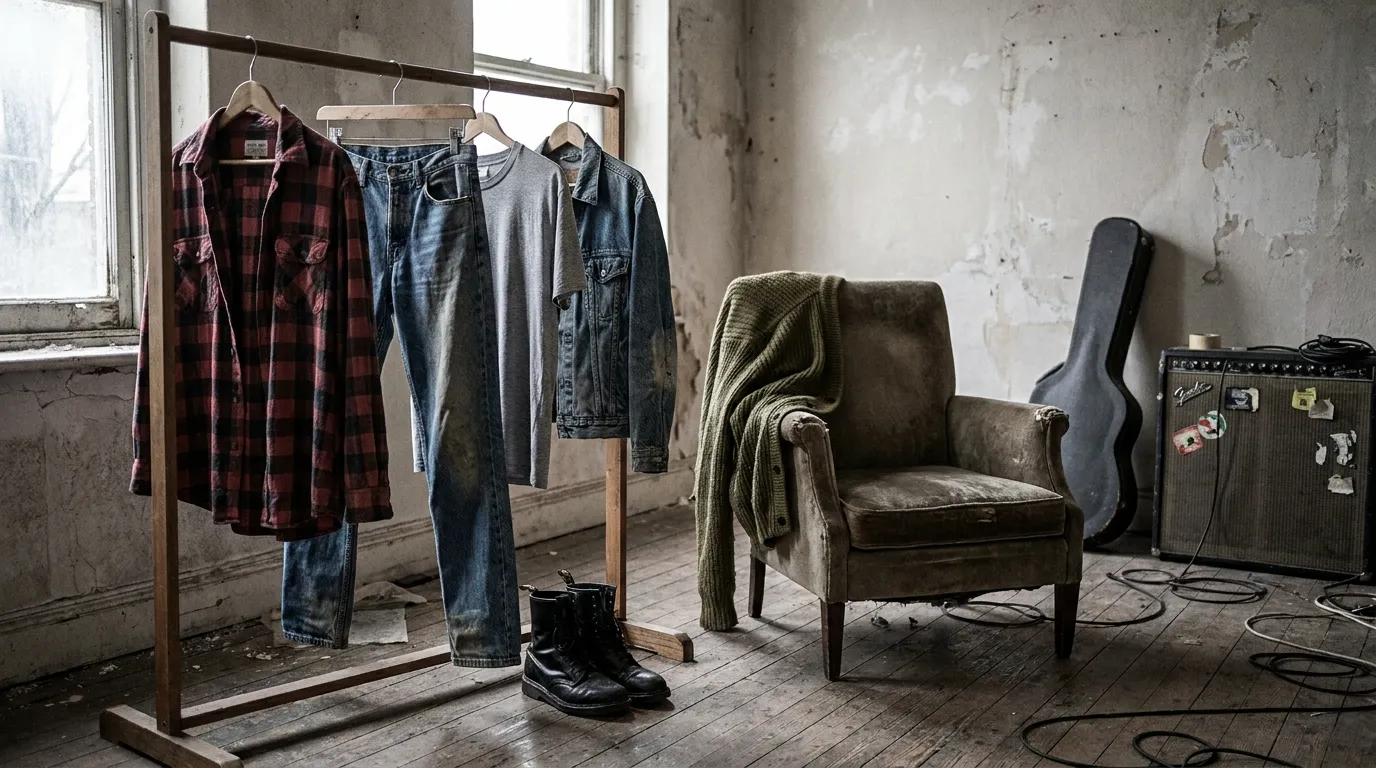
Grunge became associated with flannel shirts, distressed denim, oversized sweaters, combat boots, and an intentionally unpolished appearance. The style was influenced by alternative music and youth culture, challenging the glamorous presentation that had dominated many fashion images of the 1980s.
Meanwhile, hip hop fashion continued to develop into a powerful influence on mainstream clothing. Artists including TLC and Aaliyah helped popularize looks featuring oversized denim, baggy trousers, crop tops, sneakers, sportswear, and statement accessories.
These styles drew on the creativity of Black American communities and an established hip-hop culture that predated the decade. The 1990s amplified their visibility through music videos, performances, and popular media.
At the opposite end of the fashion spectrum was minimalism. Simple slip dresses, neutral colors, clean tailoring, understated accessories, and streamlined silhouettes became associated with a quieter form of elegance. Figures such as Kate Moss helped popularize that aesthetic, while other performers and designers embraced experimentation and individuality.
The decade demonstrated that fashion no longer needed one dominant silhouette to define its identity.
The Good
Broad stylistic variety, comfortable casual clothing, and powerful contributions from music and streetwear cultures.
The Bad
Certain high-fashion and advertising trends promoted extremely narrow body ideals, including the controversial heroin-chic aesthetic.
The Bold
Oversized silhouettes, expressive streetwear, and understated minimalism challenged the idea that one fashionable look should dominate.
Beyond the 1900s: Womens 2000s Fashion and the Rise of Y2K Style
The 2000s belong to the next era of fashion history, but they deserve a place in this story because they brought many late-20th-century influences into a more digitally connected culture.
And what an era it was.
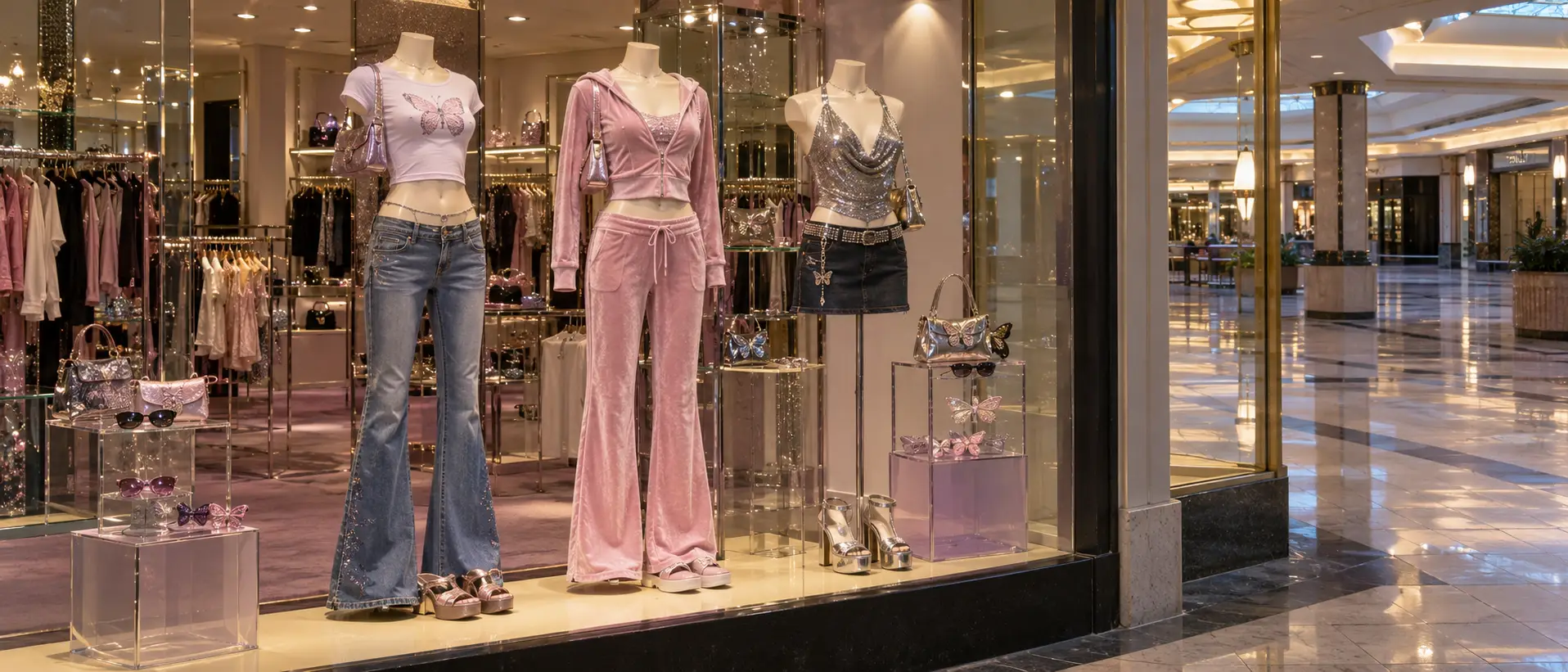
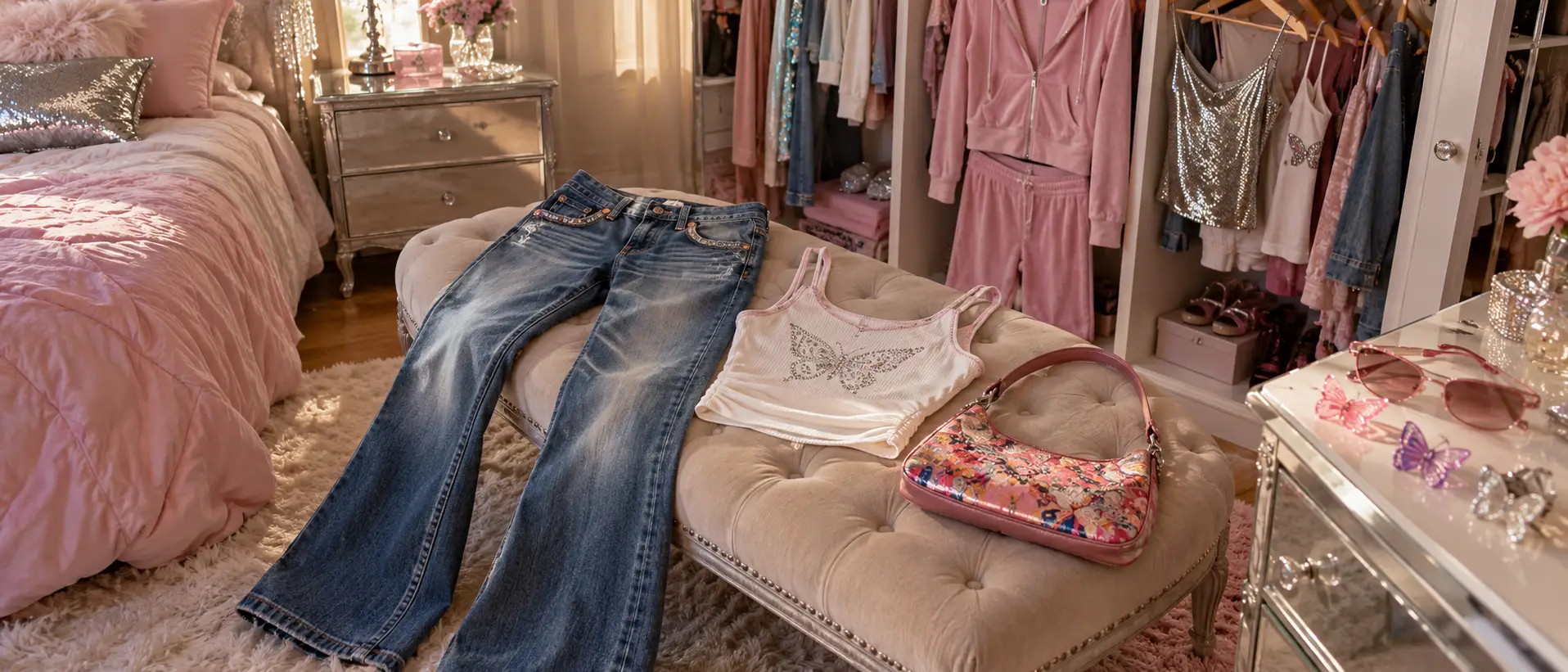
Womens 2000s fashion embraced low-rise jeans, cropped tops, metallic fabrics, velour tracksuits, butterfly clips, and highly visible branding. Celebrity culture, music videos, fashion magazines, and reality television helped spread recognizable trends. As internet communities expanded during the decade, online discussion and shopping began to influence how people discovered and adopted styles.
There was plenty of rhinestone everything, from decorated denim to handbags and accessories. The decade also featured body-conscious styling, including low-rise jeans, micro miniskirts, and the controversial trend of visible thongs.
At the same time, alternative youth styles, denim-heavy casualwear, and sportswear-inspired clothing offered very different fashion identities. Looking back, Y2K style now represents both the exuberance and the contradictions of early digital-age fashion.
The Good
Playful experimentation, expanding fashion-media access, and a wider variety of mixed influences.
The Bad
Intense celebrity-driven beauty expectations, impractical trends, and excessive branding.
The Bold
Y2K fashion combined denim, metallic finishes, body-conscious styling, and pop culture into an instantly recognizable visual identity.
Explore Women’s Apparel Manufacturing Options
From vintage-inspired dresses and tailored garments to modern denim, casualwear, and fashion collections, explore the apparel categories RYZEAL SOURCING helps buyers manufacture through specialized partners in Bangladesh.
What Didn’t Age Well: Fashion Fails by the Decade
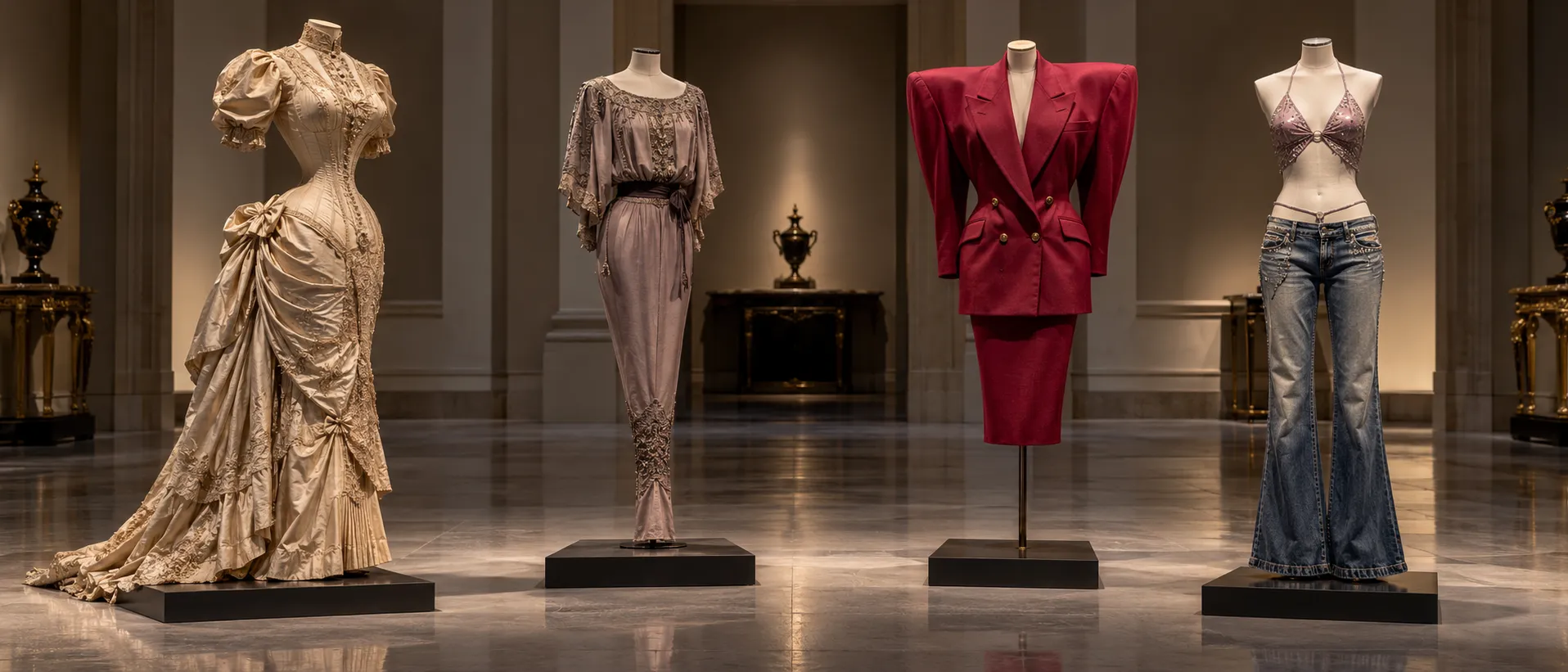
Looking back at fashion history is entertaining partly because some trends now seem almost unbelievable.
But there’s a difference between an impractical design, an outdated beauty ideal, and a style that simply isn’t popular anymore.
Not everything unfashionable today was a mistake in its own historical context.
Still, a few trends deserve a second look.
- 1900s: Exaggerated corseted silhouettes. Beautiful craftsmanship could coexist with restrictive expectations about women’s figures and posture.
- 1910s: Hobble skirts. A fashionable silhouette that could make ordinary walking unnecessarily difficult.
- 1920s: The pressure to appear youthful and slender. New fashion freedoms also introduced new appearance standards.
- 1950s: Highly structured feminine ideals. Some fashionable outfits required multiple foundation garments and considerable effort to maintain their intended shape.
- 1980s: Exaggerated proportions. Dramatic shoulder pads and oversized accessories could overpower otherwise thoughtful clothing.
- 1990s: Heroin-chic beauty imagery. Certain fashion representations promoted unhealthy and exclusionary ideals.
- 2000s: Extremely low-rise styling. A popular look that did not necessarily prioritize comfort or accommodate diverse body shapes.
These examples remind us that fashion is not automatically progressive simply because it changes.
A new silhouette may offer freedom in one respect while introducing restrictions in another.
That is why understanding the historical context matters more than deciding whether an old trend looks attractive today.
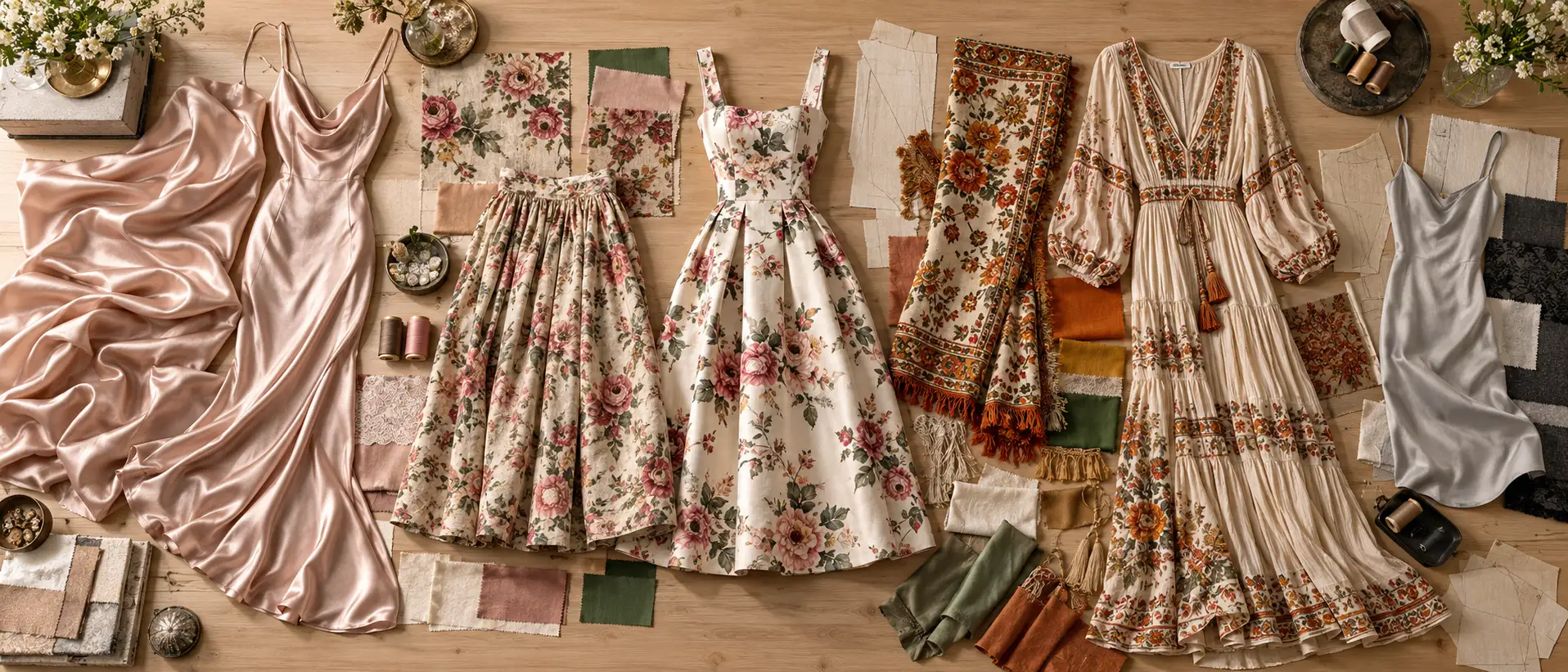
What Still Inspires: Legacy Styles We Still Love
Despite the occasional questionable experiment, 1900s womens fashion left an extraordinary collection of ideas for modern designers, clothing brands, and vintage enthusiasts.
Consider how often familiar historical elements return in contemporary clothing.
The drop-waist dresses of the 1920s continue to influence eveningwear and occasion dressing.
The draped gowns and clean silhouettes of the 1930s remain important references for formal fashion.
The 1940s contributed practical tailoring and workwear-inspired details.
The 1950s popularized memorable skirt shapes, fitted jackets, and carefully balanced proportions.
The 1960s provided modern shift dresses, short hemlines, and playful geometric patterns.
The 1970s left us relaxed maxi dresses, flared trousers, and bohemian styling.
The power suits of the 1980s still influence contemporary professional and statement dressing, while the 1990s contributed minimalist slip dresses, relaxed denim, and oversized casual clothing.
Even Y2K fashion continues to reappear through nostalgic styling and reinterpretation.
Why Old Fashion Trends Keep Returning
Fashion rarely repeats itself in exactly the same form.
Instead, designers borrow recognizable elements and adapt them to current expectations.
A 1950s-inspired dress may use a lighter fabric, fewer foundation layers, and a more comfortable fit.
A 1970s-inspired jumpsuit may feature modern stretch materials and updated construction.
A 1990s-inspired slip dress may be styled for contemporary layering rather than recreating an entire period outfit.
This process allows historical inspiration to remain recognizable without reproducing every limitation of the original design.
For readers interested in how retro influences appear in more recent clothing, our overview of women’s fashion trends in 2025 explores examples of seasonal styling, contemporary tailoring, and Y2K-inspired details.
What Fashion Designers Can Learn From the Past
Historical fashion offers practical lessons beyond visual inspiration.
A vintage garment can reveal how designers approached proportion, shaping, seams, decorative details, and fabric movement.
It can also demonstrate how clothing responded to available technologies, materials, and social expectations.
For example, the bias-cut gowns of the 1930s illustrate how fabric direction influences drape. The tailored clothing of the 1940s demonstrates how practical requirements can shape design. The popularity of 1980s activewear shows how lifestyle changes can create demand for new garment categories.
For modern apparel brands, the lesson is not simply to copy a historic silhouette. It is to understand why that silhouette worked, what limitations it had, and how to adapt it for current customers.
That distinction separates thoughtful fashion development from superficial nostalgia.
Why Understanding Past Fashion Helps Shape the Future
Fashion history is more than a collection of beautiful dresses and unusual accessories.
It records changing relationships between clothing, technology, society, and individual identity.
The evolution of 20th century women’s fashion reveals how innovation can come from many places: skilled dressmakers, established designers, working women, youth movements, musical communities, and ordinary consumers.
It also reminds us that attractive clothing is not always comfortable, expensive clothing is not always practical, and popular fashion does not necessarily represent everyone’s experience.
Today’s designers face different expectations surrounding fit, accessibility, material selection, environmental impact, and production quality.
Looking backward can help them make more thoughtful decisions about what deserves to return and what should remain in the past.
A historic design can be admired without accepting every social expectation that surrounded it.
And an old silhouette can inspire something genuinely new.
Frequently Asked Questions About 1900s Womens Fashion
What was women’s fashion like in the early 1900s?
Early-1900s women’s fashion in Europe and North America was strongly influenced by Edwardian styles. Fashionable clothing often included structured bodices, long skirts, high-necked blouses, elaborate hats, lace, and carefully shaped silhouettes. Dress choices varied according to class, occupation, occasion, and region.
How did women’s fashion change throughout the 20th century?
Women’s fashion shifted from highly structured early-century silhouettes toward a wider range of clothing styles, including practical suits, shorter dresses, trousers, denim, sportswear, and relaxed casual clothing. Wars, changing social roles, youth culture, popular media, and textile developments contributed to these changes.
What was the biggest change in women’s fashion during the 1900s?
One of the most significant changes was the expansion of clothing choices beyond traditionally formal and restrictive silhouettes. Over time, trousers, casual separates, practical workwear, and sportswear became increasingly accepted in many settings. However, changes occurred gradually and differed across cultures.
What did women wear in the 1920s?
Fashionable 1920s clothing included straight or drop-waist dresses, cloche hats, shorter skirts, cardigans, and tailored coats. Eveningwear could feature beadwork and decorative embroidery. The famous flapper style was influential, but it did not represent every woman’s wardrobe.
How did World War II influence women’s fashion?
World War II affected clothing through material shortages, rationing, and growing demand for practical workwear. Tailored jackets, utility dresses, simplified construction, and functional trousers became important in many settings. The extent of restrictions varied by country.
Why was the 1950s hourglass silhouette so popular?
The silhouette gained prominence partly through the influence of Christian Dior’s New Look, introduced in 1947. Fitted waists, full skirts, and shaped proportions became important elements of postwar fashion. However, many women also wore practical separates, straight skirts, and trousers.
Which decade had the boldest women’s fashion?
There is no single objective winner. The 1920s challenged earlier dress conventions, the 1960s popularized youthful short silhouettes, the 1970s celebrated stylistic diversity, and the 1980s embraced dramatic proportions and strong colors. Each decade was bold in a different way.
Why are vintage women’s fashion trends still popular?
Vintage styles offer distinctive silhouettes, recognizable details, and connections to cultural history. Designers and consumers can reinterpret older styles using contemporary fabrics, construction techniques, and styling preferences. Nostalgia also contributes to recurring fashion trends.
Final Thoughts: The Good, the Bad & the Bold Still Matter
Every decade of 1900s womens fashion contributed something to the way women dress today.
The 1900s demonstrated elaborate craftsmanship. The 1910s challenged established silhouettes. The 1920s embraced youthful change. The 1930s refined draping and elegance. The 1940s adapted clothing to necessity. The 1950s celebrated shape and tailoring.
The 1960s challenged conventions, the 1970s expanded personal expression, the 1980s turned confidence into a fashion statement, and the 1990s proved that simplicity and rebellion could exist side by side.
Some trends were beautiful. Some were impractical. Some carried expectations that deserve criticism today.
But the most influential styles did more than change appearances. They changed how clothing could be designed, understood, and worn.
At RYZEAL SOURCING, we see fashion history as a source of inspiration for modern apparel development. Historic garments demonstrate how silhouette, fabric, construction, and cultural expectations come together to create clothing that people remember.
Through our network of specialized manufacturing partners in Bangladesh, we help brands translate their own design concepts into modern apparel, with attention to technical requirements, materials, sampling, and production coordination.
Because fashion is more than fabric. It is history, identity, creativity, and the constant reinvention of what clothing can mean.
And while the good trends may return and the bad ones may fade, the bold ideas are often the ones that change fashion forever.
Bring Your Vintage-Inspired Fashion Concept to Life
Developing a clothing collection inspired by classic silhouettes or modern fashion trends? Share your sketches, reference garments, or technical specifications with RYZEAL SOURCING to discuss sampling and product development through our vetted manufacturing partners in Bangladesh.
Connect with RYZEAL SOURCING