
Sourcing teams lose time and money when they pick the wrong operating model. Most problems are not “factory problems.” They are accountability problems: who owns QC, who owns planning, who owns approvals, and who carries risk when things go wrong. This is why buying house vs clothing manufacturer is not a basic comparison. It is a governance decision.
This guide explains three models buyers commonly use: (1) apparel buying house / garment sourcing agent model, (2) direct clothing manufacturer model, and (3) the single manufacturing partner model. If you understand buying house vs clothing manufacturer correctly, you can design a sourcing setup that matches your team size, product complexity, and risk tolerance.
You will leave with a decision checklist, a role map, and a clear explanation of the single manufacturing partner model, so buying house vs clothing manufacturer becomes a structured choice, not guesswork.
Before choosing an operating model, make sure you also understand how suppliers should be evaluated. Our Manufacturer Vetting and Due Diligence: How to Evaluate a Clothing Manufacturer guide explains the evidence, capability checks, and risk controls buyers should verify before approving a supplier.
Quick Answer: Choosing between models in 30 seconds
In buying house vs clothing manufacturer, choose based on where you want accountability to sit
- Apparel buying house / sourcing company: Apparel buying house / sourcing company: Often fits buyers that need local supplier access, sourcing support, merchandising coordination, and production follow-up across multiple factories.
- Direct clothing manufacturer / garment factory: Direct clothing manufacturer / garment factory: Often fits buyers that already know the right production facility and have the internal capability to manage specifications, approvals, quality, and production follow-up directly.
- Single manufacturing partner model: Often fits buyers that want one buyer-facing partner to coordinate sourcing and production across a vetted factory network while standardizing reporting, approvals, quality control, and escalation.
Table of Contents
Buying House vs Clothing Manufacturer – Who Does What?!
Direct Answer
In buying house vs clothing manufacturer, a buying house typically coordinates sourcing and execution between the buyer and manufacturing facilities, while a clothing manufacturer is directly responsible for producing the garments at the contracted production facility or facilities. A single manufacturing partner model adds one buyer-facing coordination and control layer across a vetted network of manufacturing partners.
A buying house can be a sourcing company that supports vendor selection, development coordination, QC follow-up, compliance coordination, and shipment support. A clothing manufacturer is the production unit (garment factory / apparel factory) responsible for manufacturing output. Confusion happens because some brands call their own local office a “buying house,” while others mean a third-party sourcing intermediary.
For this article, buying house vs clothing manufacturer is defined as: buying house = intermediary sourcing/coordination model; clothing manufacturer = direct production entity; and single manufacturing partner = one accountable partner managing the sourcing-to-shipment system across vetted factories.
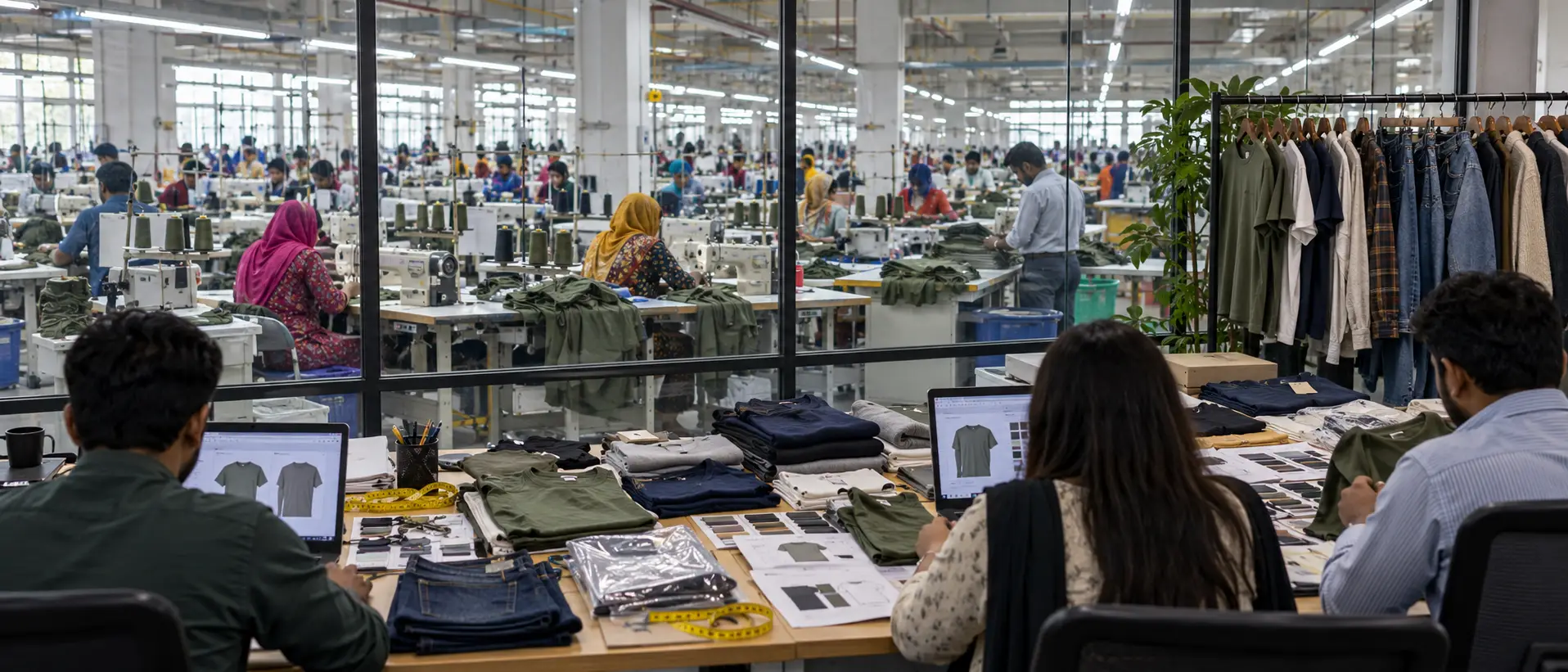
| Model | Production Role | Typical QC Role | Typical Compliance Role | Often Suitable For | Main Governance Risk |
|---|---|---|---|---|---|
| Apparel buying house / sourcing company | Production performed by selected factories | May coordinate inspections, QC follow-up, and buyer requirements | May collect and monitor factory compliance evidence | Buyers needing sourcing access and local coordination | Authority and responsibility can be unclear if scope is vague |
| Direct clothing manufacturer | Produces the order at the contracted manufacturing facility | Factory operates production QC; buyer defines acceptance requirements and may verify independently | Factory provides facility-specific compliance evidence | Buyers with known product/factory fit and strong internal sourcing capability | Buyer must directly manage approvals, supplier risk, and production follow-up |
| Single manufacturing partner | Production carried out through selected manufacturing partners | Partner coordinates agreed QC controls and production monitoring across the network | Partner coordinates compliance requirements while factory-specific compliance remains tied to the manufacturing facility | Buyers needing multi-category capability with one coordination structure | Weak partner governance or unclear factory disclosure can create another management layer |
What an apparel buying house actually is (and what it is not)
An apparel buying house is commonly used to bridge buyer requirements and factory execution. In practice, it often functions like a garment sourcing agent with broader coordination responsibilities: supplier discovery, merchandising communication, sample follow-up, and production monitoring. The value is speed, access, and coordination.
A buying house is not necessarily the physical production facility itself. Depending on its scope, it can act as the buyer-facing sourcing and manufacturing coordination partner – matching orders with suitable factories and managing development, merchandising, quality follow-up, compliance coordination, and shipment support. The garments are physically produced at the contracted factory or factories, while the buying house’s level of authority depends on the commercial arrangement.
A good buying house clarifies its scope: what it owns, what the factory owns, what the buyer owns, and how escalation works. If scope is vague, you have risk.
The ILO-IFC Better Work programme also treats brands, retailers, intermediaries, and sourcing agents as active participants in garment supply-chain improvement, reinforcing the importance of aligned responsibilities rather than assuming that all responsibility sits with the factory alone.
The Accountability Problem: Why Unclear Intermediary Roles Create Risk
Direct Answer
The real risk in buying house vs clothing manufacturer is unclear ownership. When accountability is fragmented, problems float between parties until time runs out.
A common failure pattern appears when responsibilities are assumed rather than documented. The buyer may expect the intermediary to control QA and planning, while the intermediary expects the factory to manage those functions independently. Meanwhile, approval authority may remain with the buyer. When those boundaries are unclear, approvals drift, corrective actions stall, and production decisions can move forward without a clearly accountable owner.
If you want predictable outcomes, you need explicit governance: named owners, response-time expectations, evidence requirements, and escalation ladders. In buying house vs clothing manufacturer, governance is what separates a scalable model from chaos.
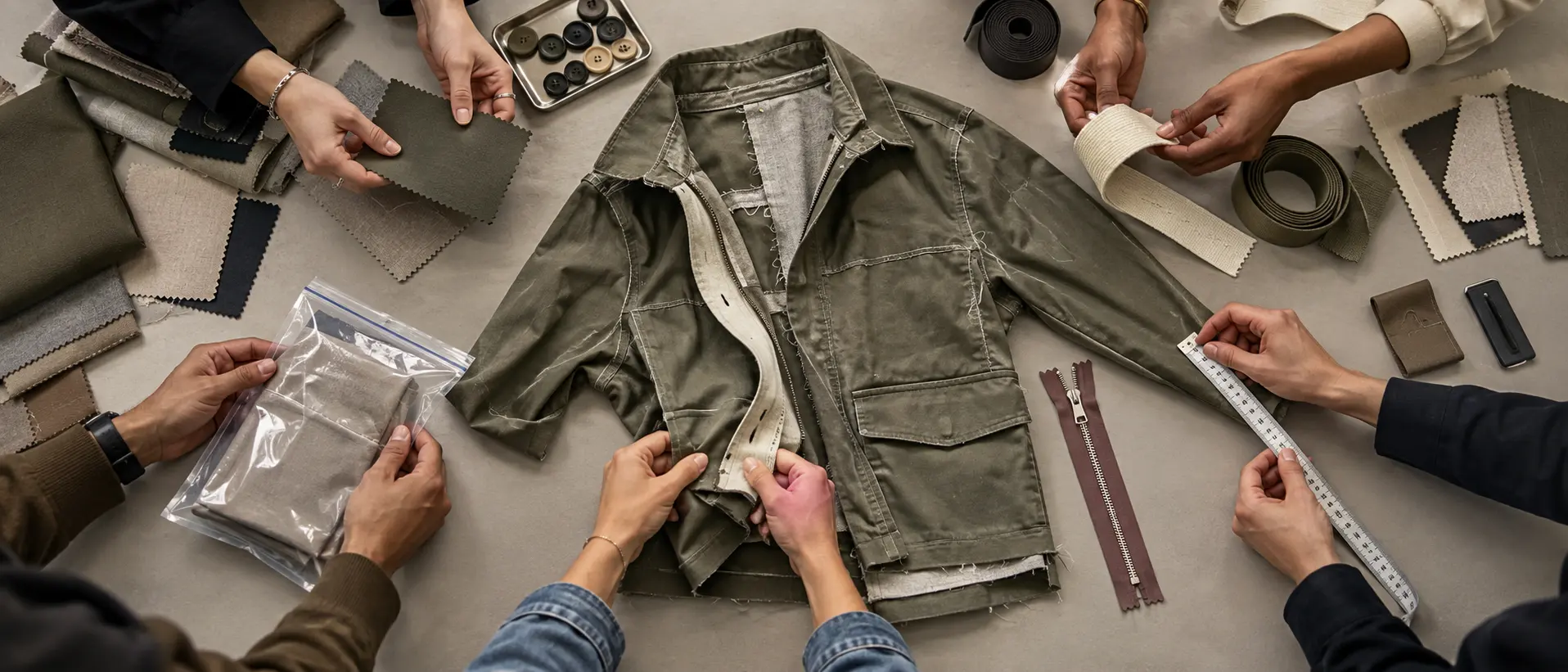
| Activity | Buyer | Buying House / Sourcing Company | Factory | Single Manufacturing Partner | Evidence / Record |
|---|---|---|---|---|---|
| Product requirements | Approves requirements | Coordinates clarification | Confirms manufacturability | Coordinates requirements across selected factory | Tech pack / BOM / comments |
| RFQ and costing | Sets commercial requirements | Collects / coordinates quotations | Builds production cost | Normalizes quotations and assumptions | RFQ / quote comparison |
| Sampling | Approves samples | Follows development | Produces samples | Coordinates timeline, revisions, and approvals | Sample comments / approval record |
| Production planning | Confirms delivery requirement | Follows progress | Creates production plan | Coordinates capacity and reporting | T&A / production plan |
| Quality control | Defines acceptance standard | May coordinate QC | Operates factory QC | Coordinates agreed QC controls | Inspection / QC records |
| Compliance | Defines buyer requirements | Collects / follows evidence | Maintains facility-specific compliance | Coordinates factory evidence and buyer requirements | Audit / certificate / CAP record |
| Corrective action | Approves major commercial decisions | Escalates issues | Implements corrective action | Tracks containment, correction, and closure | CAPA / closure evidence |
| Shipment release | Gives buyer authorization where required | Coordinates documents | Prepares goods and records | Coordinates readiness and release evidence | Final inspection / packing / shipment records |
Vendor management vs vendor risk management (what changes in apparel)
Vendor management is coordination: timelines, communication, delivery tracking, and day-to-day follow-up. Vendor risk management is control: preventing hidden subcontracting, preventing uncontrolled variability, enforcing documentation, and ensuring corrective actions close.
In apparel, vendor risk management matters because production is variable and timelines compress fast. A supplier can look fine in sampling and fail in bulk if risk controls are weak. In buying house vs clothing manufacturer, risk management must be owned by someone with both visibility and authority.
Responsible sourcing also extends beyond day-to-day production management. The OECD’s garment and footwear due-diligence guidance treats due diligence as an ongoing process for identifying, preventing, mitigating, and accounting for risks across a company’s operations, supply chains, and business relationships.
Risk signals that show accountability is weak:
- No clear QA owner
- No production planning artifacts
- Slow response time to approvals
- Subcontracting happens “sometimes” without controls
- Defects repeat with no corrective action records
Why supplier management needs a risk-based approach
Coordination alone does not control supplier risk. Buyers also need a structured way to identify risks, define controls, review evidence, and decide how problems should be escalated. This NQA webinar provides a broader risk-management perspective on working with external suppliers.
For apparel sourcing, the practical lesson is to define ownership, evidence, escalation, and corrective-action controls before problems move from sampling into bulk production.
The Single Manufacturing Partner Model (What It Is and Why It Exists)
Direct Answer
The single manufacturing partner model exists to solve the biggest gap in buying house vs clothing manufacturer: managing multiple factories without losing control, transparency, and accountability.
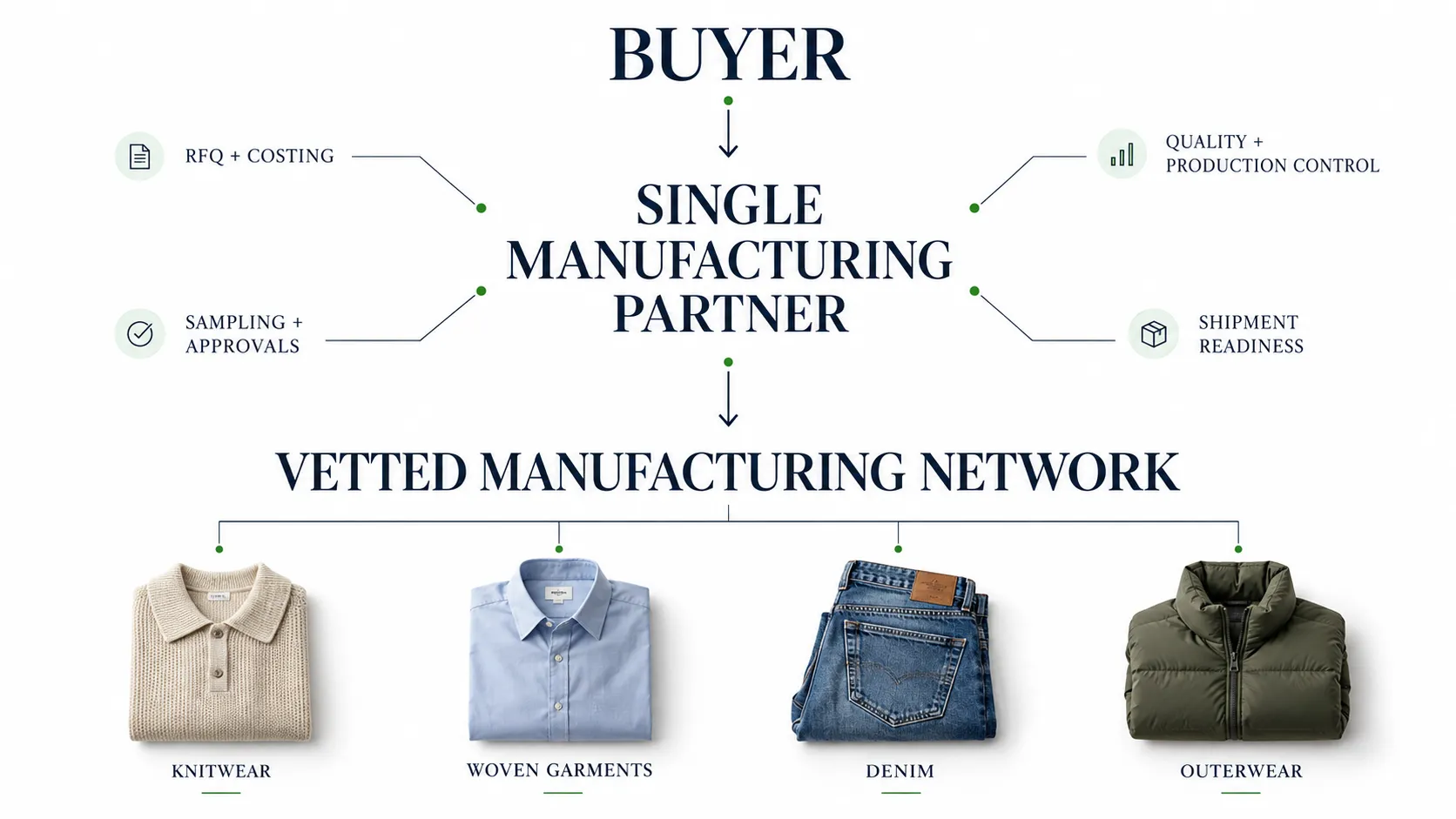
In this guide, a single manufacturing partner is one buyer-facing partner that coordinates sourcing-to-shipment execution across a vetted manufacturing network. Depending on the agreed scope, that can include RFQ coordination, factory matching, sampling follow-up, approvals management, production monitoring, quality-control coordination, vendor management, compliance follow-up, and shipment-readiness support.
This model is designed for brands that want the flexibility of multiple manufacturing options (knit, woven, denim, outerwear) without running multi-factory complexity internally. In buying house vs clothing manufacturer, the single partner model is the “control layer” that prevents fragmented execution.
The model should not depend on hiding where production takes place. Buyers should understand which manufacturing facility is producing the order when that information is commercially and operationally relevant, while documentation, reporting cadence, approvals, and escalation rules remain standardized through the buyer-facing partner.
When a Single Manufacturing Partner May Be the Right Fit
A single manufacturing partner may be a strong fit when sourcing complexity is greater than the buyer’s internal capacity to manage multiple factories, approvals, production updates, and quality controls directly. If you need multiple product categories, multiple suppliers, multiple compliance requirements, and fast launch cycles, this model reduces execution noise.
It’s also strong when you need end-to-end manufacturing visibility without managing many factories directly. In buying house vs clothing manufacturer, this is the model that combines breadth (network access) with control (one accountable owner).
Best-fit scenarios:
- Multi-category sourcing (knit + woven + outerwear)
- Limited in-house production management capacity
- Tight timelines and frequent approvals
- High QA expectations and documentation needs
- Need for vendor consolidation and stable reporting
Want to See How RYZEAL Manages Apparel Production?
RYZEAL SOURCING helps buyers coordinate product development, factory matching, sampling, production follow-up, quality control, compliance support, and shipment readiness through a vetted manufacturing network.
Buying House vs Clothing Manufacturer (Pros, Cons, and Best-For Use Cases)
Direct Answer
In buying house vs clothing manufacturer, each model has a tradeoff. Your job is to choose the tradeoff that matches your operating reality.
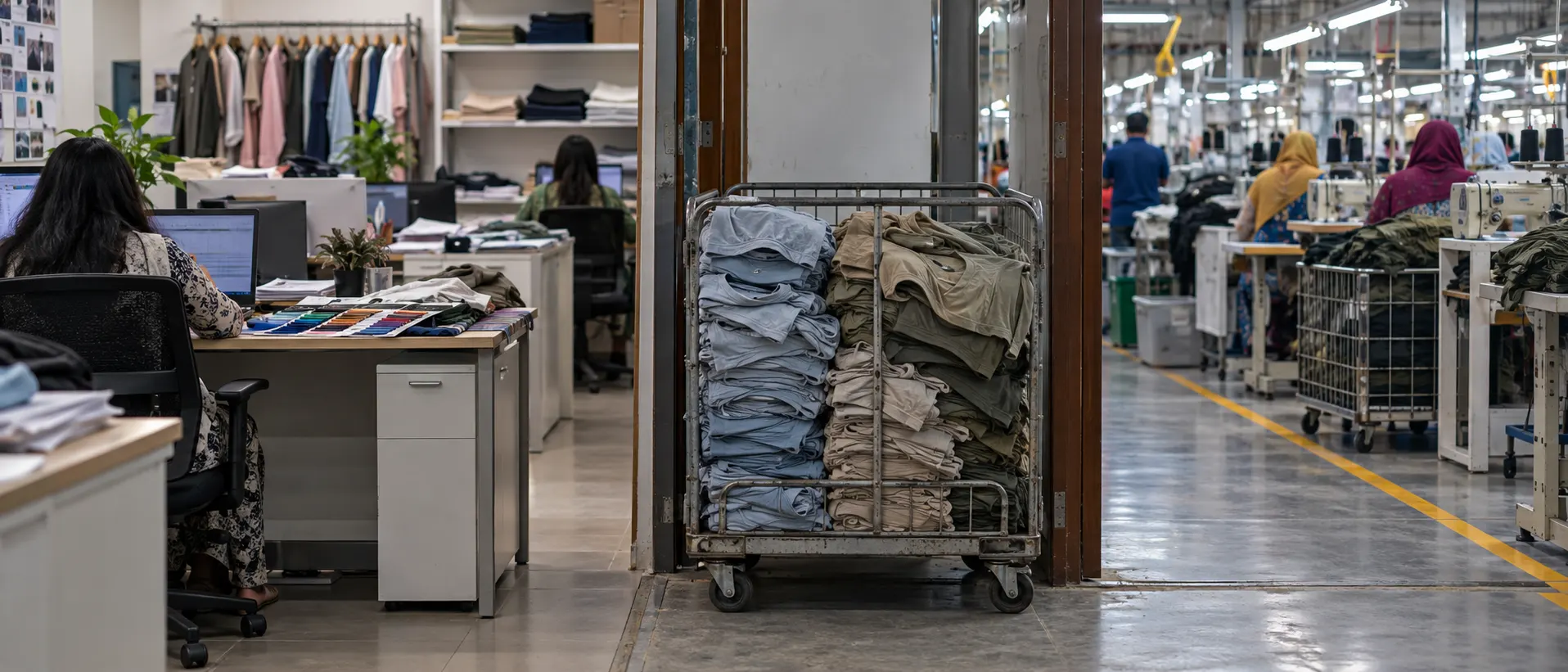
Apparel buying house model
Pros
- Faster supplier access and market discovery
- Coordination support across multiple garment factories
- Helps brands without local presence or sourcing teams
Cons
- Accountability can be diluted if scope is vague
- QC authority and decision rights can vary significantly between buying houses
- Additional communication layers can create delay or interpretation risk if roles are unclear.
Best for
- New brands entering a region
- Buyers who need supplier discovery and coordination support
- Teams without sourcing bandwidth
Direct clothing manufacturer model (factory direct sourcing)
Pros
- Direct communication with production unit
- Potentially fewer layers and faster decisions
- Strong fit when you already know the right apparel factory
Cons
- You must manage vendor management, risk control, and approvals discipline internally
- Harder to scale across categories and multiple factories
- A single factory can limit flexibility (capacity, machinery, category)
Best for
- Buyers with strong internal production management
- Stable product categories
- Long-term factory partnerships
Single manufacturing partner model
Pros
- One accountable point for execution across a factory network
- Standardized reporting, QC control, and escalation discipline
- Integrates supplier risk management with operational delivery
Cons
- Requires clarity on transparency and disclosure
- You must evaluate the partner’s governance maturity
- Effectiveness depends heavily on the partner’s governance, technical capability, transparency, and factory-selection discipline
Best for
- Private-label brands and buyers that need multi-category production with one coordination structure
- Buyers managing multiple categories or collections
- Brands prioritizing reliable execution over managing suppliers directly
| If Your Priority Is… | Model to Consider | Why It May Fit | Main Tradeoff to Manage |
|---|---|---|---|
| Direct control of one established production facility | Direct clothing manufacturer | Fewer coordination layers | Buyer needs strong internal production-management capability |
| Finding and coordinating several suppliers in a sourcing market | Apparel buying house / sourcing company | Local access and supplier coordination | Scope and authority must be clearly defined |
| Multi-category sourcing with one buyer-facing management structure | Single manufacturing partner | Centralizes reporting and coordination across specialized factories | Partner governance and factory transparency must be verified |
| Building long-term production around one stable category | Direct manufacturer | Deep factory-specific relationship | Less flexibility when category or capacity needs change |
| Entering a new sourcing market without a local team | Buying house / sourcing company | Provides local communication and sourcing support | Buyer must understand exactly what the intermediary controls |
| Managing several product categories with limited internal sourcing bandwidth | Single manufacturing partner | Reduces multi-vendor coordination burden | Buyer becomes dependent on the partner’s management system |
How sourcing structure affects execution
Choosing a sourcing route is not only about supplier access or unit price. The operating structure also affects planning, critical-path control, country choice, logistics, and how much coordination the buyer must manage internally. This Source Fashion session provides a broader sourcing perspective from experienced retail buyers.
The practical point is to choose a sourcing structure that fits your team, product mix, and ability to manage the process, rather than assuming one model is universally better.
Private label brands (where model choice impacts speed and QC)
Private label sourcing succeeds when approvals and execution are tight. Multiple trims, multiple colors, and multiple sizes magnify risk. A private label buyer also needs predictable lead times and consistent quality systems across styles.
In buying house vs clothing manufacturer, private-label brands without dedicated sourcing or production-management teams may find direct factory sourcing more demanding because approvals, quality follow-up, timelines, materials, and supplier coordination remain largely with the buyer. A single manufacturing partner can reduce that management burden by coordinating these functions across suitable manufacturing partners through one buyer-facing workflow.
How RFQs, Sampling, and Approvals Change by Model
Direct Answer
The operating model changes who owns the process. In buying house vs clothing manufacturer, RFQs, sampling rounds, and approvals either become clean and controlled, or they become fragmented.
RFQ ownership and quote clarity
- In buying house model: the intermediary may collect RFQs and coordinate multiple factory quotations. Risk appears when quote assumptions are not normalized.
- In direct factory model: you must write and manage RFQs cleanly, and push factories to clarify assumptions.
- In single partner model: the partner should standardize RFQ templates, normalize quotes, and reduce negotiation noise.
Regardless of the operating model, quote quality depends on sending manufacturers the same commercial and technical scope. Our How to Write an RFQ to a Clothing Manufacturer That Gets Accurate Quotes guide explains the fields buyers should standardize before comparing offers.
Sampling and approval governance
- Buying house model: sampling follow-up can be efficient, but approval ownership must be explicit.
- Direct factory model: sampling can be fast, but only if your team drives approvals with discipline.
- Single partner model: the partner should own sampling timeline control, evidence tracking, and escalation.
In buying house vs clothing manufacturer, approvals are where timelines die if governance is missing: lab dips, strike-offs, size set samples, PP samples, TOP samples, packing approvals.
Before sample development begins, buyers should also clarify MOQ, lead time, testing, compliance, and approval expectations. Use our Questions to Ask a Clothing Manufacturer Before Sampling guide to structure that conversation before development costs begin.
Once responsibilities are clear, the same ownership structure should carry into the RFQ and onboarding system so quotation assumptions, approvals, responsibilities, and production requirements remain consistent.
Color, print, fit, pre-production, testing, packing, and shipment decisions also need a documented approval workflow map so every gate has an owner, evidence, and release decision.
Model Selection Checklist (What to Verify Before You Commit)
Direct Answer
Treat buying house vs clothing manufacturer like selecting an operating system. Verify ownership, reporting, transparency, and risk controls before you commit.
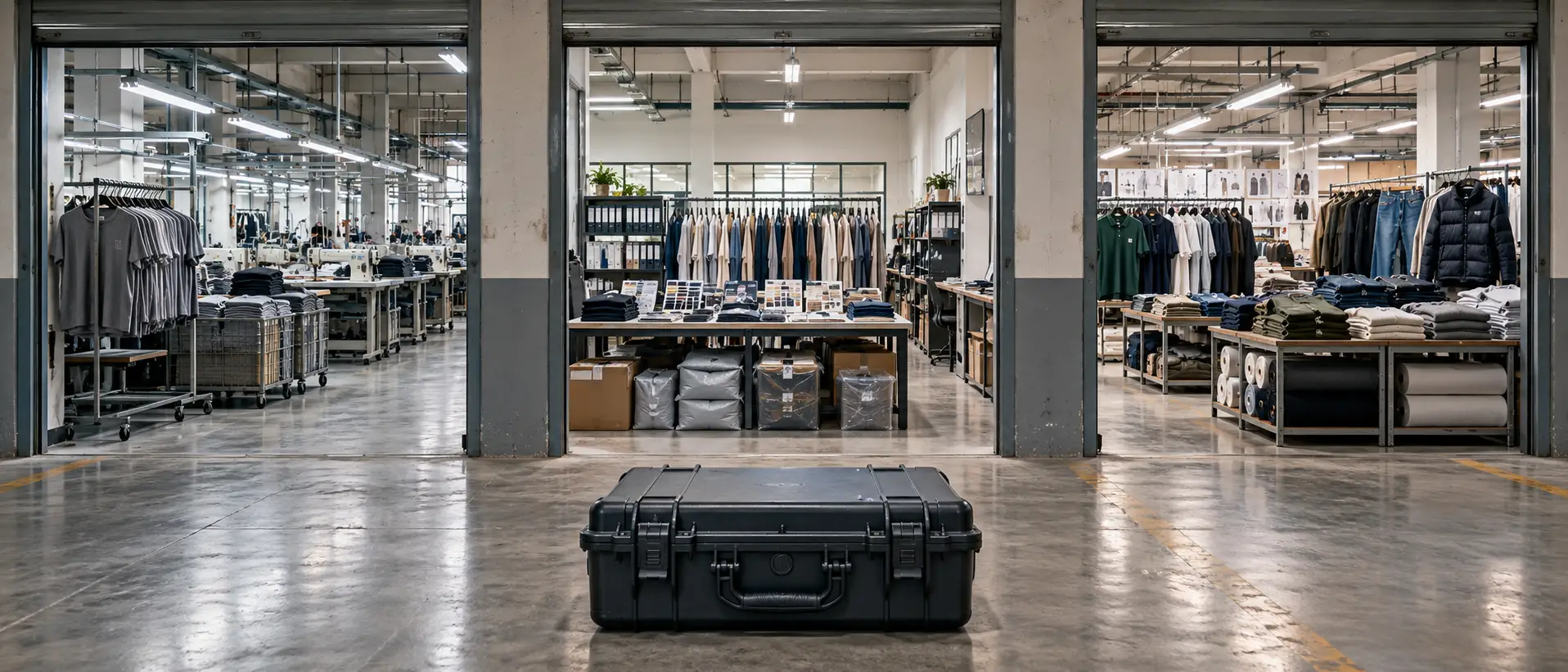
Model selection checklist (12–15 verification points)
Use this checklist to evaluate either an apparel buying house, a direct clothing manufacturer, or a single manufacturing partner:
- Who owns QC decision-making and who signs off shipment release?
- Who owns production planning and capacity booking?
- What is the weekly reporting format (output, WIP, risks)?
- What agreed response-time target or service-level expectation applies to approvals and critical issues?
- How are corrective actions handled and closed?
- What documentation is stored and how is it shared?
- How is subcontracting controlled and disclosed?
- If multiple factories are used, how is factory selection decided?
- Who owns compliance follow-up and audit documentation tracking?
- What happens when a timeline slips: escalation ladder and decision rights?
- How are material approvals controlled (lab dips, shade bands)?
- How are quote assumptions normalized across suppliers?
- What is the process for change control (spec changes mid-development)?
| Verification Item | Why It Matters | Proof to Request | Red Flag |
|---|---|---|---|
| QC ownership | Prevents unclear release decisions | QC responsibility map / inspection process | Nobody can identify final decision owner |
| Production planning | Shows whether delivery is actually planned | Production timeline / capacity evidence | Only verbal assurances |
| Factory disclosure | Confirms where production occurs | Manufacturing facility details | Factory identity remains unclear |
| Subcontracting control | Prevents unauthorized production transfer | Subcontracting policy / approval process | “We outsource when needed” with no controls |
| Reporting | Creates visibility during bulk | Example weekly production report | Updates only when buyer asks |
| Corrective action | Shows whether recurring problems are controlled | CAPA / closure example | Repeated defect with no root-cause record |
| Compliance coordination | Confirms facility-specific requirements are tracked | Audit scope / validity / corrective-action status | Documents do not match production facility |
| Approval control | Prevents conflicting versions | Approval tracker / signed comments | Approvals handled mainly through informal messages |
| Change control | Protects against specification drift | Revision log / change approval method | Production changes without documented approval |
This is the section that turns buying house vs clothing manufacturer into a defensible decision.
FAQs
Is an apparel buying house the same as a garment sourcing agent?
Often yes in function, but scope can vary. A buying house may provide broader production coordination and QC follow-up, while a sourcing agent may focus more on supplier discovery and negotiation. Always clarify scope and accountability.
Is factory direct sourcing always cheaper?
Factory-direct sourcing may reduce intermediary costs in some cases, but the lowest quoted unit price does not automatically mean the lowest total sourcing cost. Buyers should also consider internal management time, inspections, development work, rework, delays, and supplier-management requirements.
How does a single manufacturing partner manage multiple factories without hiding risk?
A credible partner increases transparency through standardized reporting, factory disclosure, documented controls, and clear escalation rules. If disclosure is vague, treat it as risk.
Which sourcing model may suit a private-label apparel brand?
Direct factory sourcing can work well when the buyer has strong internal production-management capability and a stable product category. A buying house can be useful when local sourcing and coordination support are needed. A single manufacturing partner may fit buyers that need multi-category capability and one coordinated production-management structure.
How does vendor risk management work in apparel supply chains?
It works through evidence: documentation, testing, QC records, subcontracting controls, and corrective action closure. Risk management fails when ownership is unclear or proof is missing.
What should be in the contract to enforce accountability?
Scope of responsibility, reporting cadence, response-time SLAs, approval ownership, subcontracting disclosure rules, QC authority, and escalation steps. These terms reduce ambiguity when problems happen.
Summary: the real lesson in buying house vs clothing manufacturer
Direct Answer
There is no universally superior model in buying house vs clothing manufacturer. The right structure depends on the buyer’s internal capability, product range, sourcing market, need for factory access, and level of production-control support. Buying houses provide sourcing and coordination functions, direct manufacturers provide production capability, and a single manufacturing partner model can provide one coordinated management layer across multiple specialized factories.
Ready to Evaluate a Supplier or Manufacturing Partner?
Before moving to sampling or production, verify the supplier’s real capacity, quality system, communication discipline, documentation, and risk controls using the same evidence-based process.
Connect with RYZEAL SOURCING
 English
  Chinese
  French
  Dutch
Dutch  Japanese