
Pre Production Meeting Checklist: What Must Be Locked Before Bulk Starts

Many bulk-production problems begin before the sewing line, when important specifications, approvals, material decisions, quality controls, or production responsibilities are still open. Sampling may look acceptable, costing may be approved, and the PO may already be issued, but unresolved decisions can still create rework, delays, and disputes once production starts. A pre production meeting (PPM) is an important readiness gate used to reduce that risk. It brings the buyer, supplier, and relevant production teams together to confirm the current specification, BOM, materials, approvals, quality plan, production schedule, responsibilities, and open risks. This pre production meeting checklist provides a repeatable system for deciding whether the order is ready for bulk production. […]
How to Write an RFQ to a Clothing Manufacturer That Gets Accurate Quotes
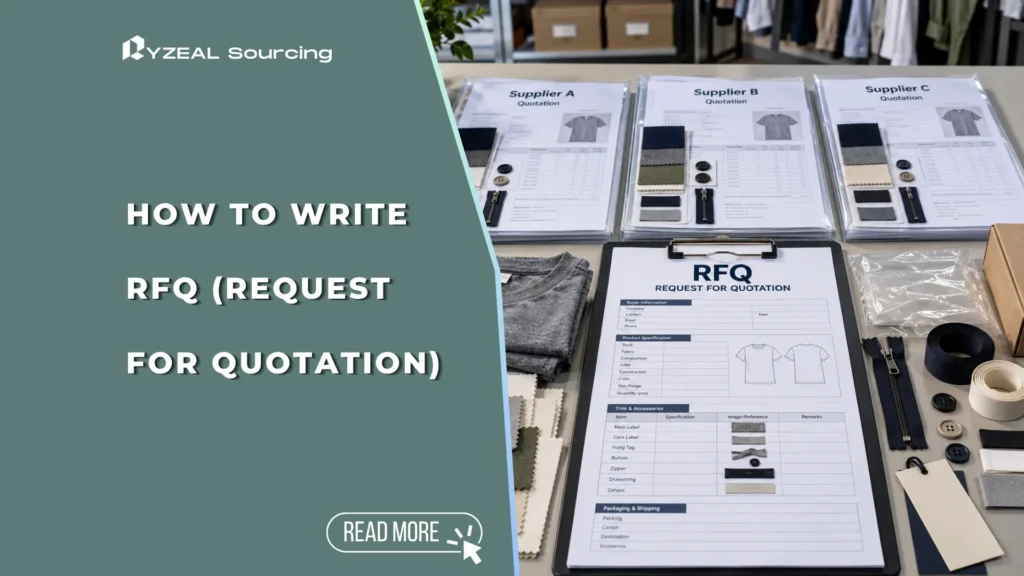
Many inaccurate or difficult-to-compare quotations begin with an unclear RFQ. When product details, BOM items, packaging requirements, testing expectations, or commercial assumptions are missing, suppliers have to make assumptions to prepare a price. Those assumptions can later lead to re-quotes, delays, or disagreements. This guide shows how to write an RFQ to a clothing manufacturer so quotations are based on a clearer and more comparable scope. The goal is not to create the longest possible document. It is to define the commercial and technical scope clearly enough for suppliers to understand what they are pricing. A structured RFQ can reduce clarification loops and help buyers compare quotations using more consistent […]
How to Start Production With a Clothing Manufacturer: RFQ Clothing Manufacturer Onboarding System
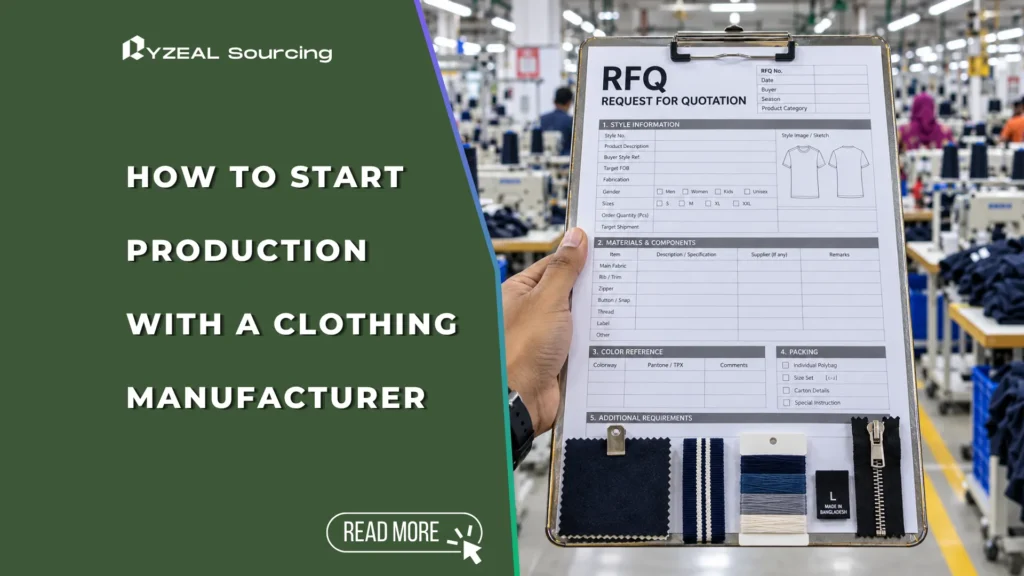
Many bulk-production problems begin before the sewing line, when a supplier is selected but execution starts with unclear scope, vague assumptions, or unmanaged approvals. A disciplined RFQ clothing manufacturer onboarding system reduces that risk by locking inputs, responsibilities, timelines, and proof requirements before production begins. This hub is the operating playbook for moving from “shortlisted supplier” to “safe-to-start bulk.” It is designed to eliminate quote confusion, approval drift, PO disputes, and timeline collapse by turning RFQ and onboarding into a control framework. If you are still selecting suppliers, start with our complete guide to how to find a clothing manufacturer in Bangladesh. Before moving into RFQ and onboarding, the shortlisted […]
Buying House vs Clothing Manufacturer: The Single Manufacturing Partner Model Explained
Sourcing teams lose time and money when they pick the wrong operating model. Most problems are not “factory problems.” They are accountability problems: who owns QC, who owns planning, who owns approvals, and who carries risk when things go wrong. This is why buying house vs clothing manufacturer is not a basic comparison. It is a governance decision. This guide explains three models buyers commonly use: (1) apparel buying house / garment sourcing agent model, (2) direct clothing manufacturer model, and (3) the single manufacturing partner model. If you understand buying house vs clothing manufacturer correctly, you can design a sourcing setup that matches your team size, product complexity, and […]
Questions to Ask a Clothing Manufacturer Before Sampling: MOQ, Lead Time, Testing, Compliance
Sampling is where many sourcing projects start, but it should not be where clarity starts. If you skip the right questions, you get predictable outcomes: wrong MOQ assumptions, lead time surprises, mismatched fabric in bulk, and compliance issues discovered too late. This guide is a practical set of questions to ask a clothing manufacturer before you spend money or time on samples. The goal is not to interrogate suppliers. The goal is to force alignment and proof early, so your sample becomes a controlled test, not an expensive guessing game. These questions to ask a clothing manufacturer are designed to lock down MOQ, lead time, testing expectations, and compliance transparency […]
Clothing Manufacturer Vetting Checklist: Capacity, Quality Systems, Communication, Red Flags
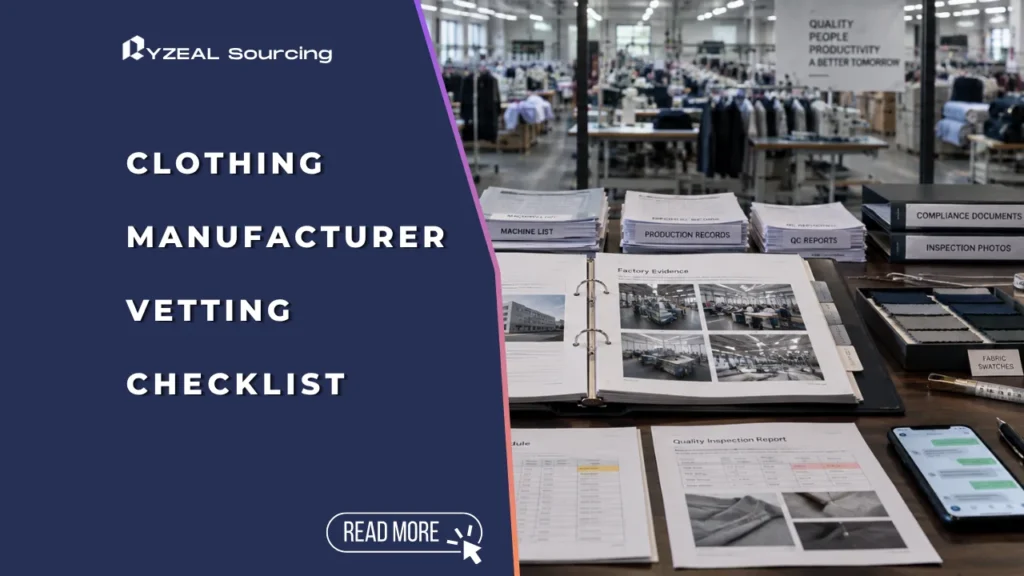
If you want predictable bulk outcomes, you need a proof-based screening process, not a “nice factory” impression. This clothing manufacturer vetting checklist is designed to help you verify four things fast: capacity reality, quality system discipline, communication control, and red-flag risk. A supplier can look strong on paper and still fail in bulk because their planning is weak, their QA is informal, their response time is slow, or their subcontracting is uncontrolled. This clothing manufacturer vetting checklist forces evidence: documents, records, timestamps, photos, reports, and named owners. Use this clothing manufacturer vetting checklist before you spend on sampling. Sampling proves a product can be made once. Vetting proves the supplier […]
Garments Buying House in Bangladesh: Top 10 Buying Houses & Sourcing Companies

Bangladesh is one of the world’s largest apparel-production bases, but finding a factory is only one part of building a reliable supply chain. International brands, retailers, importers, wholesalers, and private-label businesses also need product development, supplier selection, costing, approvals, production follow-up, quality control, compliance support, and shipment coordination. This is where a garments buying house in Bangladesh can become valuable. Depending on the company and its business model, buyers may also hear terms such as buying house, buying office, sourcing agent, sourcing agency, sourcing company, garment sourcing agent, sourcing partner, procurement partner, intermediary, or even middleman. These terms overlap, but they do not always describe the same level of responsibility. […]
Clothing Manufacturer Vetting and Due Diligence: How to Evaluate a Clothing Manufacturer
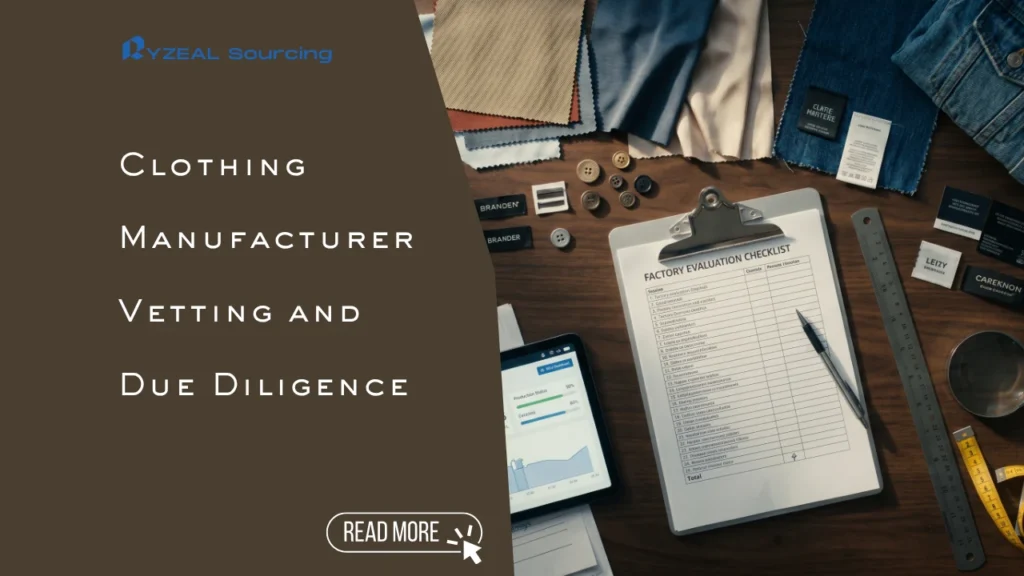
If you treat supplier selection like shopping, you will pay for it in production. Clothing manufacturer vetting is the discipline that stops “good sample, bad bulk,” unrealistic lead times, and hidden subcontracting before they become costly surprises. This guide is built for brand owners, sourcing managers, merchandisers, and ops leads who need a repeatable way to evaluate a factory using evidence, not opinions. Done properly, clothing manufacturer vetting can reduce supplier risk, improve quote accuracy, and lower the likelihood of avoidable production and delivery problems. By the end, you will have a structured workflow, a supplier scoring model, an evidence pack checklist, and a production readiness gate you can reuse […]
How to Find a Clothing Manufacturer in Bangladesh: Vetting, Sampling, Pricing, and Production Control
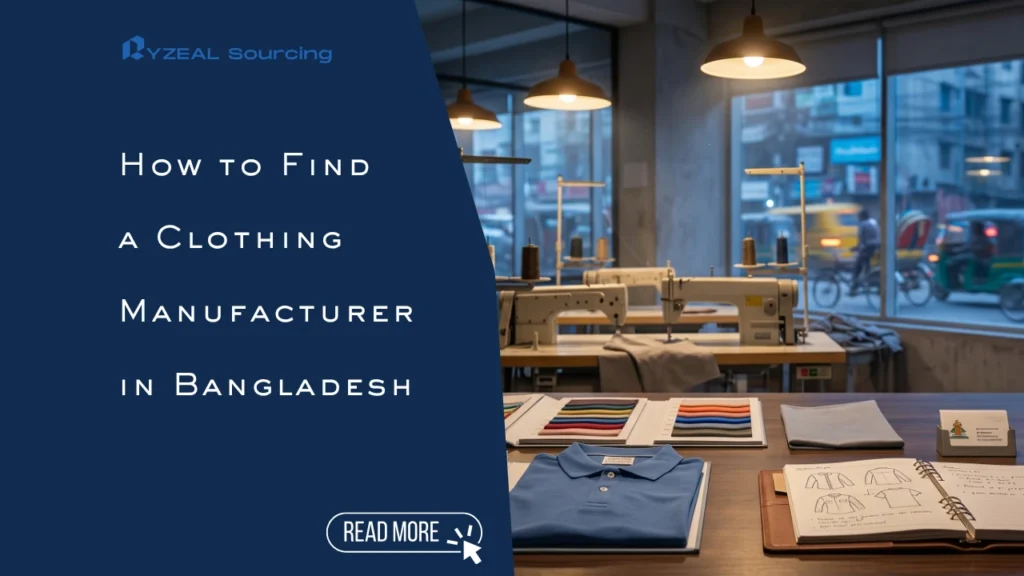
If you are trying to understand how to find a clothing manufacturer, the real answer is not only “search on Google” or “contact factories.” The safer method is to follow a controlled process: define your product, shortlist the right suppliers, verify their capability, send a clear RFQ, manage sampling, compare quotes correctly, and lock production controls before bulk starts. This is especially important in Bangladesh, where the apparel supply chain is strong, but buyer results depend heavily on product clarity, MOQ reality, factory fit, and approval discipline. Many startups and small fashion brands begin by asking how to find a clothing manufacturer after they already have designs, references, or a […]
 English
 Chinese
 French
 Dutch
 Japanese