Click and Jump On The Desired Topic
- Customization Options for kids’ Denim Jeans
- Denim Jeans Manufacturing Process & Workflow
- Frequently Asked Questions for kids’ Denim Jeans
- Denim Jeans Design Collections
- Request for Denim Jeans Quotation
- About RYZEAL SOURCING
- 我们的服务
- Why Choose Us
- Certifications & Compliance Standard
- Frequently Asked Questions About RYZEAL
- Talk Directly With Our Manufacturing Expert Team
- Google Map Location
- Denim Jeans Sourcing Knowledge (Articles)
Denim Jeans Manufacturer For Kids With Custom Fits And Washes
Children’s denim jeans can be developed for school, everyday dressing, streetwear, winter collections, fashion ranges, and coordinated kidswear programs. As a Bangladesh-based Denim Jeans Manufacturer For Kids, RYZEAL SOURCING supports brands, retailers, wholesalers, and startups with custom development from the first design concept through bulk production and shipment.
Buyers can customize the fit, rise, waistband, pockets, denim weight, stretch level, wash, distressing, color, embroidery, trims, sizing, and packaging. Whether the collection requires classic straight jeans, kids baggy jeans, bootcut styles, lined winter denim, wide-leg silhouettes, or fashion-led distressed products, RYZEAL coordinates sampling, washing, quality control, and export preparation around the approved specification.
Customization Options For Children’s Denim Jeans
Children’s jeans must combine the visual character of denim with proportions and construction suitable for growing, active wearers. A rigid fashion jean, stretch skinny style, relaxed school product, and fleece-lined winter design may all use denim, but they require different patterns, fabric weights, waist systems, seams, washes, and finishing methods.
RYZEAL organizes denim customization through six connected areas. Product styling establishes the silhouette, rise, leg shape, length, waistband, pockets, yoke, seams, and fashion details. Measurement and sizing determine how waist, hip, rise, inseam, thigh, knee, and leg opening should develop across the chosen age range.
Fabric selection controls weight, strength, stretch, recovery, surface appearance, wash response, and comfort. Print and embroidery introduce logos, pocket artwork, motifs, patches, and decorative identity. Trims and accessories complete the jeans through tack buttons, zippers, rivets, adjustable elastic, labels, patches, thread, and branded hardware. Finishing and packaging then manage washing, fading, softness, pressing, measurement stability, garment presentation, and shipment protection.
Buyers may select from an available jeans reference, combine compatible construction details, or submit a complete tech pack. Each request is reviewed according to fit, child suitability, fabric behavior, wash feasibility, trim security, MOQ, target cost, testing requirements, and delivery timing.
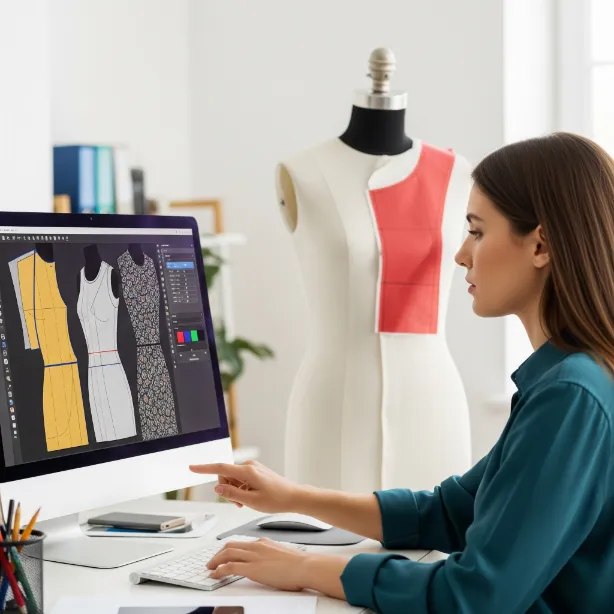
1. Denim Jeans Style Options
2. Measurement & Size
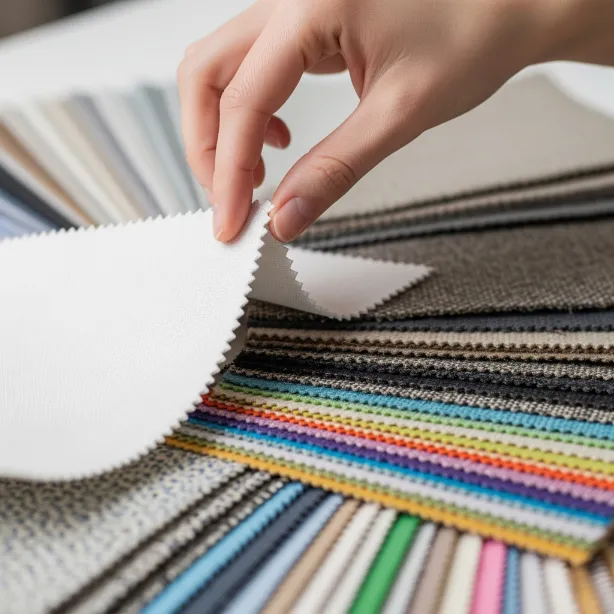
3. Denim Jeans Fabric Options
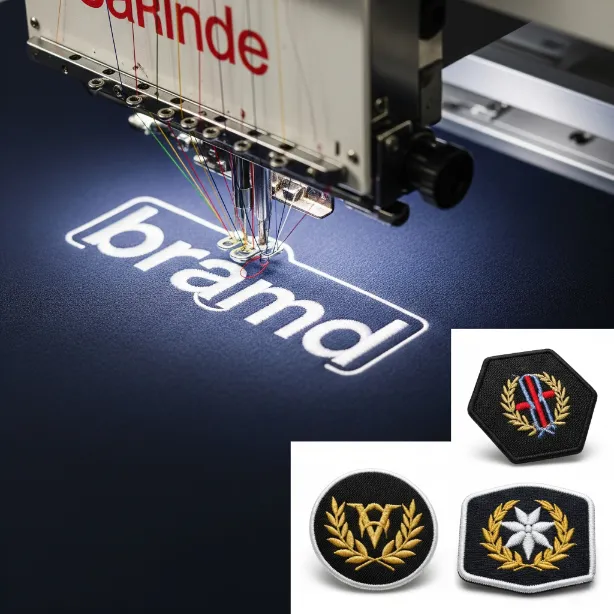
4. Print & Embroidery
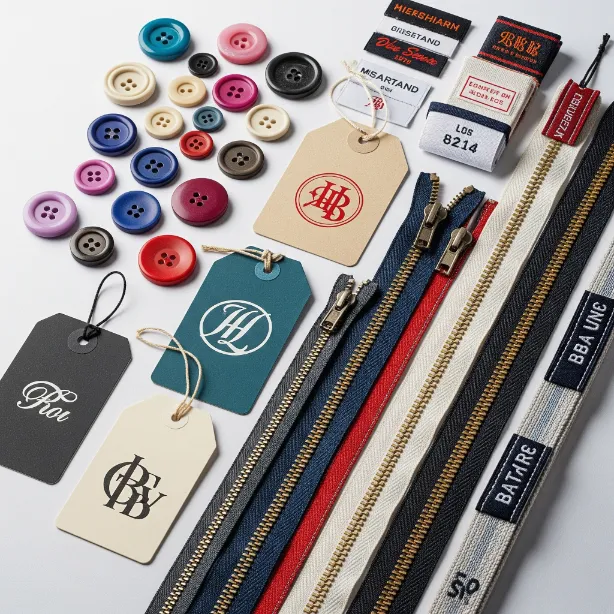
5. Trims & Accessories
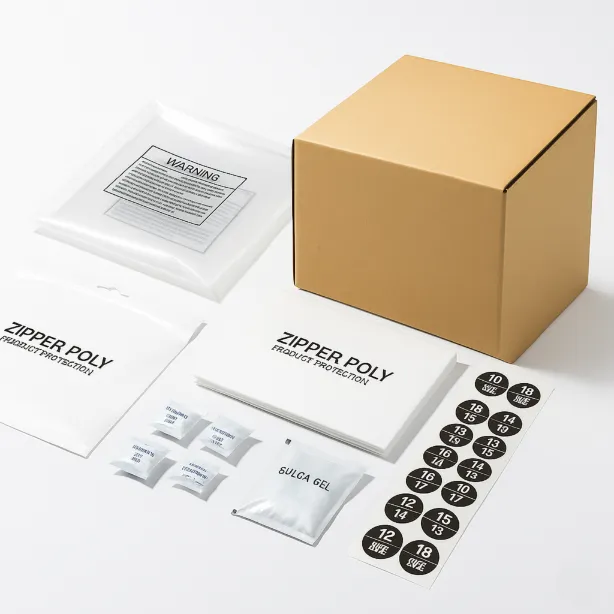
6. Packaging & Finishing
Explore Your Denim Jeans Production Options. Click each button to review customization choices and technical guidance before moving to sampling or quotation.
1. Types And Styles Of Kids’ Denim Jeans Manufactured By RYZEAL
RYZEAL can develop classic straight-leg jeans, slim fits, skinny jeans, relaxed fits, tapered jeans, bootcut styles, flares, wide-leg jeans, carpenter designs, cargo-denim pants, pull-on jeans, jogger jeans, and fashion-led stacked silhouettes.
Kids baggy jeans provide extra room through the hip, thigh, and leg, while wide-leg designs maintain a broader shape from the upper leg to the hem. Children’s bootcut jeans fit more closely through the thigh before opening below the knee. Flare jeans create a stronger lower-leg shape, while skinny styles require stretch denim and carefully controlled recovery.
Stacked jeans use additional leg length to create folds above the footwear. For children, the length must be managed carefully so the garment creates the intended appearance without becoming a tripping risk. Distressed and kids ripped jeans may include grinding, abrasion, whiskers, repaired holes, patching, or frayed hems, subject to age suitability and wash durability.
Cold-weather ranges can include children’s lined jeans using flannel, jersey, fleece, or another approved inner layer. Girls’ and unisex collections may also feature paper-bag waists, colored denim, decorative pockets, wide legs, or purple washes. The visual collection below provides starting references that can be adapted to the buyer’s market and brand identity.
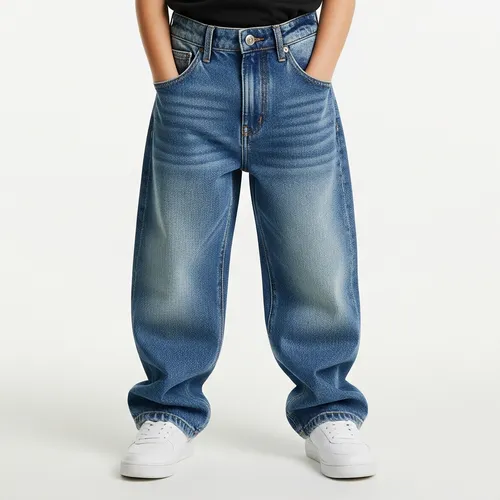
Baggy Jeans
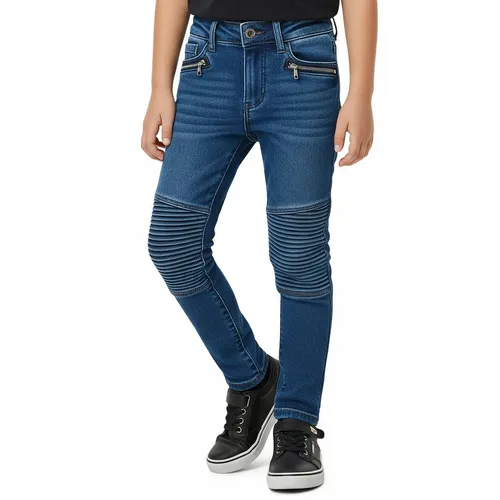
Biker Jeans
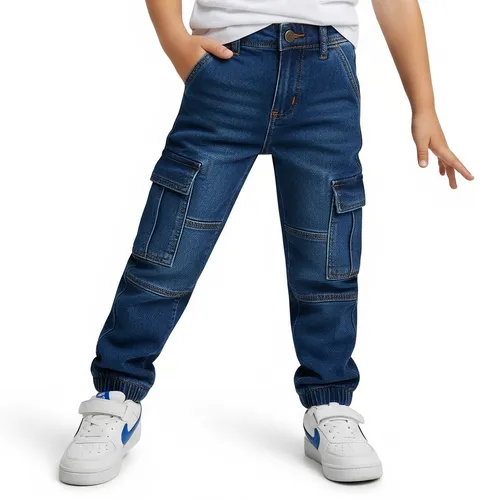
Cargo Jeans
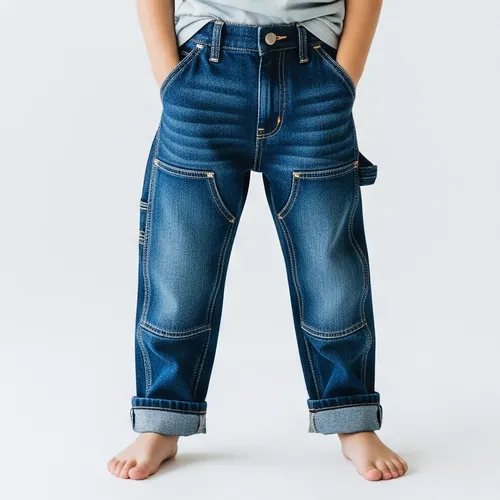
Carpenter Jeans
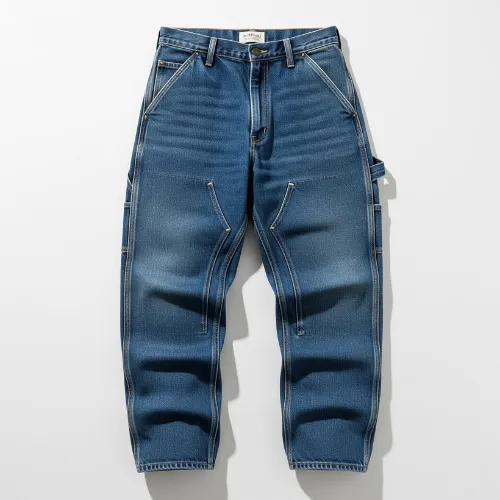
Painter Jeans
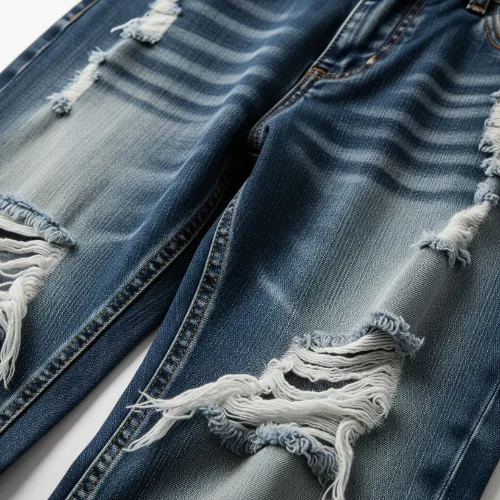
Distressed Jeans
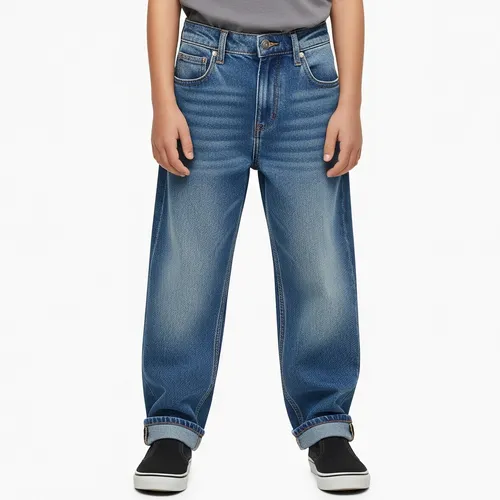
Relaxed Fit Jeans
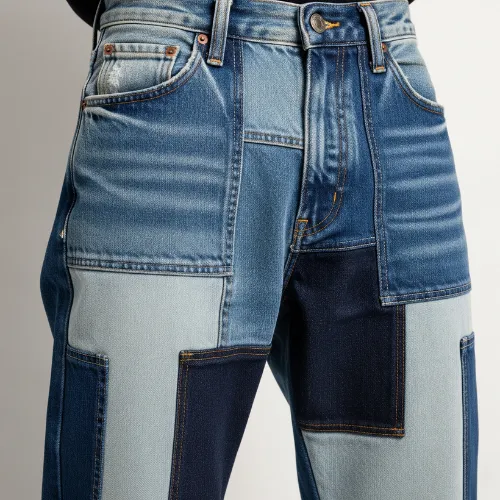
Patchwork Jeans
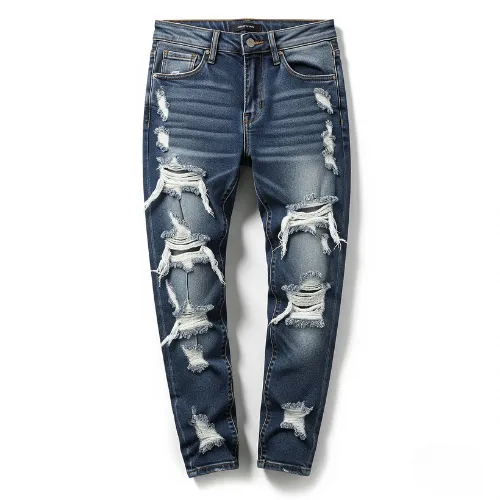
Ripped Jeans
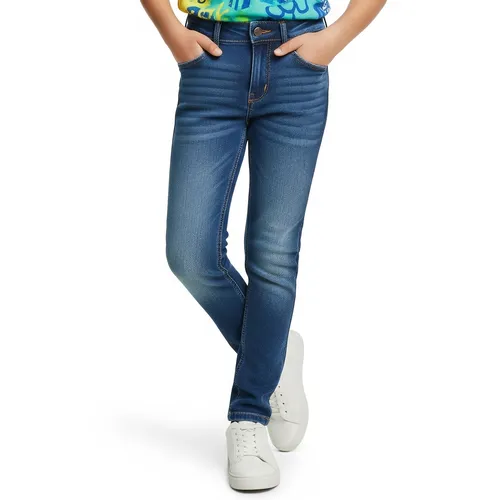
Slim Fit Jeans
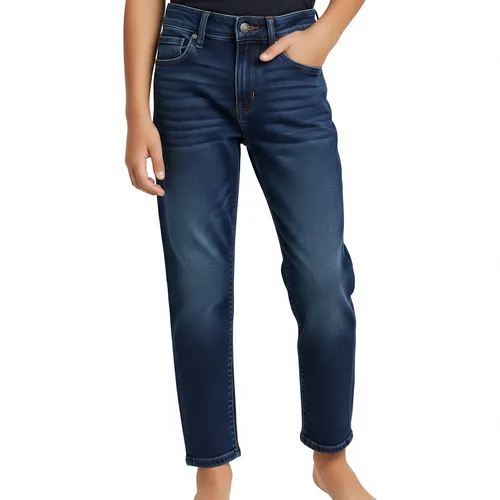
Tapered Jeans
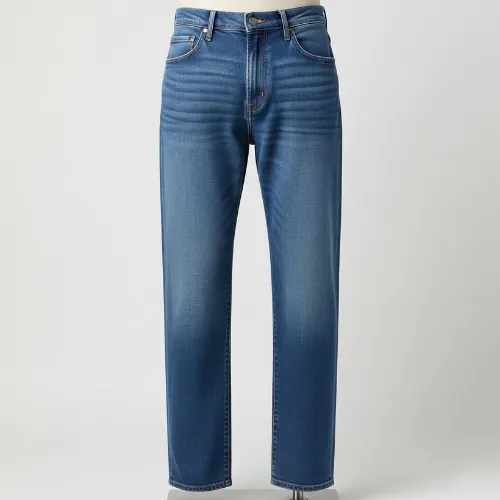
Straight Fit Jeans
2. Measurement Process And Size Options For Kids’ Jeans
A successful pair of children’s jeans must provide enough room for sitting, walking, running, and everyday movement while maintaining the intended denim silhouette. Fit is influenced by the waistband structure, rise, hip ease, thigh shape, knee position, inseam, and leg opening.
This section introduces the measuring method and regional sizing references for the USA, Europe, and Asia. Standard points include waistband, hip, front rise, back rise, thigh, knee, inseam, outseam, and leg opening. Style-specific measurements may be added for adjustable waists, stacked lengths, bootcut openings, cargo pockets, knee panels, turn-ups, or lining.
The regional tables provide development references rather than universal standards. Final jeans measurements must follow the buyer’s customer profile, approved fit sample, tech pack, pattern, grading rules, wash shrinkage, and tolerance sheet.
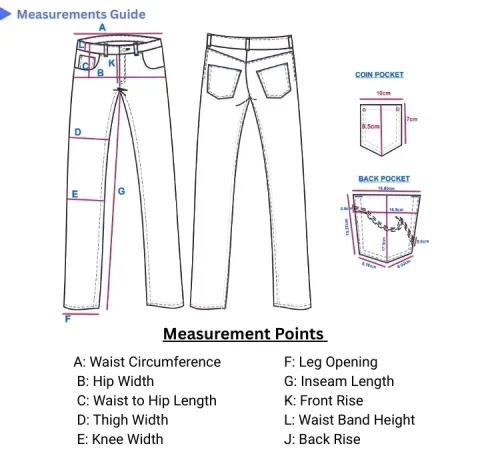
Measurement Process Of Kids’ Denim Jeans
Children’s jeans should be measured flat with the waistband aligned, fly closed, pockets arranged naturally, and the legs placed without stretching or twisting. Adjustable inner elastic should be released to the agreed base position before the waist is measured.
The half-waist measurement is taken straight across the top waistband. Hip width is measured across a defined point below the waistband. Front rise runs from the top of the front waistband to the crotch seam, while back rise follows the corresponding rear seam.
The inseam begins at the crotch point and follows the inner seam to the bottom leg opening. The outseam runs from the top waistband to the hem along the outer side. Thigh width is measured below the crotch, and the leg opening is recorded straight across the bottom hem.
Bootcut, flare, wide-leg, and skinny jeans may also require knee width to control the silhouette. Stacked jeans need an approved additional length and footwear reference. Lined products require checks for both the outer denim and inner fabric so the layers do not twist, shrink differently, or restrict movement.
RYZEAL verifies these points against the pattern and approved sample before bulk grading and cutting.
Size Options For Kids’ Denim Jeans
Children’s jeans may use age labels, numeric sizes, body-height sizes, or brand-specific size codes. A USA size 7/8, EU size 128, and Asian size 130 may target comparable height groups, but the waistband, hip, rise, and leg proportions can still differ.
RYZEAL provides three regional reference charts for early development. The USA chart uses toddler and numeric sizing, while the European and Asian versions follow height-led commercial systems. Measurements are shown in centimetres and inches.
The supplied charts are based on regular-fit, mid-rise, straight-leg, five-pocket jeans with a fixed waistband and optional adjustable inner elastic. They should not be applied unchanged to every design. Kids skinny jeans need closer thigh and opening measurements, while baggy and wide-leg jeans require greater ease. Bootcut and flare styles need separately controlled knee and hem widths.
Lined winter jeans may require extra ease for the inner layer. Stacked jeans need additional inseam length, and pull-on styles use different waistband measurements. Final dimensions should always be confirmed through the buyer-approved sample, wash test, grading review, and tolerance chart.
| USA Size | Suggested Body Height (cm) | Garment Measurements (cm) | Garment Measurements (in) | ||||||||||||
|---|---|---|---|---|---|---|---|---|---|---|---|---|---|---|---|
| Outseam | 1/2 Waistband | 1/2 Hip | Front Rise | Inseam | 1/2 Thigh | 1/2 Leg Opening | Outseam | 1/2 Waistband | 1/2 Hip | Front Rise | Inseam | 1/2 Thigh | 1/2 Leg Opening | ||
| 2T | 86–92 | 52 | 24 | 31.5 | 19.5 | 34 | 19.5 | 13 | 20.47 | 9.45 | 12.40 | 7.68 | 13.39 | 7.68 | 5.12 |
| 3T | 92–98 | 56.5 | 25 | 33 | 20.5 | 38 | 20.5 | 13.5 | 22.24 | 9.84 | 12.99 | 8.07 | 14.96 | 8.07 | 5.31 |
| 4T | 98–104 | 61 | 26 | 34.5 | 21.5 | 42 | 21.5 | 14 | 24.02 | 10.24 | 13.58 | 8.46 | 16.54 | 8.46 | 5.51 |
| 5/6 | 104–116 | 68.5 | 27.5 | 37 | 23 | 49 | 23 | 14.5 | 26.97 | 10.83 | 14.57 | 9.06 | 19.29 | 9.06 | 5.71 |
| 7/8 | 116–128 | 76 | 29 | 39.5 | 24.5 | 56 | 24.5 | 15 | 29.92 | 11.42 | 15.55 | 9.65 | 22.05 | 9.65 | 5.91 |
| 10 | 128–140 | 83.5 | 30.5 | 42 | 26 | 63 | 26 | 15.5 | 32.87 | 12.01 | 16.54 | 10.24 | 24.80 | 10.24 | 6.10 |
| 12 | 140–152 | 91 | 32.5 | 45 | 27.5 | 70 | 27.5 | 16 | 35.83 | 12.80 | 17.72 | 10.83 | 27.56 | 10.83 | 6.30 |
NOTE: This USA chart is a development reference for regular straight-leg jeans and is not a universal retail standard.
| EU Size | Suggested Body Height (cm) | Garment Measurements (cm) | Garment Measurements (in) | ||||||||||||
|---|---|---|---|---|---|---|---|---|---|---|---|---|---|---|---|
| Outseam | 1/2 Waistband | 1/2 Hip | Front Rise | Inseam | 1/2 Thigh | 1/2 Leg Opening | Outseam | 1/2 Waistband | 1/2 Hip | Front Rise | Inseam | 1/2 Thigh | 1/2 Leg Opening | ||
| 92 | 86–92 | 51 | 23.5 | 31 | 19 | 33.5 | 19 | 12.5 | 20.08 | 9.25 | 12.20 | 7.48 | 13.19 | 7.48 | 4.92 |
| 98 | 92–98 | 55.5 | 24.5 | 32.5 | 20 | 37.5 | 20 | 13 | 21.85 | 9.65 | 12.80 | 7.87 | 14.76 | 7.87 | 5.12 |
| 104 | 98–104 | 60 | 25.5 | 34 | 21 | 41.5 | 21 | 13.5 | 23.62 | 10.04 | 13.39 | 8.27 | 16.34 | 8.27 | 5.31 |
| 116 | 104–116 | 67.5 | 27 | 36.5 | 22.5 | 48.5 | 22.5 | 14 | 26.57 | 10.63 | 14.37 | 8.86 | 19.09 | 8.86 | 5.51 |
| 128 | 116–128 | 75 | 28.5 | 39 | 24 | 55.5 | 24 | 14.5 | 29.53 | 11.22 | 15.35 | 9.45 | 21.85 | 9.45 | 5.71 |
| 140 | 128–140 | 82.5 | 30 | 41.5 | 25.5 | 62.5 | 25.5 | 15 | 32.48 | 11.81 | 16.34 | 10.04 | 24.61 | 10.04 | 5.91 |
| 152 | 140–152 | 90 | 32 | 44.5 | 27 | 69.5 | 27 | 15.5 | 35.43 | 12.60 | 17.52 | 10.63 | 27.36 | 10.63 | 6.10 |
NOTE: This European chart uses height-led sizing and should be adjusted according to the buyer’s own fit and wash standards.
| Asia Size | Suggested Body Height (cm) | Garment Measurements (cm) | Garment Measurements (in) | ||||||||||||
|---|---|---|---|---|---|---|---|---|---|---|---|---|---|---|---|
| Outseam | 1/2 Waistband | 1/2 Hip | Front Rise | Inseam | 1/2 Thigh | 1/2 Leg Opening | Outseam | 1/2 Waistband | 1/2 Hip | Front Rise | Inseam | 1/2 Thigh | 1/2 Leg Opening | ||
| 90 | 84–90 | 50 | 23 | 30.5 | 18.5 | 32.5 | 18.5 | 12.5 | 19.69 | 9.06 | 12.01 | 7.28 | 12.80 | 7.28 | 4.92 |
| 100 | 90–100 | 54.5 | 24 | 32 | 19.5 | 36.5 | 19.5 | 13 | 21.46 | 9.45 | 12.60 | 7.68 | 14.37 | 7.68 | 5.12 |
| 110 | 100–110 | 59.5 | 25 | 33.5 | 20.5 | 41 | 20.5 | 13.5 | 23.43 | 9.84 | 13.19 | 8.07 | 16.14 | 8.07 | 5.31 |
| 120 | 110–120 | 66.5 | 26.5 | 36 | 22 | 47.5 | 22 | 14 | 26.18 | 10.43 | 14.17 | 8.66 | 18.70 | 8.66 | 5.51 |
| 130 | 120–130 | 74 | 28 | 38.5 | 23.5 | 54.5 | 23.5 | 14.5 | 29.13 | 11.02 | 15.16 | 9.25 | 21.46 | 9.25 | 5.71 |
| 140 | 130–140 | 81.5 | 29.5 | 41 | 25 | 61.5 | 25 | 15 | 32.09 | 11.61 | 16.14 | 9.84 | 24.21 | 9.84 | 5.91 |
| 150 | 140–150 | 89 | 31.5 | 44 | 26.5 | 68.5 | 26.5 | 15.5 | 35.04 | 12.40 | 17.32 | 10.43 | 26.97 | 10.43 | 6.10 |
NOTE: This Asian chart is a commercial development reference. Final measurements must follow the approved target-market specification and washed sample.
3. Fabric Customization Options For Kids’ Denim Jeans
Denim selection determines how the jeans feel before washing, how they respond to finishing, and how they perform during wear. Fibre content alone does not define the fabric. Weight, weave, yarn construction, stretch direction, recovery, shade, slub character, and finishing all influence the result.
RYZEAL divides denim development into three decisions. The first concerns the required performance, including durability, flexibility, recovery, warmth, or softness. The second is the denim construction and weight needed for the chosen silhouette. The third is the color and wash direction, which may involve traditional indigo, black denim, ecru, sulfur shades, garment-dyed colors, or custom effects.
These choices must be developed together. A rigid baggy jean needs different pattern ease from a stretch skinny style, while a heavily washed product may require additional shrinkage and strength allowances.
Performance-Driven Features For Comfort And Durability
Children’s denim should provide sufficient strength for regular movement while remaining appropriate for the wearer’s age and intended use. Everyday jeans benefit from controlled shrinkage, seam durability, rubbing fastness, secure pockets, and a waistband that remains comfortable during sitting and activity.
Stretch denim can improve movement in skinny, slim, bootcut, and fitted girls’ styles. However, stretch percentage alone is not enough; recovery must also be controlled so knees, hips, and waistbands do not become permanently loose.
Rigid denim is well suited to straight, baggy, wide-leg, carpenter, and vintage-inspired silhouettes. These jeans can be softened through approved washing, but excessive processing may reduce fabric strength. Lined winter jeans should be checked for layer compatibility, thermal comfort, and differential shrinkage.
Useful testing may include dimensional stability, colorfastness, rubbing fastness, tensile or tear strength, seam strength, stretch, recovery, and trim attachment. Specialized claims such as recycled content, organic cotton, water-saving washes, or harmful-substance testing should only be used when supported by the actual material, process, certification, and documentation.
OEKO-TEX STANDARD 100 evaluates textile articles and their components for harmful substances according to intended use, while GRS and RCS provide certification frameworks for recycled material claims and chain of custody. These routes must be confirmed for the specific order rather than assumed automatically.

Breathable

Light-weight

Soft Touch

Quick Dry

Wrinkle Free

Durable

Anti Odor

Stretchable
Eco-Friendly

UPF 50+

Moisture Wicking

Anti Shrink

Color Fast
Anti Piling
Denim Fabric Choices Tailored To Fit And Season
Rigid 100% cotton denim creates an authentic, structured character for straight, relaxed, baggy, carpenter, and wide-leg jeans. Comfort-stretch denim may include a small proportion of elastane to provide flexibility while preserving a traditional appearance.
Higher-stretch denim is more suitable for skinny, fitted, flare, or active fashion styles that need closer body movement. Cotton-polyester blends can improve dimensional stability and strength, while recycled-cotton or recycled-polyester blends may be developed when supported by suitable sourcing and documentation.
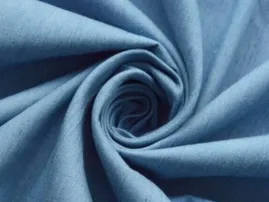
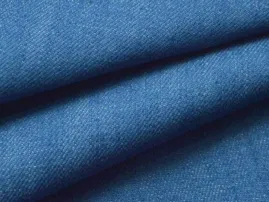
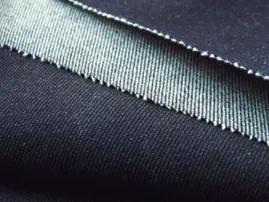
Lightweight denim suits younger children, summer products, pull-on jeans, and softer silhouettes. Midweight denim is commonly considered for classic five-pocket styles, while heavier qualities may be used selectively for structured fashion products. Final weight should be determined by the intended fit, season, wash, and age range rather than choosing the heaviest available option.
Other possibilities include chambray-look denim, colored denim, black denim, ecru denim, stretch twill with a denim appearance, fleece-backed denim, and bonded or lined constructions. The visual block below presents suitable material directions.
RYZEAL can review the target fit, wash, price, and season before recommending appropriate denim options for sampling.
#1 Lightweight Denim
#2 Mid Weight Denim
#3 Heavy Weight Denim
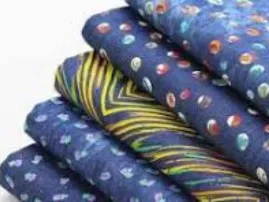
#4 Printed Denim
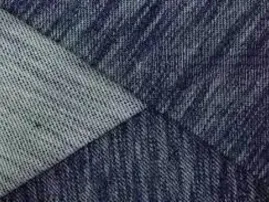
#5 Slub Denim
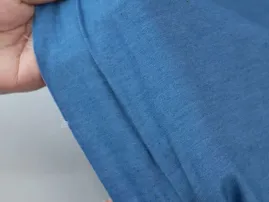
#6 Stretch Denim
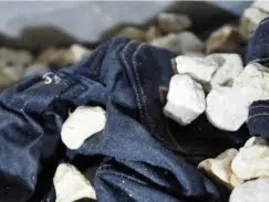
#7 Stone Wash Denim
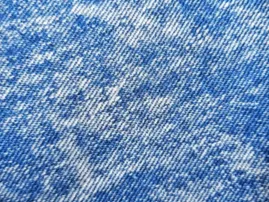
#8 Acid Wash Denim
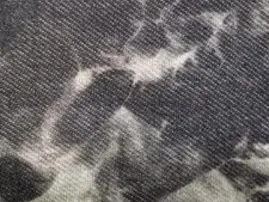
#9 Coated Denim
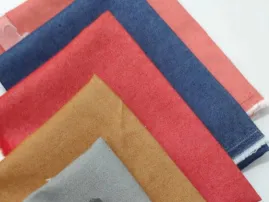
#10 Colored Denim
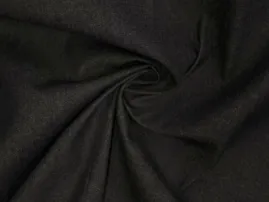
#11 Black Heavy Denim
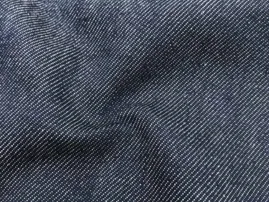
#12 Sanforized Denim
Denim Color And Wash Options For Kids’ Jeans
Traditional indigo can be developed from dark raw-looking shades through medium blue and light vintage washes. Black denim may remain deep and clean or be washed toward charcoal and grey. Ecru, white, brown, olive, burgundy, pink, and purple jeans for kids can be developed through colored denim or garment-dye routes.
RYZEAL offers more than 30 preset Pantone-referenced color directions for colored denim and supporting components. Traditional denim shades are normally approved through fabric swatches, wash panels, or shade bands rather than Pantone alone.
Available wash directions may include rinse wash, enzyme wash, stone effect, bleach effect, acid or marble character, vintage fade, tinting, over-dyeing, whiskering, hand scraping, laser effects, grinding, frayed hems, repaired distressing, and localized abrasion. The selected combination must suit the denim strength, garment design, age group, and intended appearance.
Dark indigo and black products need particular attention to rubbing and color transfer. Light or heavily distressed washes require strength review, while matching jackets, skirts, or coordinated denim pieces should be compared using physical wash standards.
The final bulk wash should be controlled against the buyer-approved sample or wash panel.



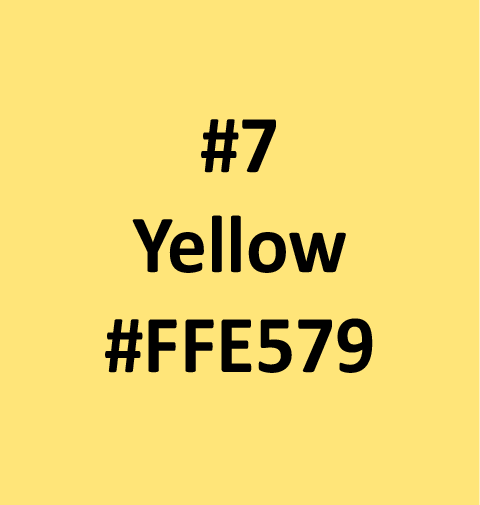


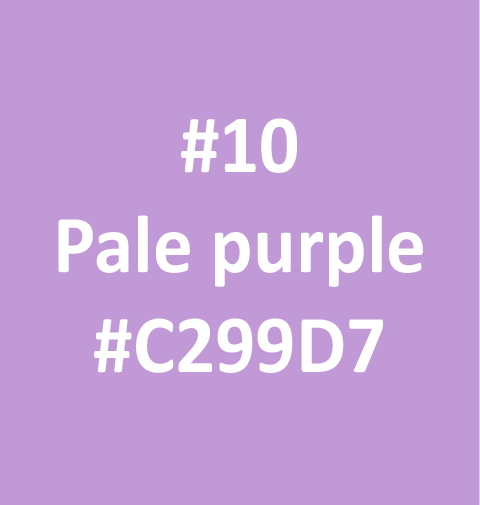


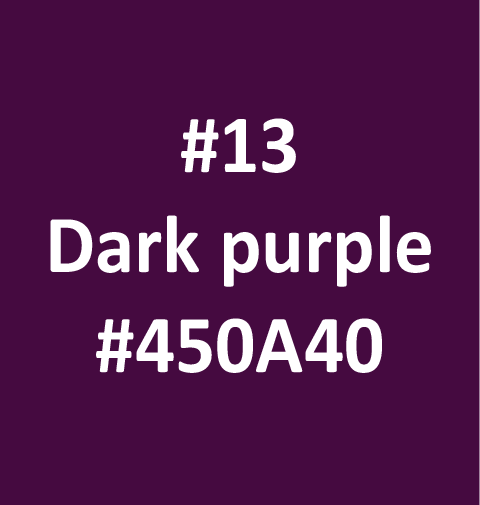
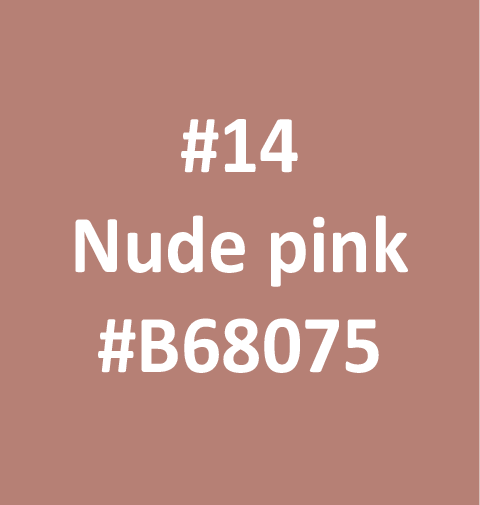
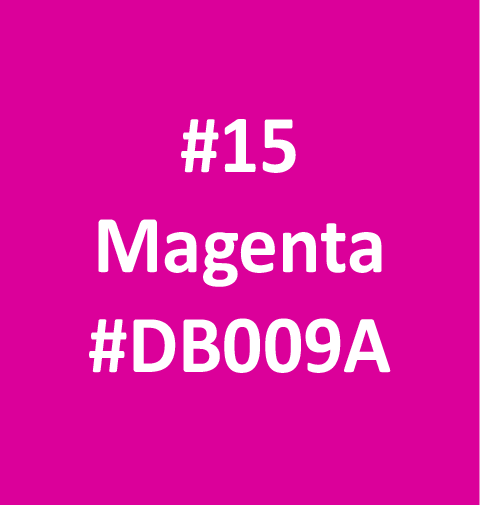

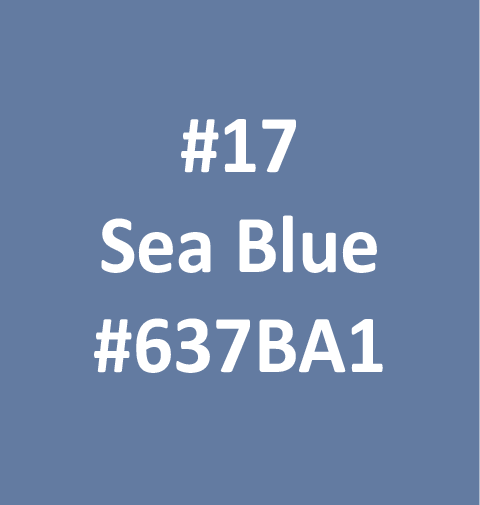
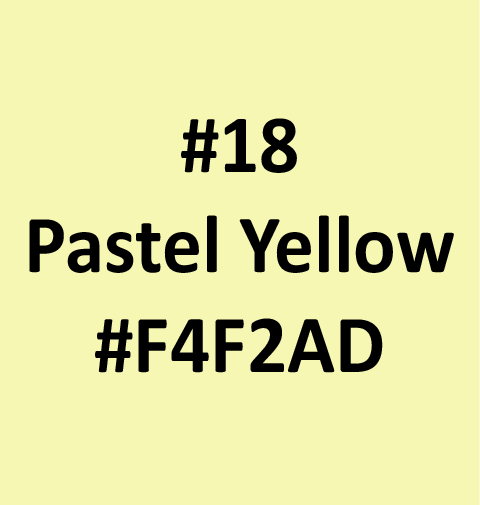

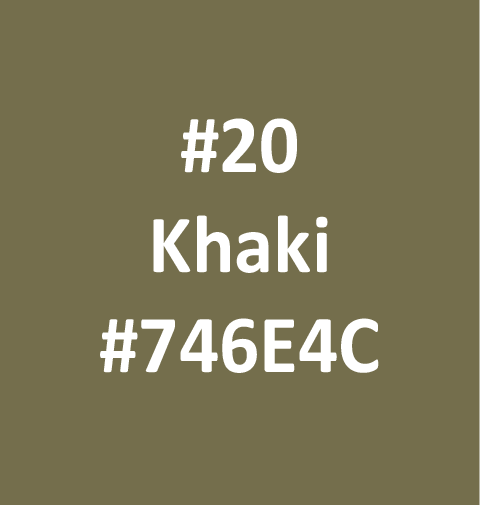


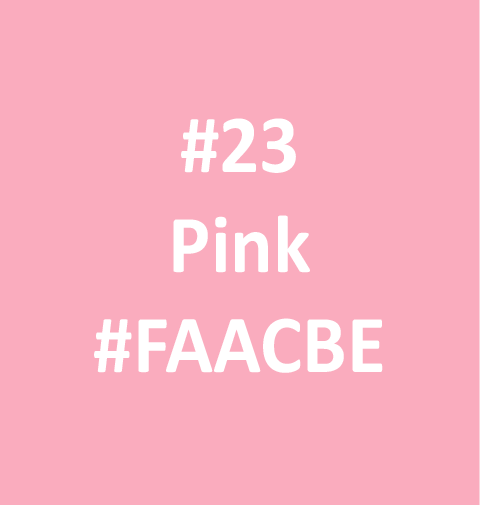
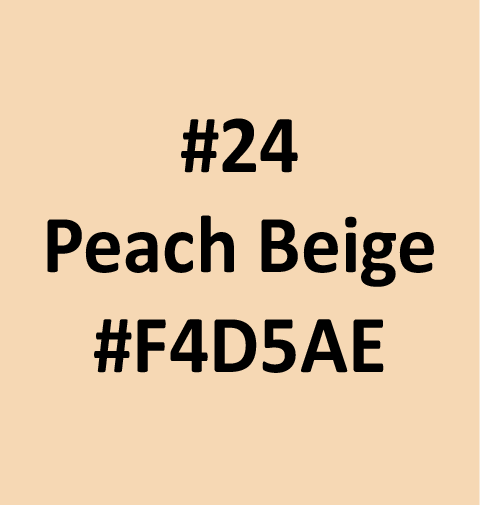

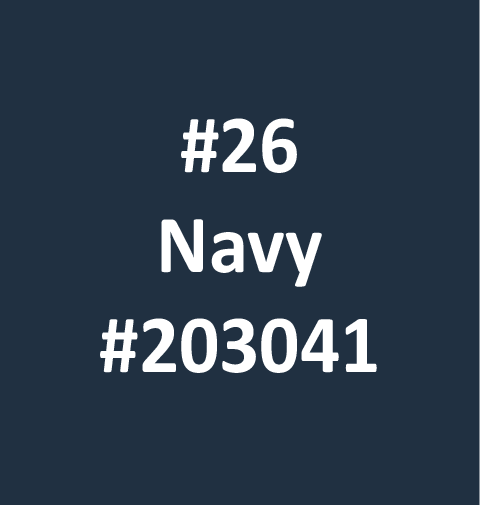
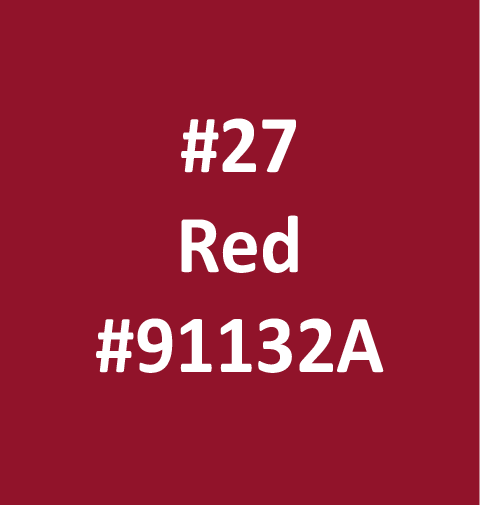


Need help selecting the right fabric combination for your kids Denim Jeans? Tell us your target market, use case, and price range. Performance finishes, knit structures, and Pantone color support available.
4. Print And Embroidery Customization Options For Kids’ Jeans
Denim provides a strong surface for logos, pocket artwork, patches, motifs, contrast details, and fashion treatments. Decoration can remain subtle through a small embroidered pocket mark or become more expressive through leg graphics, appliqué, prints, or embellished panels.
The chosen technique must work with the fabric weight, wash route, stretch level, and garment construction. Artwork applied before washing may fade or distress with the denim, while decoration added after washing can retain a cleaner appearance. This sequence should be decided during development.
Print, embroidery, and placement must also be reviewed for comfort. Thick decoration around the knee, inner thigh, waistband, or seat may affect movement and durability.
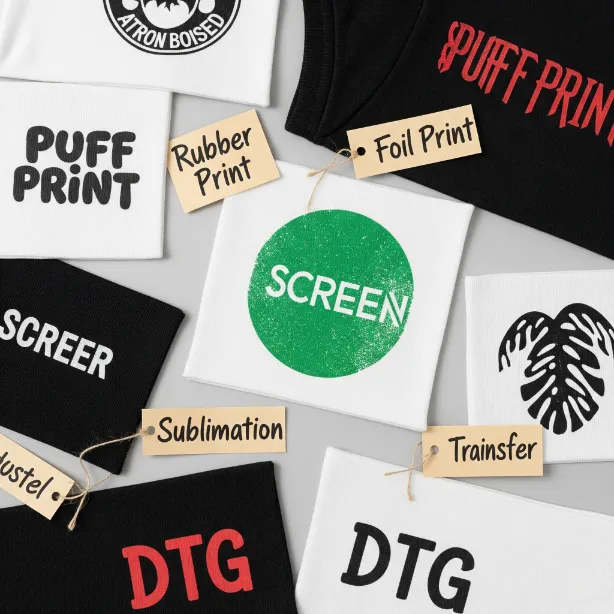
Explore Print Techniques For Denim Branding And Fashion Effects
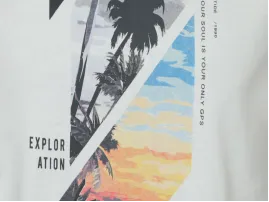
Screen printing can create logos, typography, illustrations, and limited-color artwork on denim. Pigment printing can produce vintage or washed effects, while digital textile printing may support detailed graphics on suitable prepared fabrics.
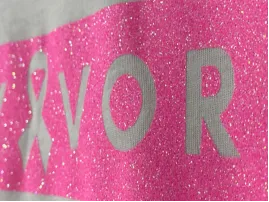
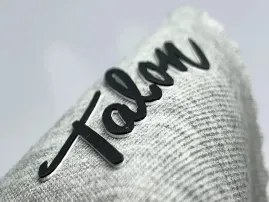
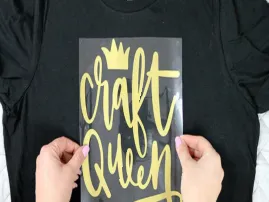
DTF and heat-transfer applications can be used for compact motifs when adhesion and washing performance are confirmed. Puff, rubber, silicone, flock, glitter, metallic, foil, reflective, and crack-effect prints may be considered for fashion-led collections.
Laser artwork can create faded motifs, whiskers, patterns, and localized surface effects without adding a printed layer. The final result depends on the denim shade, fibre blend, laser settings, wash process, and artwork.
Sublimation is generally unsuitable for traditional cotton-rich denim because it relies on compatible polyester content. It should not be selected simply because it works for other apparel categories.
The visual block below presents appropriate printing and surface-design options. RYZEAL can arrange sample panels, wash trials, or strike-offs so the buyer can review color, hand feel, fading, and durability before bulk approval.
#1 Glitter
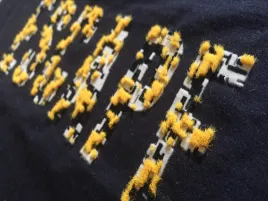
#2 Flock
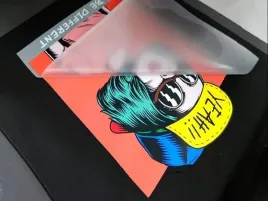
#3 DTF

#4 Applique
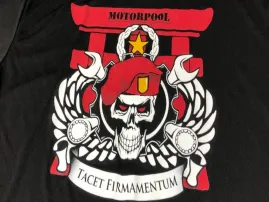
#5 Screen
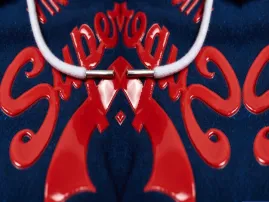
#6 Silicone
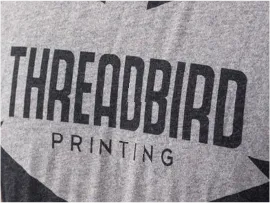
#7 Discharge
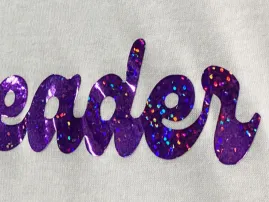
#8 Hologram

#9 Puff
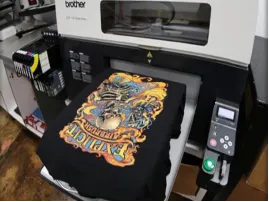
#10 DTG
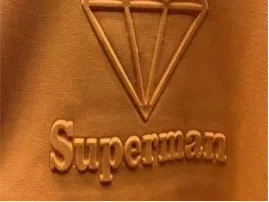
#11 Embossing
#12 Digital
#13 Embroidery
#14 Rubber

#15 Rhinestone
#16 HTV
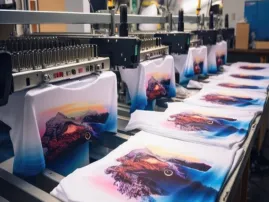
#17 Sublimation
#18 Reflective
Different Types Of Embroidery Options For Kids’ Jeans
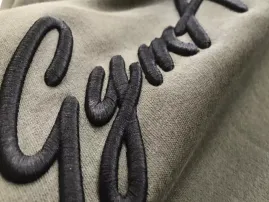
Embroidery can be placed on front pockets, back pockets, yokes, thighs, knees, side seams, waistbands, and lower legs. Satin stitch, running stitch, chain stitch, and decorative topstitching are suitable for logos, outlines, names, florals, and graphic motifs.
Appliqué can combine denim, twill, felt, printed fabric, or contrast materials. Chenille, towel embroidery, cording, sequins, beads, rhinestones, and three-dimensional embroidery can support fashion collections, subject to age suitability and secure attachment.
Pocket embroidery should be completed before the pocket is attached when a clean interior is required. Dense embroidery may stiffen the fabric, distort stretch denim, or create rough backing. The design, stabilizer, thread, wash sequence, and stitch density should therefore be evaluated together.
Patches may be woven, embroidered, rubber, leather-look, felt, or printed. RYZEAL can recommend lighter embroidery or a patch when a dense direct design would negatively affect movement, washing, or comfort.

#1 Chain Stitch
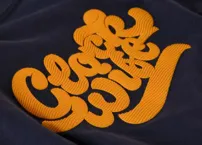
#2 Patch
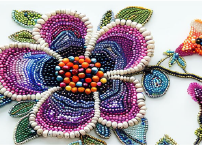
#3 Bead
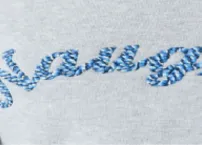
#4 Cording
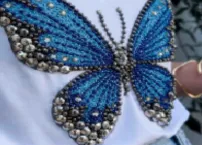
#5 Zadozi
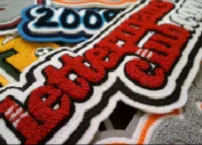
#6 Chenille
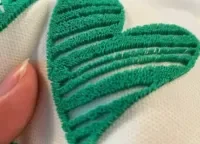
#7 Tooth
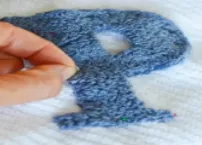
#8 Towel
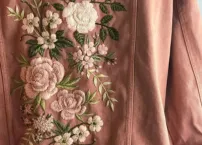
#9 3D Satin Stitch
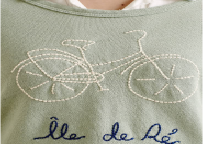
#10 Running Stitch
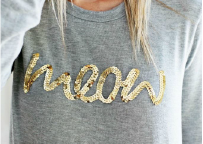
#11 Sequince
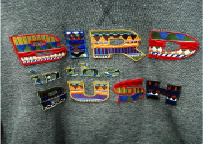
#12 Appliqué
Print And Embroidery Placement Positions For Kids’ Jeans
Common branding positions include the coin pocket, front thigh, back pocket, rear yoke, waistband, outer leg, knee panel, side seam, carpenter pocket, and lower hem. A small pocket motif can provide discreet branding, while larger leg artwork supports streetwear or fashion ranges.
Back-pocket embroidery should remain balanced with the pocket size and should not create uncomfortable bulk while sitting. Knee decoration must flex with movement, and inner-leg placement should avoid high-friction areas.
Stacked, wide-leg, and baggy jeans offer larger visible surfaces for vertical graphics, appliqué, or scattered motifs. Skinny and bootcut styles generally suit smaller, more controlled placements. Distressed areas can also be positioned to interact with prints or patches, but the combined treatment must preserve fabric strength.
The diagrams below provide standard placement options. Buyers may submit exact artwork measurements and distances from the waistband, side seam, pocket, knee, or hem. Digital mock-ups and physical wash samples can be prepared before final confirmation.
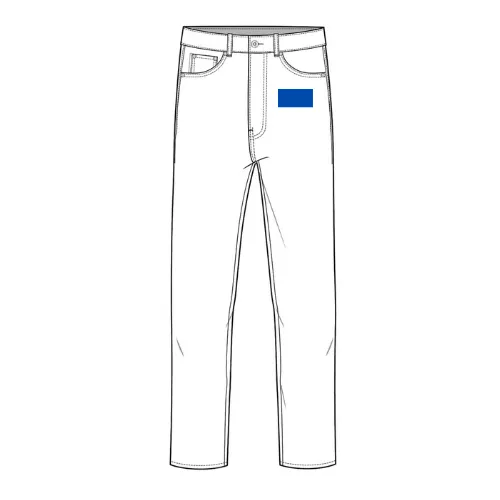
#1
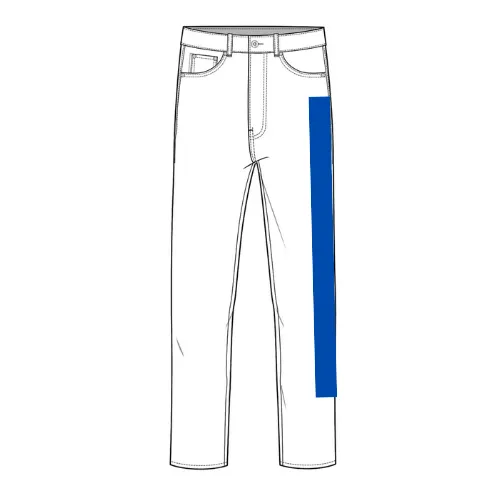
#2
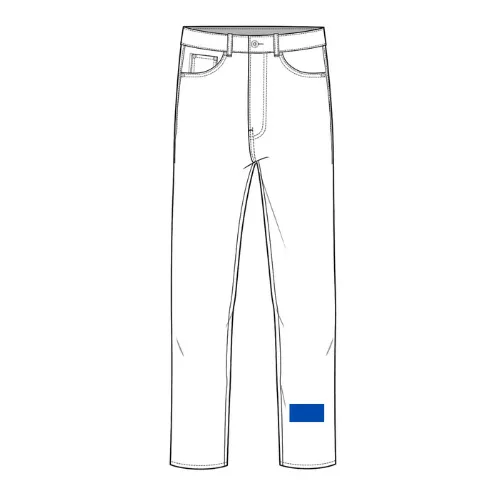
#3
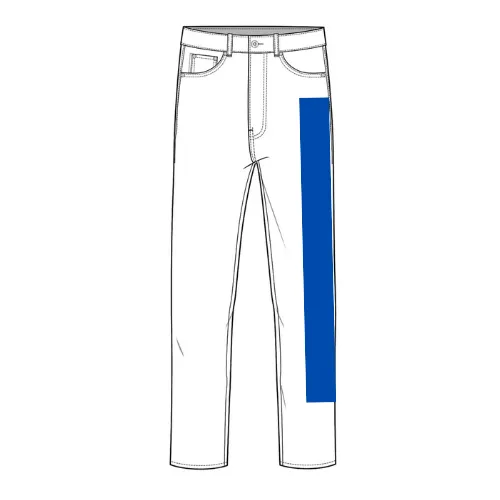
#4
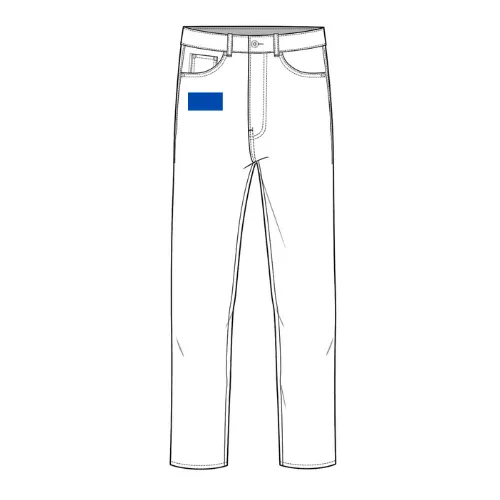
#5
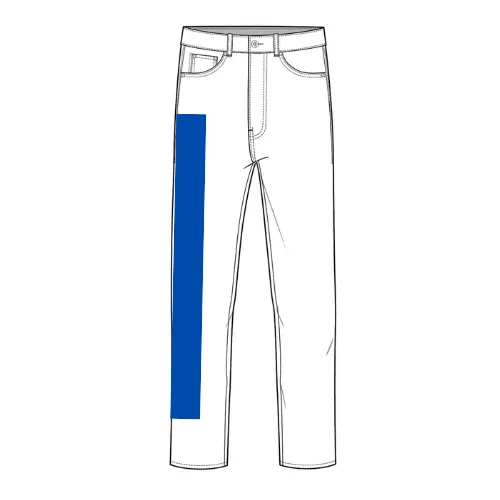
#6
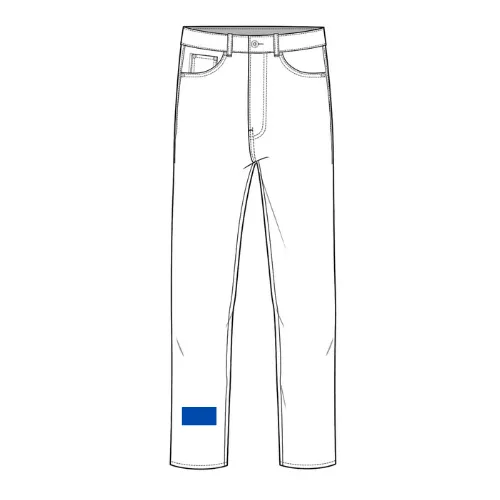
#7
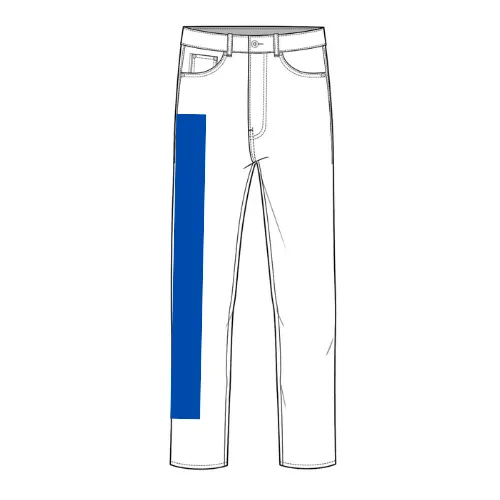
#8
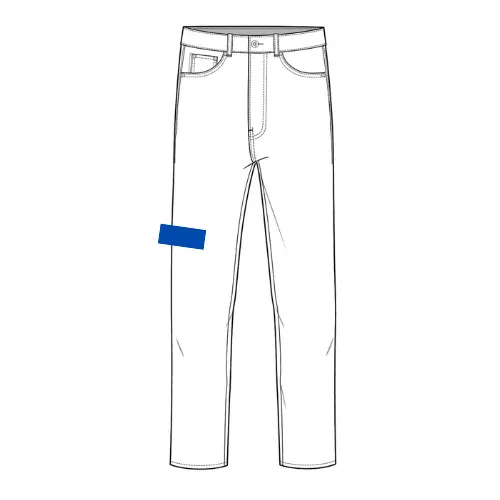
#9
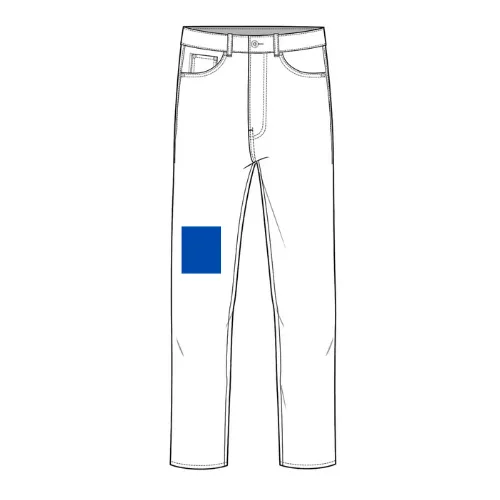
#10
#11
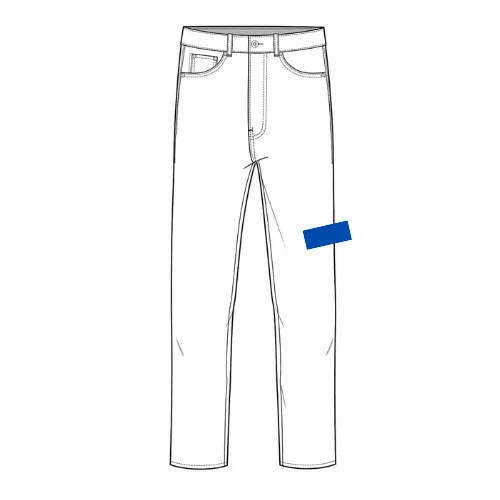
#12
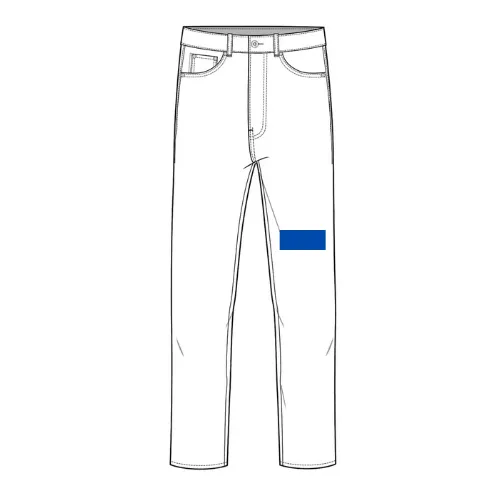
#13
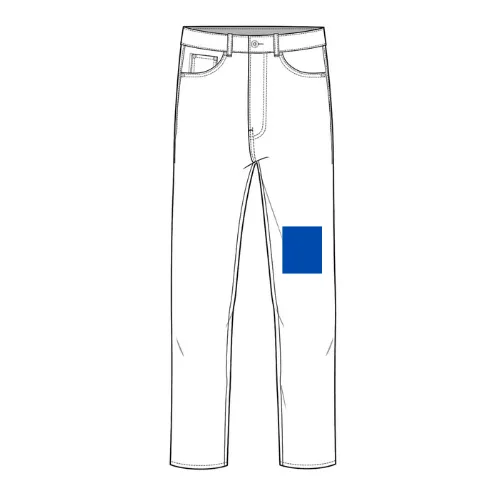
#14
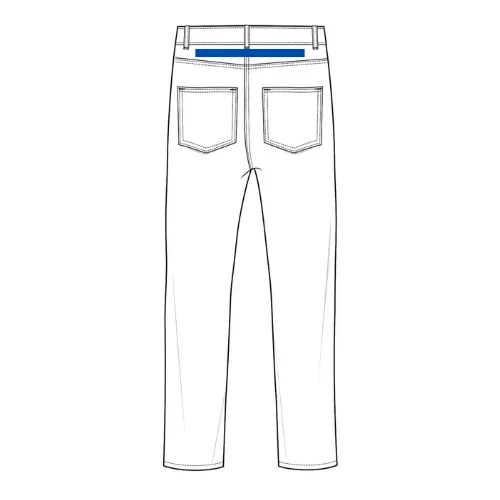
#15
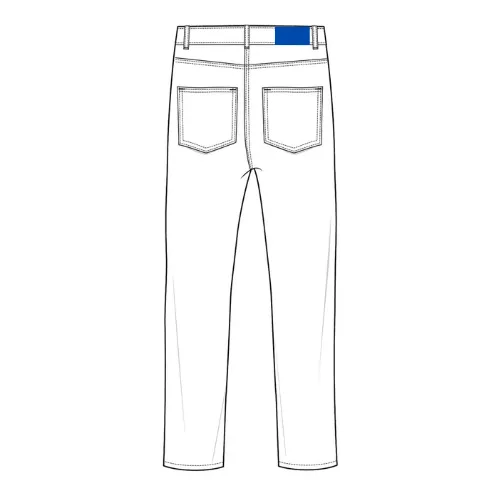
#16
5. Trims, Accessories Options: Your Brand, Fully Dressed
Trims define the function and brand identity of denim jeans. Standard five-pocket products may use a front zipper, tack button, rivets, pocketing fabric, belt loops, sewing thread, and a rear waistband patch.
Children’s jeans can also include adjustable inner waistband elastic to improve fit across growth stages. Pull-on styles may use enclosed elastic, mock flies, drawcords, or rib waistbands. Where cords are included, the design should be reviewed according to the age group and destination requirements.
Trim options include metal or plastic tack buttons, coil or metal zippers, snaps, rivets, eyelets, hook-and-bar closures, elastic, woven labels, printed care labels, heat-transfer labels, leather-look patches, rubber badges, embroidery patches, and branded pocketing.
Buttons, rivets, snaps, and decorative components should have smooth edges, suitable finishes, secure attachment, and compatibility with the selected wash. Metal hardware may change appearance or corrode if it is not suitable for garment processing.
For US children’s products, permanent tracking information must be provided on the product and packaging to the extent practicable, identifying details such as the manufacturer or private labeler, production date and location, and batch information.
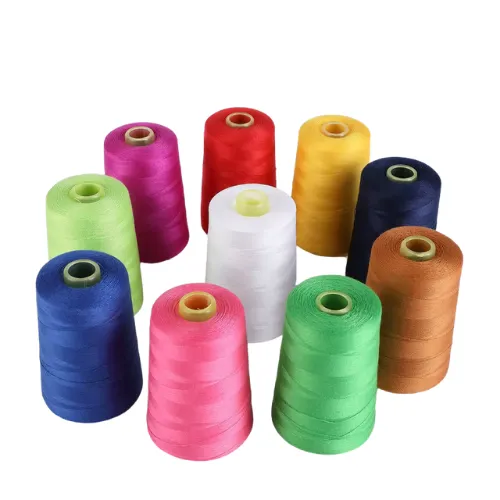
Sewing Thread
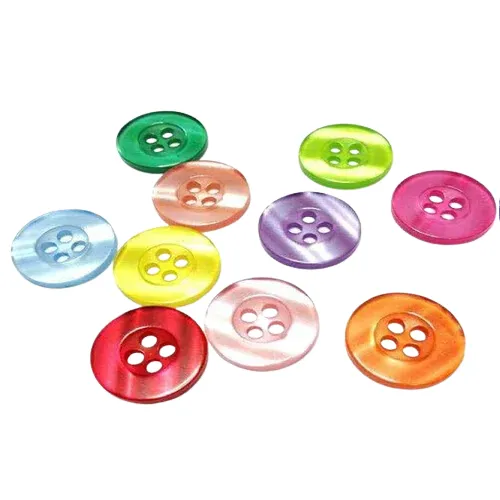
Plastic Button
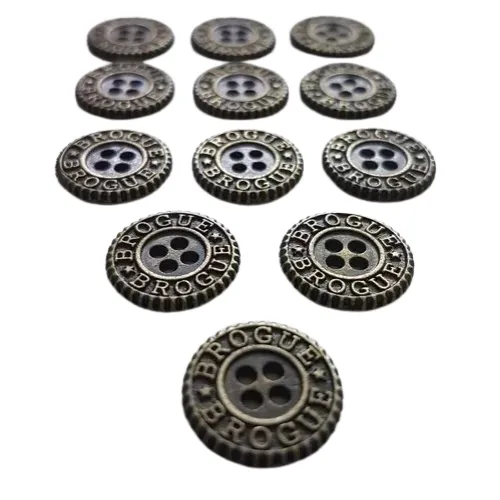
Metal Button
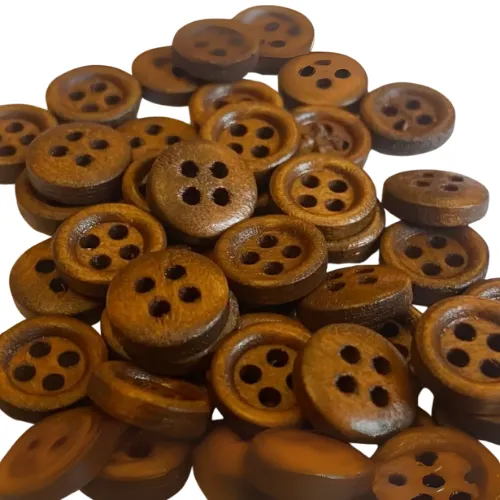
Coconut Shell Button
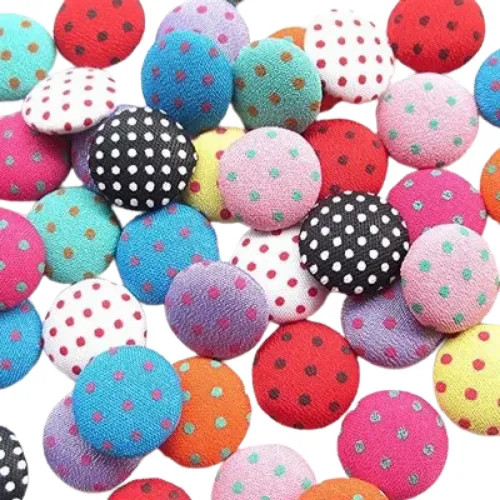
Fabric Button
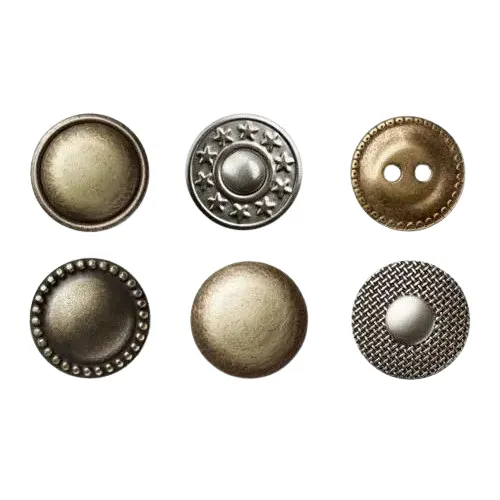
Snap Button
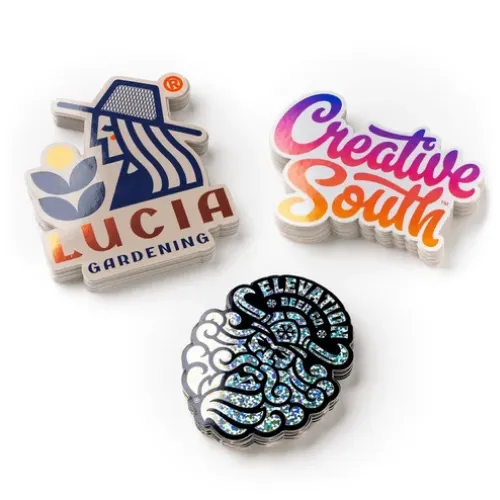
Sticker
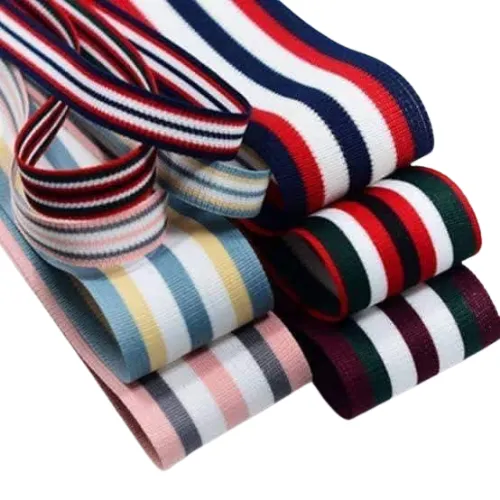
Ribs
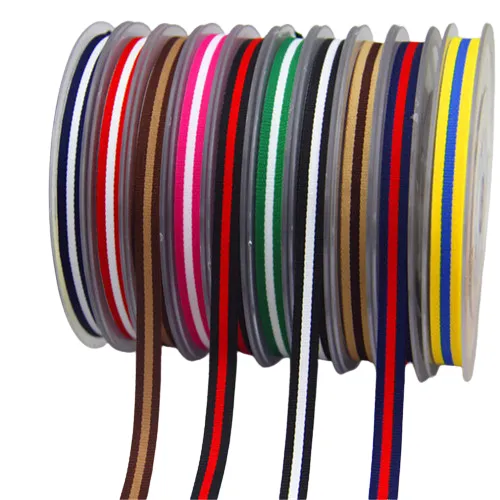
Twill Tape
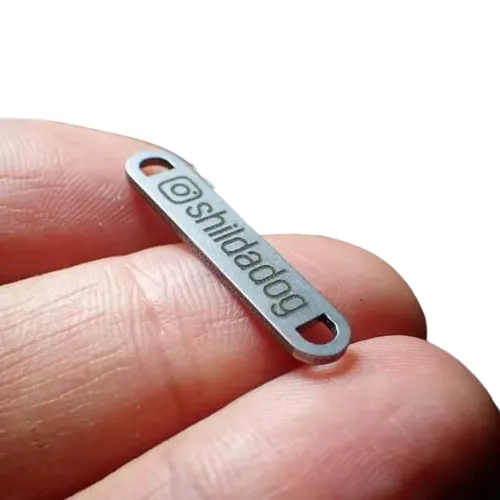
Metal Badge
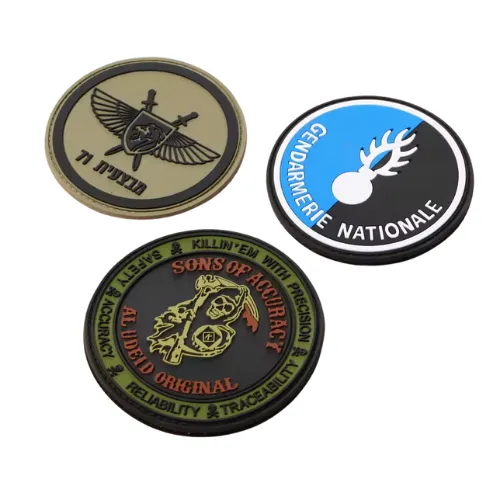
Rubber Patch
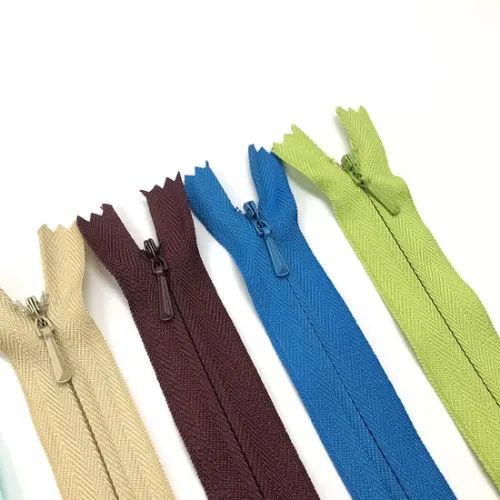
Zipper
6. Finishing and Packaging Options
Denim finishing begins before washing because the pattern and measurements must allow for the expected shrinkage and garment treatment. After sewing, jeans may undergo rinse, enzyme, stone, bleach, tint, over-dye, abrasion, laser, whisker, grinding, or distressing processes according to the approved wash standard.
Following washing, garments are checked for shade, measurements, seam twisting, puckering, fabric damage, zipper function, hardware security, pocket shape, leg balance, and overall appearance. Excessive distressing should be reinforced where necessary, especially in kids distressed jeans designed for frequent wear.
Pressing should preserve the intended denim character rather than creating unwanted shine or flattening textured effects. Lined jeans require additional inspection to confirm that the inner layer remains smooth and does not extend beyond the outer hem.
Packaging options include hangtags, recycled-paper tags, size strips, tissue, backboards, standard or printed polybags, zip-lock bags, barcode labels, QR labels, RFID tags, carton dividers, cartons, tapes, and carton straps.
Textile products marketed in the EU generally require labels or markings showing accurate fibre composition using recognized fibre names.
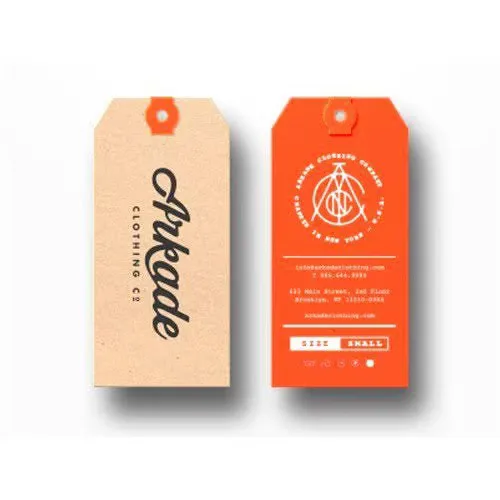
Paper hang tags
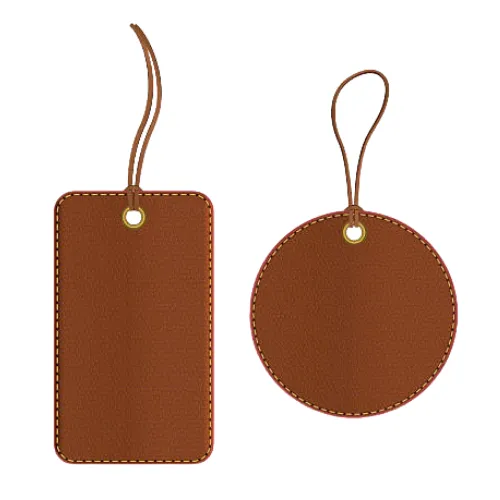
Leather patch
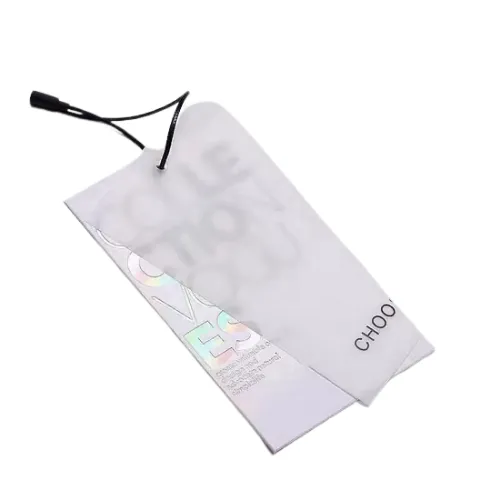
Plastic hang tags
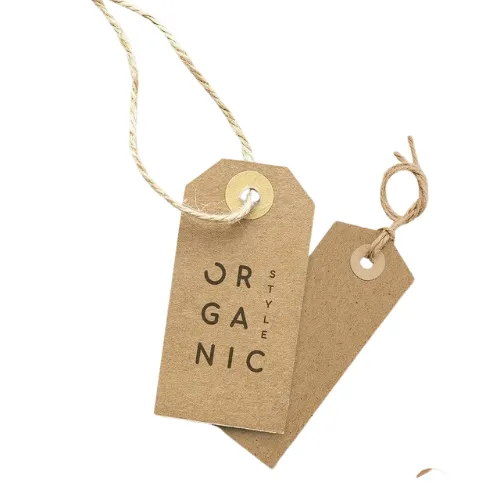
Eco-friendly Hang Tags
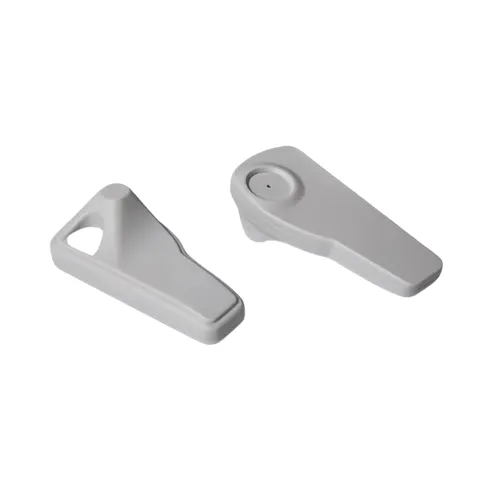
RFID Tags
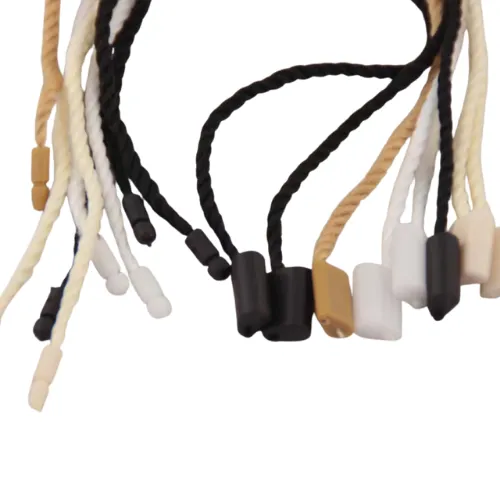
Hang tag string
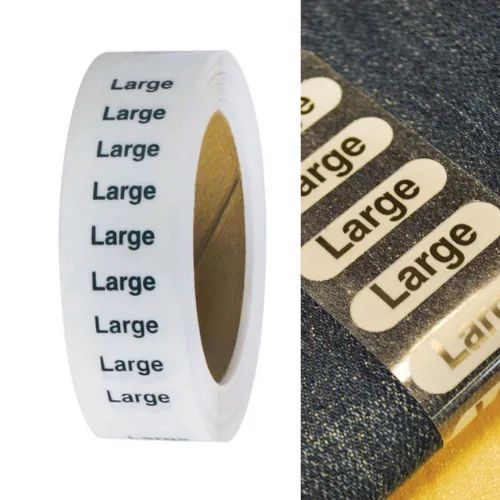
Size Strip
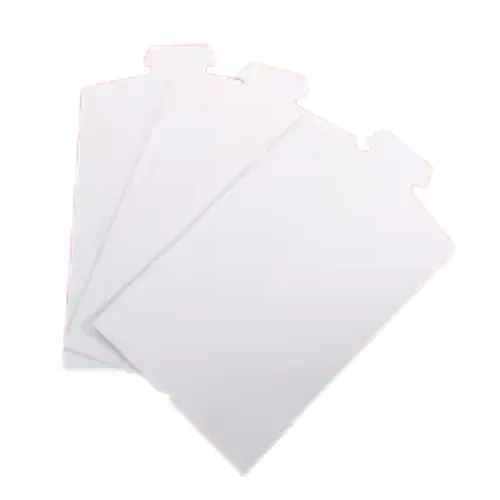
Backboard
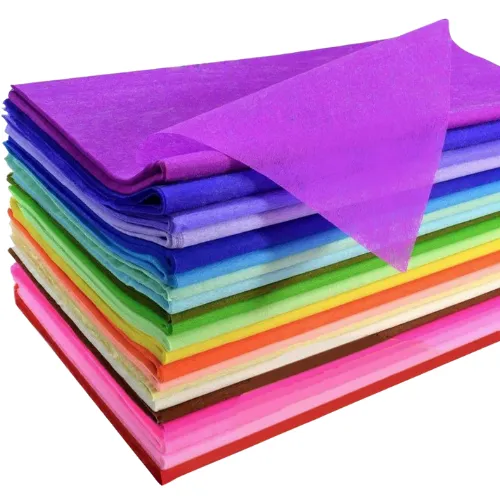
Tissue Paper
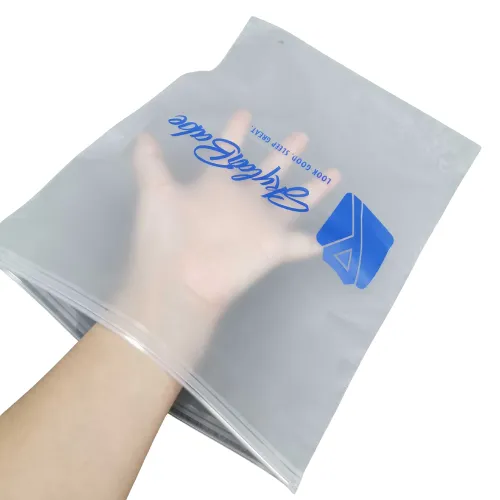
Custom Printed Poly
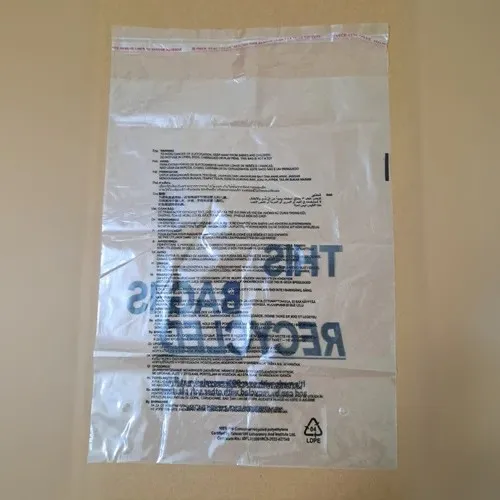
Standard Polybags
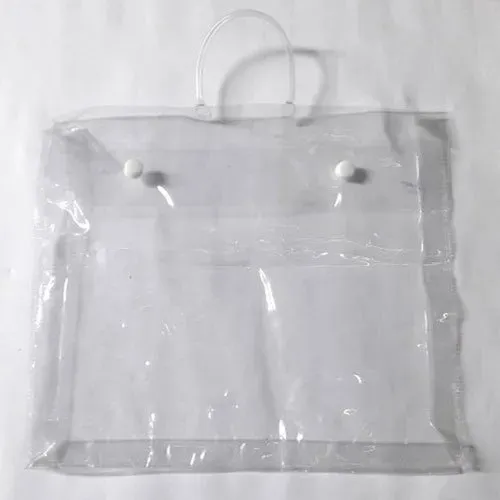
Button Closure Poly
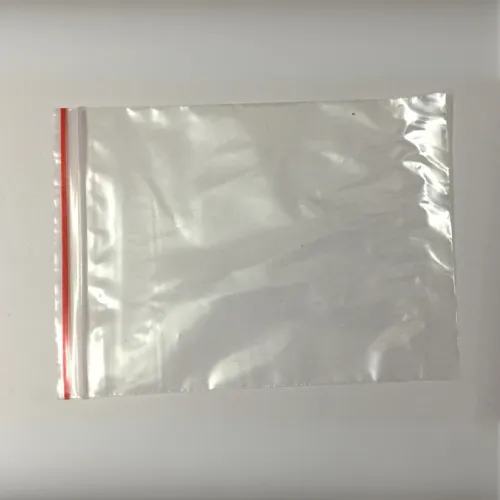
Zip Lock Poly
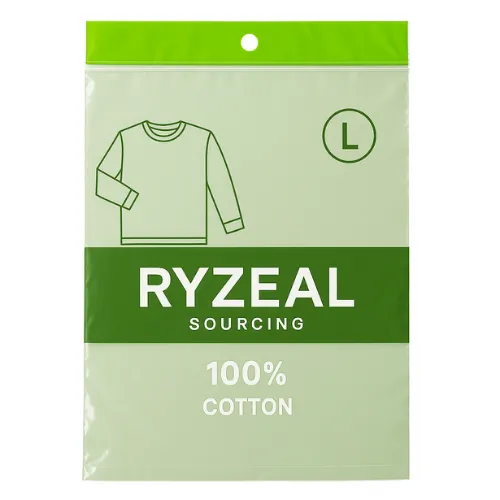
BOPP Poly
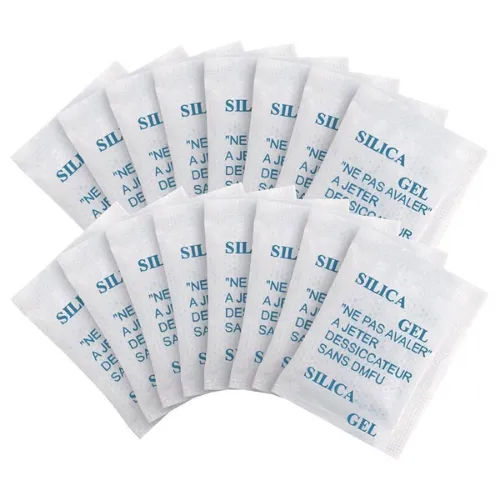
Silica Gel
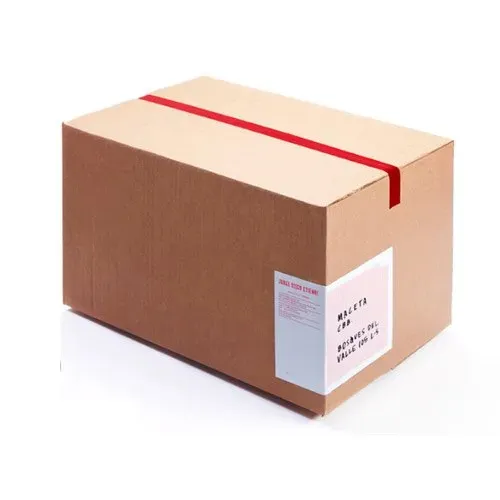
Carton
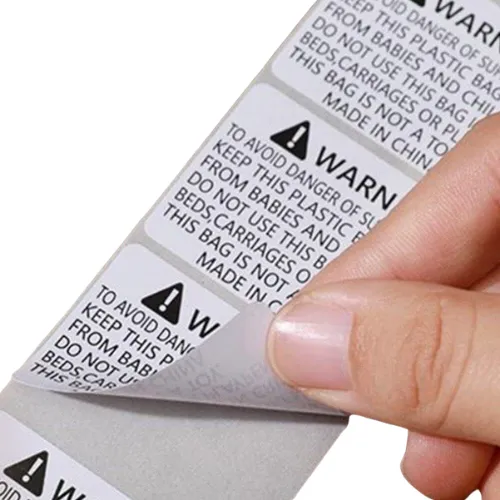
Safety Sticker
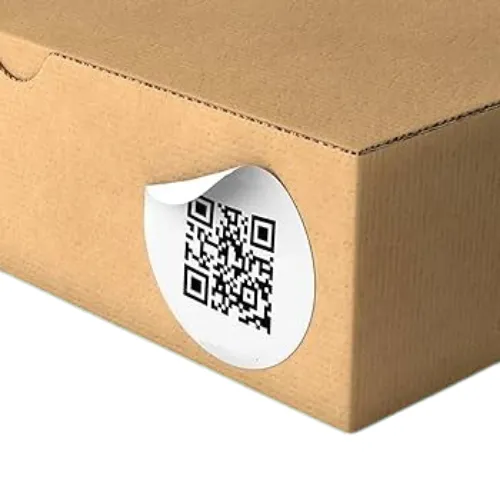
Carton QR Sticker
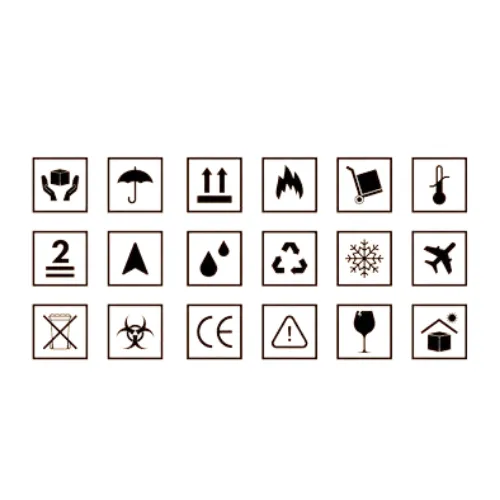
Safety Sticker
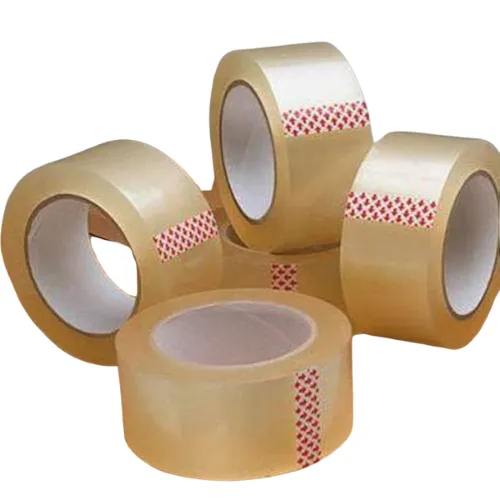
Transparent Tape
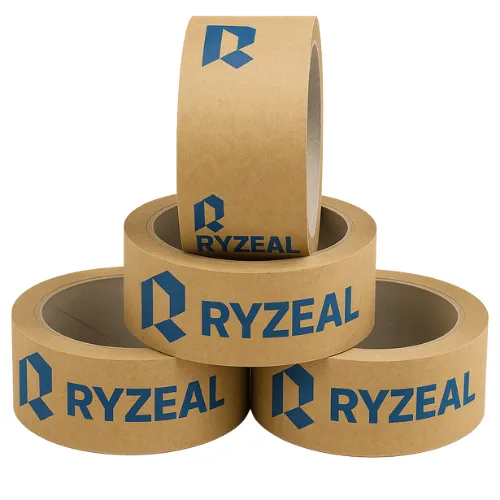
Eco Friendly Tape
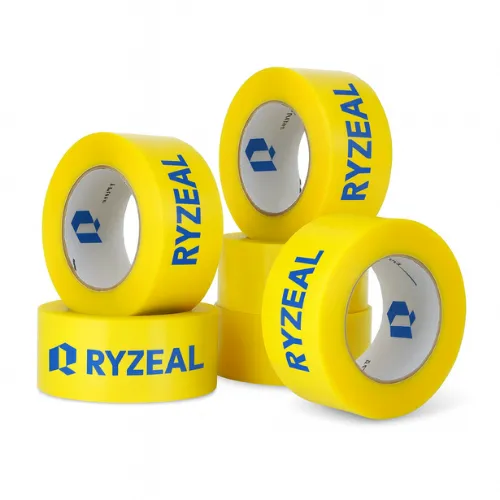
Branded Tape
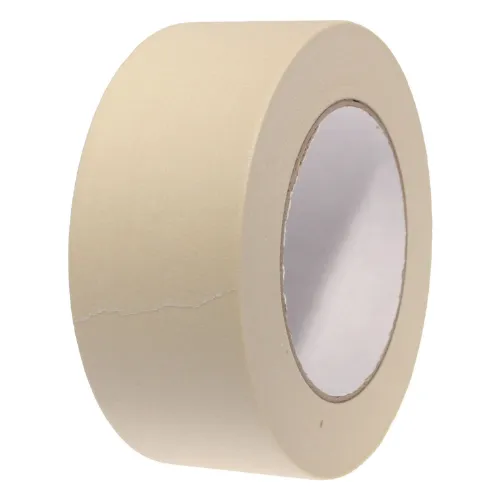
Paper Tape
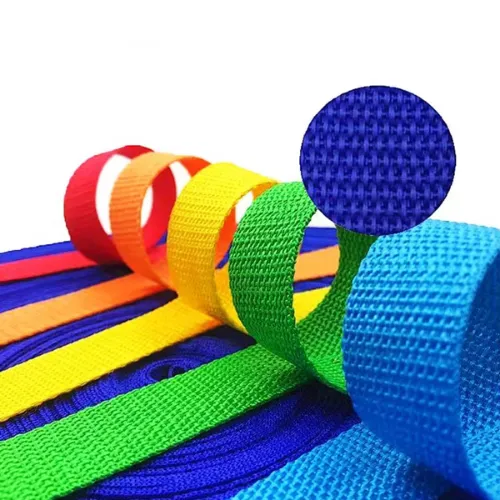
PP Belt
Kids’ Denim Jeans Manufacturing Process And Workflow
Development begins when the buyer shares the jeans style, fit, quantity, denim direction, wash reference, size range, branding, and target delivery. RYZEAL reviews the silhouette, measurement balance, fabric weight, shrinkage, hardware, decoration, and wash feasibility before the design is confirmed.
Fabric is selected and inspected before marker planning and cutting. Printing or embroidery may be completed on panels before sewing, depending on whether the buyer wants the decoration to be affected by the garment wash.
After sewing, the jeans normally move through the approved denim-washing process before final pressing and finishing. Decoration that must remain clean or bright may be applied after washing. Finished jeans are measured, inspected, labelled, folded, packed, and prepared for shipment.
The visual workflow follows these stages: Contact RYZEAL, Confirm Design, Fabric Selection, Fabric Inspection, Cutting, Embroidery, Printing, Sewing, Ironing, Finishing, Packaging, And Shipping. The exact position of washing, embroidery, printing, and ironing may change according to the approved design.
1. Contact Ryzeal
2. Confirm Design
3. Fabric Selection
4. Fabric Inspection
5. Cutting
6. Embroidery
7. Printing
8. Sewing
9. Ironing
10. Finishing
11. Packaging
12. Shipping
常见问题
What Is Your Minimum Order Quantity For Kids’ Denim Jeans?
Our standard MOQ for kids’ denim jeans normally starts from 200 pieces per color and style because denim fabric, washing, hardware, and finishing have practical production minimums.
Can I Fully Customize The Kids’ Denim Jeans?
Yes. Buyers can customize the fit, rise, leg shape, denim weight, stretch, pockets, wash, distressing, trims, labels, sizing, and packaging.
Can I Request A Kids’ Denim Jeans Sample Before Bulk Production?
Yes. A development sample normally takes around 7–12 days, although custom denim washes, distressing, embroidery, or special hardware may require additional time.
Do You Offer Eco-Conscious Denim Fabric And Wash Options?
Yes. Subject to availability, we can source organic cotton, recycled cotton, recycled polyester, GOTS, GRS, or RCS-related options and review lower-impact wash processes for the specific order.
Can I Order Kids’ Jeans In Multiple Colors And Sizes?
Yes. Kids’ jeans can be produced in multiple approved washes, colored-denim shades, and sizes, subject to fabric, wash, and order minimums.
What Payment Options Are Available For Kids’ Denim Jeans Orders?
We accept multiple payment methods, including T/T, L/C, MoneyGram, Western Union, and other agreed payment methods depending on order type, buyer location, and transaction terms.
Yes. RYZEAL can manufacture baby denim products, boys’ and girls’ jeans, adult jeans, denim jackets, denim skirts, shorts, and coordinated denim collections.
Related denim jeans pages:
Men’s denim jeans
Women’s denim jeans
No. RYZEAL primarily produces custom-made kids’ denim jeans according to the buyer’s approved fit, fabric, wash, branding, quantity, and packaging.
Yes. We can develop extended children’s sizes, custom grading, adjustable waists, longer inseams, relaxed fits, and buyer-specific measurements.
Bulk production normally requires around 30–45 days after the washed sample, denim fabric, trims, size chart, packaging, and commercial approvals are completed.
RYZEAL coordinates global shipping to the USA, Canada, Europe, Australia, the Middle East, Asia, and other international markets.
We generally follow a structured Sample-to-Bulk Production Workflow. Buyers either
(1) confirm the order first, then we develop and ship approval samples, collect staged payments (20%–50%–30%), move into bulk production with inspection, and finally ship after balance payment;
or (2) request samples first by paying a sample charge, review and approve those samples, and then place the bulk order under our standard production and payment terms.
For full step-by-step details, please review our Sample to Bulk Production Process Guide.
Denim Jeans Design Collections for Your Brand
Explore RYZEAL’s design collections for straight jeans, skinny fits, bootcut styles, flares, wide-leg jeans, baggy silhouettes, stacked jeans, carpenter products, cargo denim, pull-on jeans, lined winter styles, and distressed fashion ranges.
Buyers may select an existing concept, combine compatible details from several references, or submit an original sample, sketch, mood board, or tech pack. RYZEAL can then adapt the fit, denim quality, wash, pockets, trims, colors, branding, sizing, and packaging for the buyer’s market.
SS 26 Design Collection
WS 26 Design Collection
SS 27 Design Collection
WS 27 Design Collection
Interested in reviewing the complete collection? Catalogues are shared with qualified buyers.
Request A Kids’ Denim Jeans Quotation
Complete our detailed quotation form with the required fit, quantity, size range, denim fabric, wash, trims, artwork, packaging, and delivery destination.
Attach available tech packs, sketches, wash references, samples, or product images. RYZEAL can then review feasibility, material options, sampling requirements, costing, and bulk-production planning.
Garment Details
Prefer a Face-to-Face Online? Let’s Meet...
关于我们
RYZEAL SOURCING (Trade Name of RYZEAL LTD.) is a Bangladesh-based apparel manufacturing and sourcing partner and garments buying house – helping brands, wholesalers, retailers, importers, and clothing businesses manufacture clothing in Bangladesh. We manage production through a vetted network of specialized garment manufacturers selected according to product type, materials, quantity, quality, compliance, and market requirements. Our network supports knit, woven, denim, sweater, activewear, workwear, and other apparel categories, while one RYZEAL team coordinates development, sourcing, sampling, production follow-up, quality control, compliance, and shipment.
We don’t just deliver products – we help build brands.
我们的服务
End-to-End Apparel Sourcing & Manufacturing Support
Product Design & Development
We turn ideas, sketches, references, or tech packs into production-ready garment designs with clear style, fit, fabric, and manufacturing direction.
Fabric & Material Sourcing
Pattern Making & Sampling

Bulk Production
Quality Assurance

Compliance Management
Logistics & Shipping

Merchandising & Reporting
How It Works: Simple, Transparent Apparel Manufacturing Process
STEP 1 – Share Your Design or Requirement
Send us your tech pack, reference images, or product idea. Our merchandising team reviews feasibility, fabric options, and customization requirements.
STEP 2 – Costing, MOQ & Timeline Confirmation
STEP 3 – Sampling & Approval

STEP 4 – Bulk Production & Shipment
Why Choose Bangladesh and RYZEAL SOURCING?
Bangladesh has earned global trust as a competitive apparel manufacturing destination, serving many international brands with large-scale production capacity, skilled labor, and strong export experience. Yet for smaller brands and SME buyers, working directly with large factories can be challenging because many production units prioritize high-volume orders and offer limited flexibility.
RYZEAL SOURCING is built to make Bangladesh manufacturing more accessible. We help buyers benefit from competitive pricing, reliable factory expertise, flexible MOQ planning, organized sample development, quality control, and scalable production support. Whether you are starting small or planning future growth, our role is to connect your brand with the right manufacturing solution in Bangladesh.
Bangladesh Manufacturing Advantage
Why Brands Work With RYZEAL SOURCING
Transparent Costing & Realistic MOQs
Clear pricing with no hidden surprises, plus MOQ guidance based on product type, fabric, trims, and production complexity.

Structured Sampling Process
From tech pack review to final approval, we follow a clear sampling process to keep development organized and on track.

Order & Production Management
We manage factory communication, approvals, production timelines, progress updates, and key order follow-up.

Certified & Responsible Factories
We work with vetted manufacturing partners selected for capability, quality, compliance, and buyer requirements.

Strong Quality
Control System
We monitor fabric sourcing, production, and final inspection to ensure consistent quality in every shipment.
Flexible
Production Scale
We support both small trial orders and scalable bulk production, helping brands start carefully and grow with confidence.

Reliable
Lead Times
Clear schedules, production follow-up, and coordinated logistics help you meet delivery targets with better confidence.

Long-Term Partnership Approach
We focus on repeat production, stable partnerships, and helping brands expand sustainably - not one-off deals.
Certifications & Compliance Standards
Certificates of the following icons are shared on request based on product and factory selection.









Frequently Asked Questions
Is RYZEAL SOURCING a clothing manufacturer, sourcing partner, or garments buying house?
RYZEAL operates as an apparel manufacturing and sourcing partner and garments buying house in Bangladesh.
We help buyers manufacture clothing through a vetted network of specialized manufacturers while our team coordinates factory sourcing, product development, materials, sampling, merchandising, production follow-up, quality control, compliance support, and shipment.
This model gives buyers access to broader manufacturing capabilities while maintaining one coordinated point of contact.
What is the official registered name of your company?
Our registered legal name is RYZEAL LTD., and we operate globally under the trade name RYZEAL SOURCING.
What is your office address in Bangladesh?
Ryzeal’s Bangladesh Office address is – House #1034 (1st Floor), Avenue #8, Mirpur DOHS, Pallabi, Dhaka-1216, Bangladesh.
You can check out RYZEAL on Google Maps
Do you have an office in China?
Yes. Our China office is located at Room 4206, Tower 1, Jinghua Plaza, Nanhai District, Foshan City, Guangdong Province, China.
How can I contact RYZEAL through WhatsApp?
You can reach RYZEAL SOURCING directly via WhatsApp at +8801958374060
How can I contact RYZEAL for inquiries or project discussions?
You can reach us directly through our official communication channels. For business inquiries, project discussions, or sourcing-related questions, you may contact our Managing Director, Md. Matiur Rahman, through the following:
电子邮件: md@ryzealsourcing.com
WhatsApp: +8801958374060
You can also use our general office contact form for structured inquiries: Click to Visit the Contact Form Page
What legal certifications and documents does RYZEAL hold?
RYZEAL SOURCING maintains multiple operational and legal certifications, including:
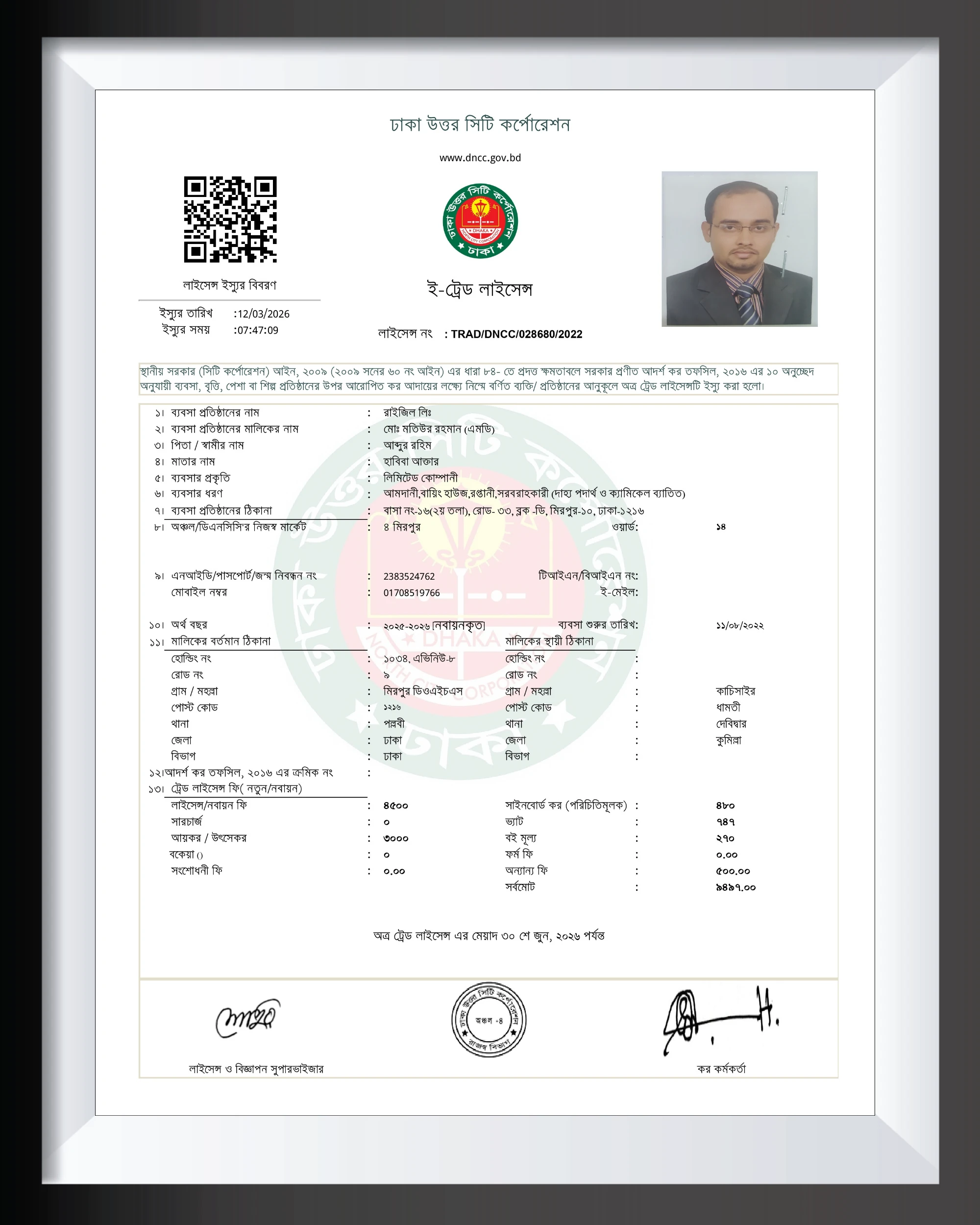
Trade License: TRAD/DNCC/028678/2022
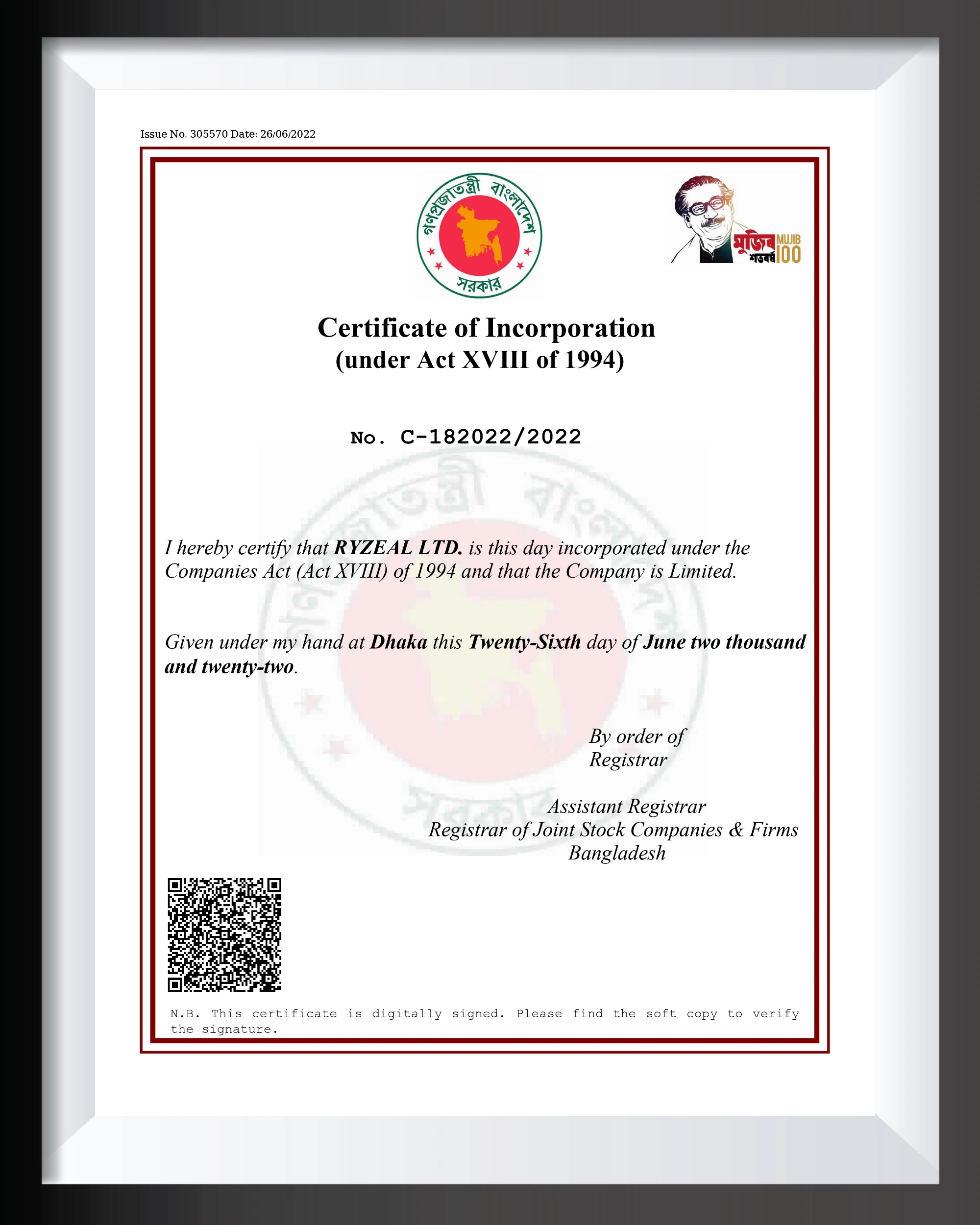
Incorporation No.: C-182020/2022
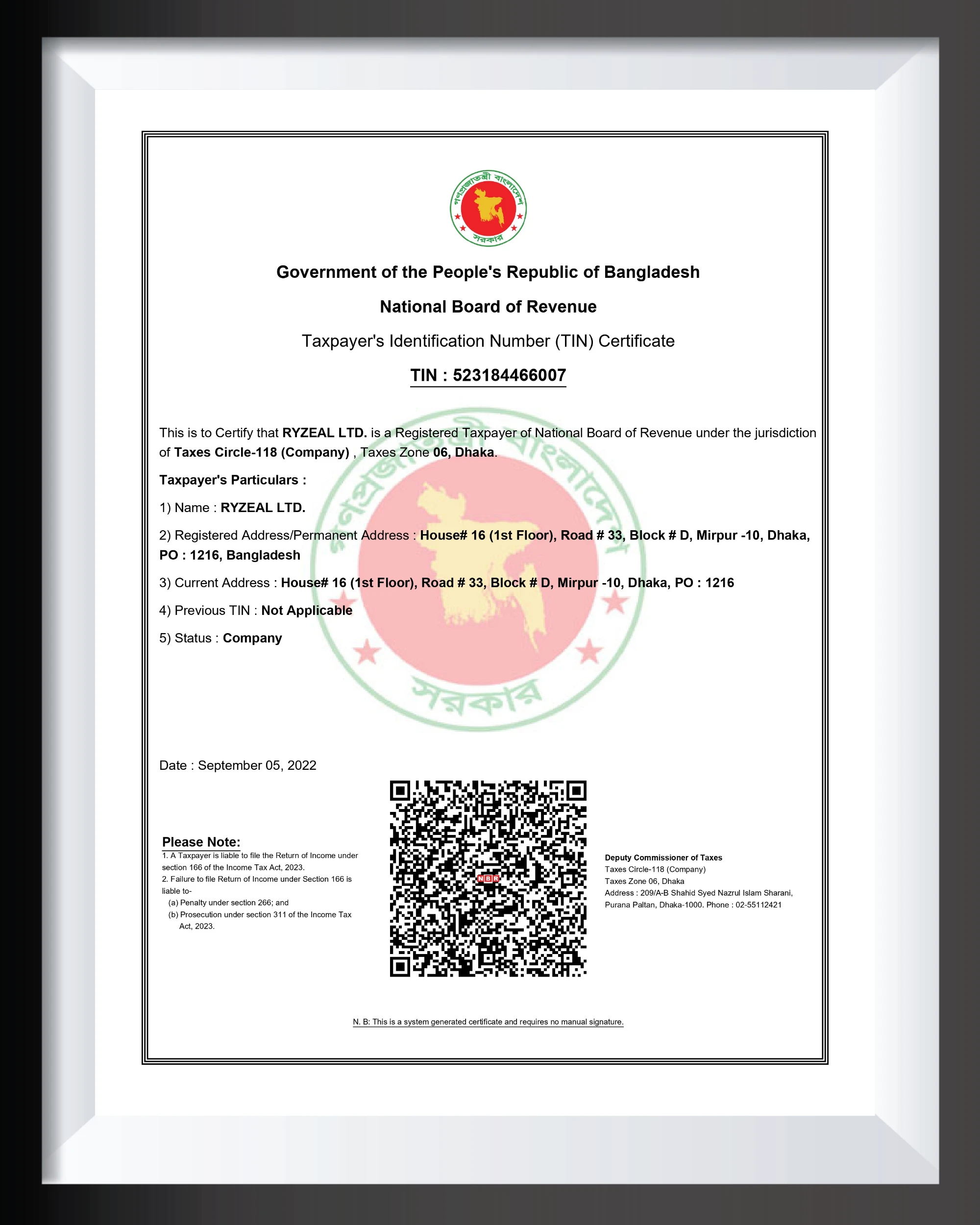
TIN: 459793941431
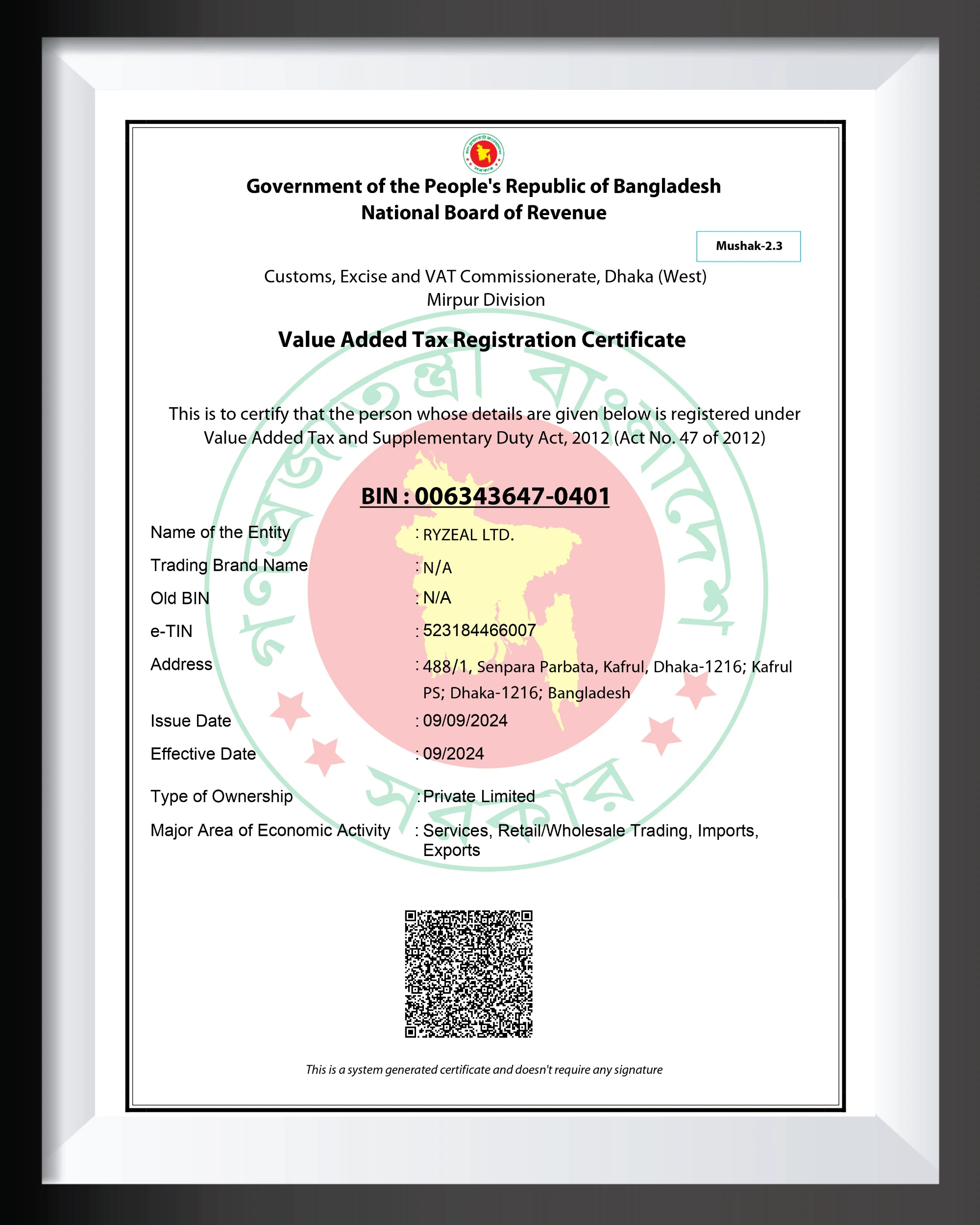
BIN: 002139014-0202
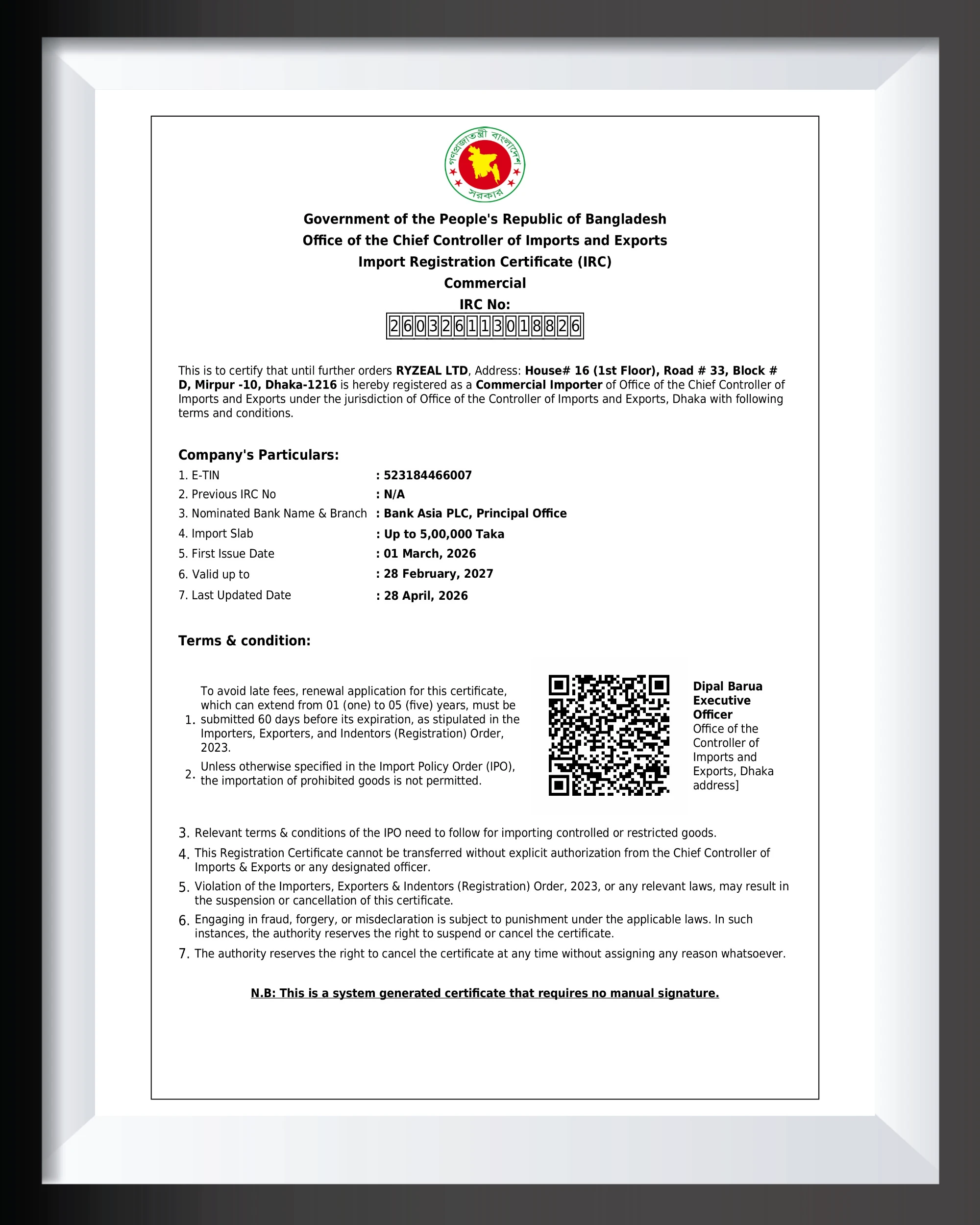
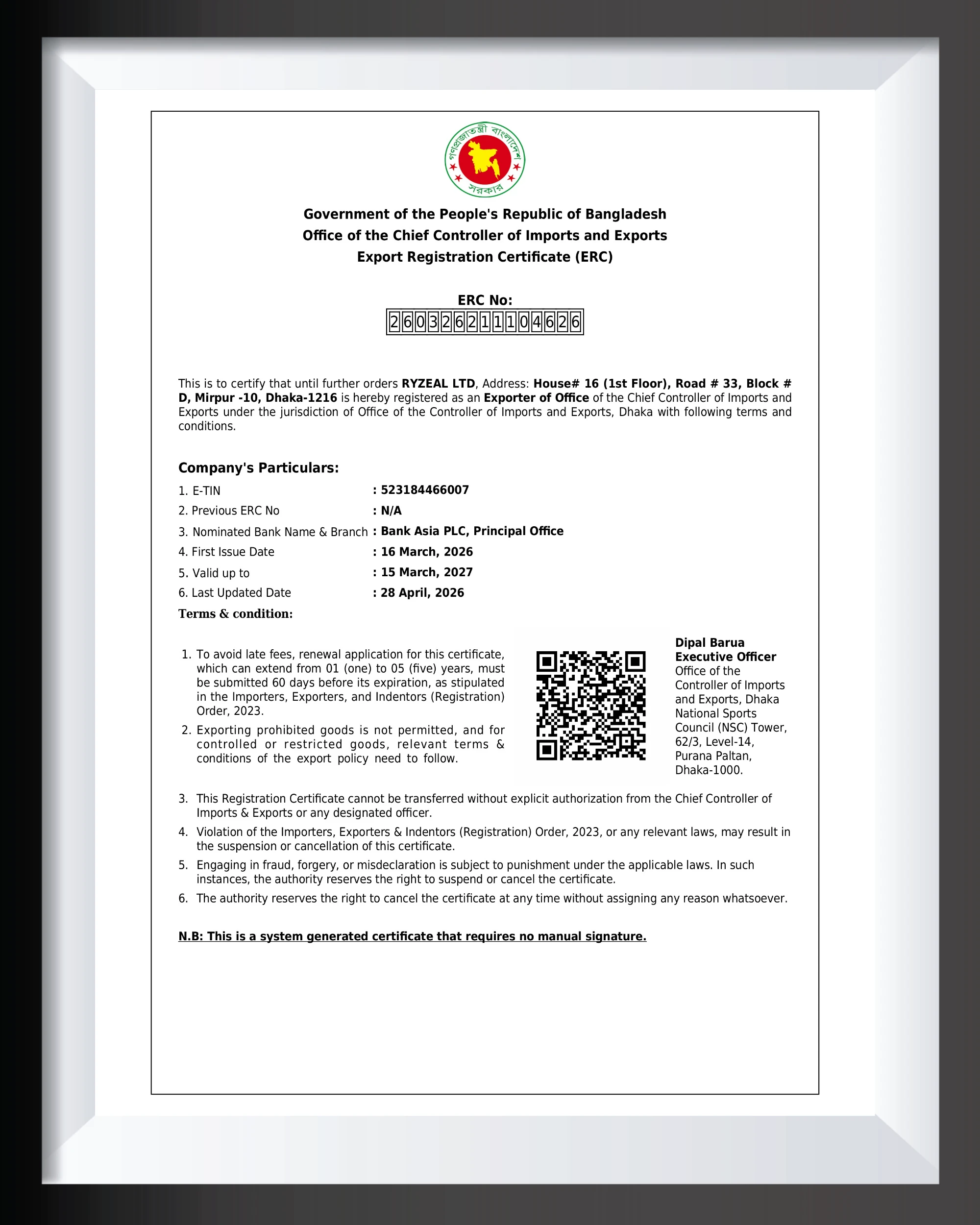
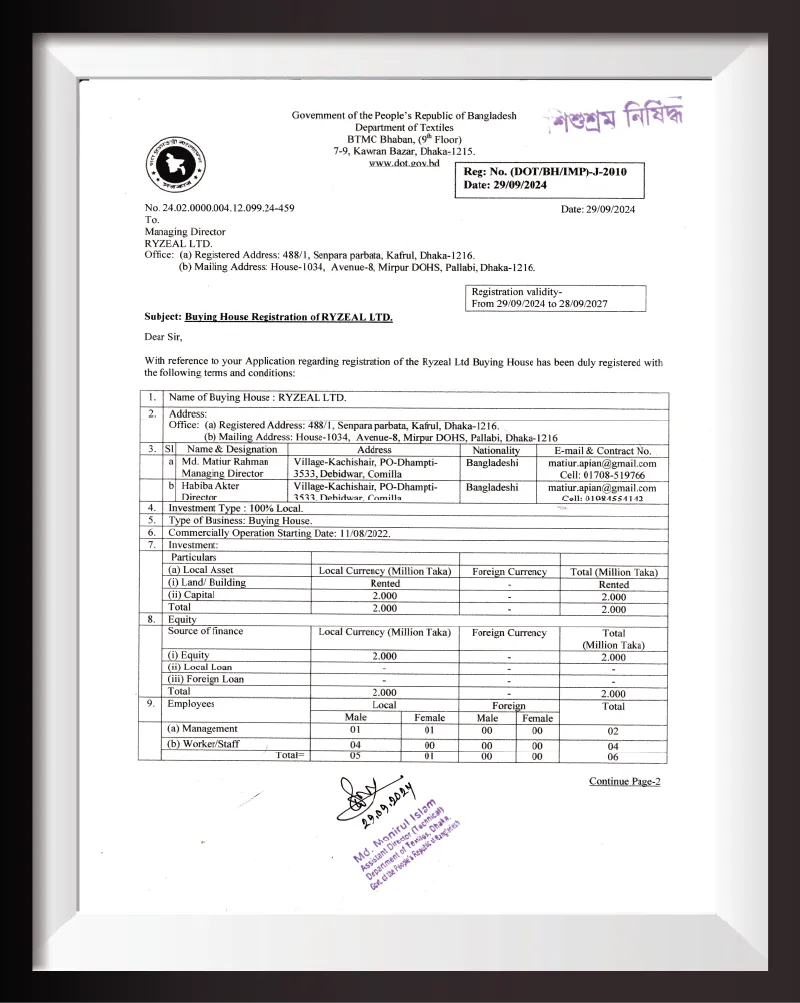
DoT Registration: (DOT/BH/IMP)-J-2010
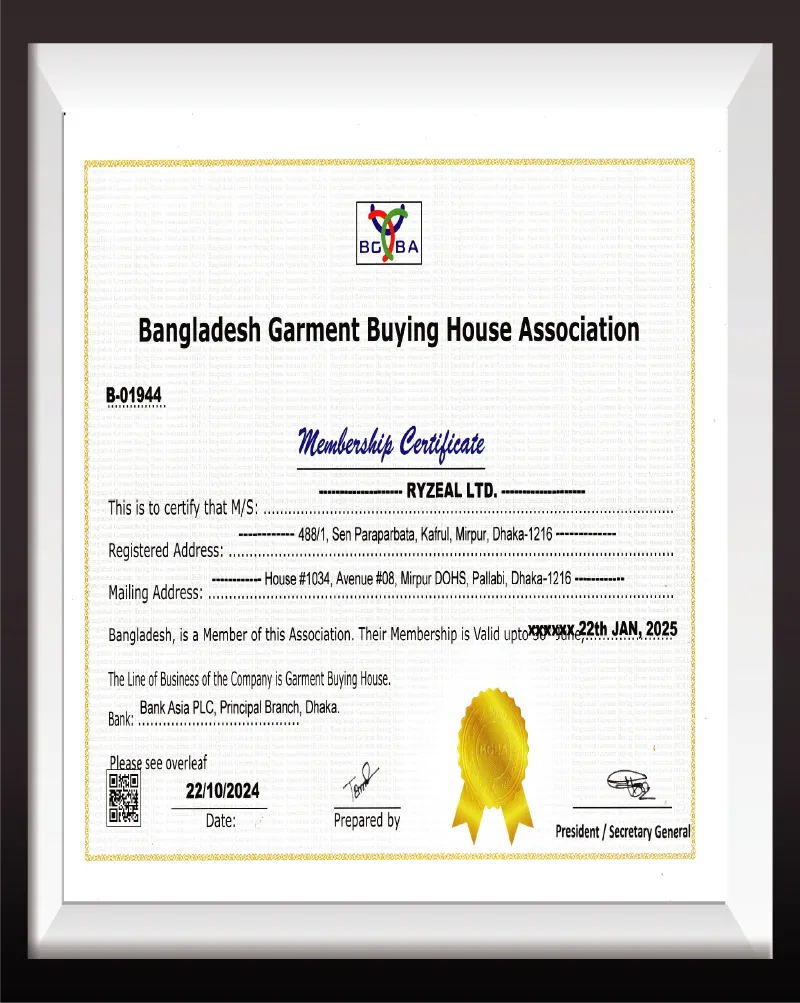
BGBA Membership: B-01944
D-U-N-S Number: 73-223-1139
Can you share Google Map directions to your office?
Yes. You can locate RYZEAL SOURCING here:
Click to visit google Map
Does RYZEAL provide a team photo gallery or company visuals?
Yes. We maintain a curated photo library that includes office visuals, team images, and corporate materials. These can be supplied as needed.
To check out our full gallery please visit our page: Photo Gallery
What are your official social media pages?
YouTube: https://www.youtube.com/@RyzealSourcing
LinkedIn: https://www.linkedin.com/company/ryzeal-sourcing/
Facebook: https://www.facebook.com/RyzealSourcing/
Instagram: https://www.instagram.com/ryzealsourcing/
Twitter/X: http://x.com/ryzealsourcing
Pinterest: https://www.pinterest.com/RyzealSourcing/
Tiktok: https://www.pinterest.com/RyzealSourcing/
How is RYZEAL written in different languages?
English: RYZEAL SOURCING
Bangla: রাইজিল সোর্সিং
Arabic (العربية): رايزيل تورسينغ
French (Français): RYZEAL SOURCING
Spanish (Español): RYZEAL SOURCING
Portuguese (Português): RYZEAL SOURCING
German (Deutsch): RYZEAL SOURCING
Italian (Italiano): RYZEAL SOURCING
Russian (Русский): РАЙЗИАЛ СОРСИНГ
Chinese Simplified (中文): 莱泽尔采购
Chinese Traditional (繁體中文): 萊澤爾採購
Japanese (日本語): ライジールソーシング
Korean (한국어): 라이질 소싱
Turkish (Türkçe): RYZEAL Tedarik
Malay (Bahasa Melayu): RYZEAL SOURCING
Indonesian (Bahasa Indonesia): RYZEAL SOURCING
Hindi (हिन्दी): राइजील सोर्सिंग
Urdu (اردو): رائزیل سورسنگ
Thai (ไทย): ไรซีล ซอร์ซิ่ง
Vietnamese (Tiếng Việt): RYZEAL SOURCING
Persian/Farsi (فارسی): رایزیل سورسینگ
What payment methods do you accept?
RYZEAL SOURCING accepts various payment methods, including T/T, L/C, MoneyGram, Payoneer, PayPal, Visa, Mastercard, Western Union.
What's your MOQ for an order?
We start from 500-1000 pcs/style/color but can adjust based on buyer needs. But this may vary depending on the clothing item and style.
What year was RYZEAL SOURCING founded?
RYZEAL LTD. was founded on 26 June 2022.
How many team members does RYZEAL have?
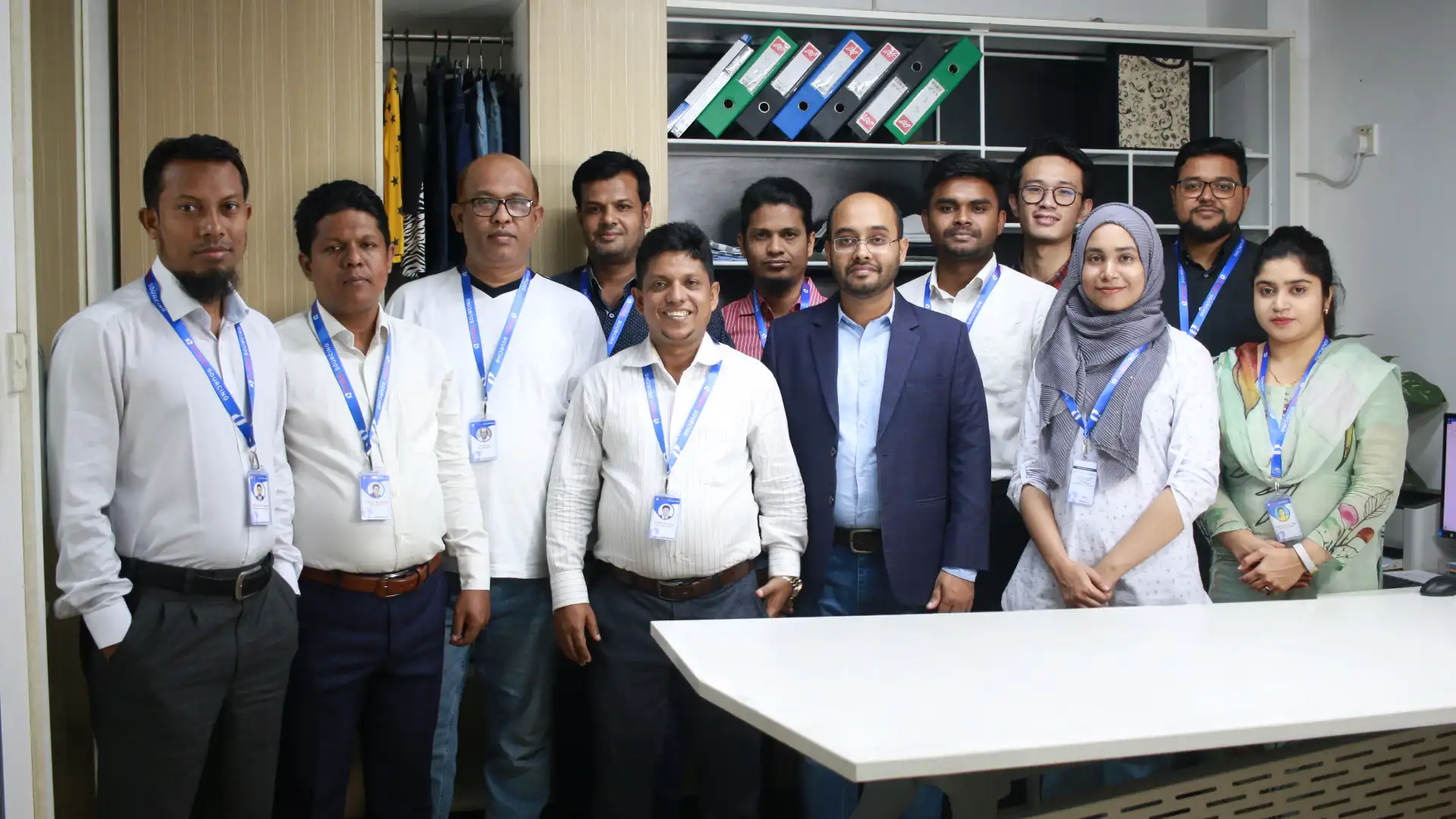
We currently have a team of 15 members.
Who is the Managing Director of RYZEAL?

Our Managing Director is Md. Matiur Rahman, an industry professional with extensive sourcing and manufacturing leadership experience.
Where can I find the business card and contact details of the Managing Director?
Our managing director’s direct email is md@ryzealsourcing.com
and verified WhatsApp link is:
https://wa.me/+8801958374060.
You can get the virtual visiting card upon request.
What makes RYZEAL SOURCING different from other Clothing Manufacturer?
RYZEAL combines apparel manufacturing support, sourcing, and buying-house services through a vetted network of specialized manufacturers.
Instead of limiting every order to one factory’s product category, machinery, MOQ, or capacity, we match each program with suitable manufacturing capability and coordinate development, merchandising, quality control, compliance, and shipment through one RYZEAL team.
您是否有与知名品牌或零售商合作的经验?
As a Clothing Manufacturer sourcing company, we haven’t worked with major brands or retailers, but our team members have experience working with major brands or retailers in their previous job roles.
Do you offer private labels and custom design?
Yes! We offer full private label solutions with custom tags, embroidery, prints, and packaging.
我们如何开始与 RYZEAL SOURCING 合作?
Just 联系我们 with your requirements. We’ll guide you through everything, from product development to final delivery.
与您合作的工厂是否通过了道德与可持续生产认证?
Yes, we prioritize BSCI, SEDEX, WRAP, and LEED-certified factories to ensure ethical labor practices and environmental sustainability.
Can you ship to my warehouse in my country?
Yes. We offer FOB, CIF, or DDP shipping to any country’s port or address.
Talk Directly With Our Merchandising & Sourcing Team
Get clear guidance on pricing, MOQ, sampling, and production directly from our merchandisers.

Discover essential Denim Jeans sourcing knowledge that May gives your brand a competitive edge!
1. How Global Demand Is Reshaping The Denim Jeans Manufacturer For Kids Market
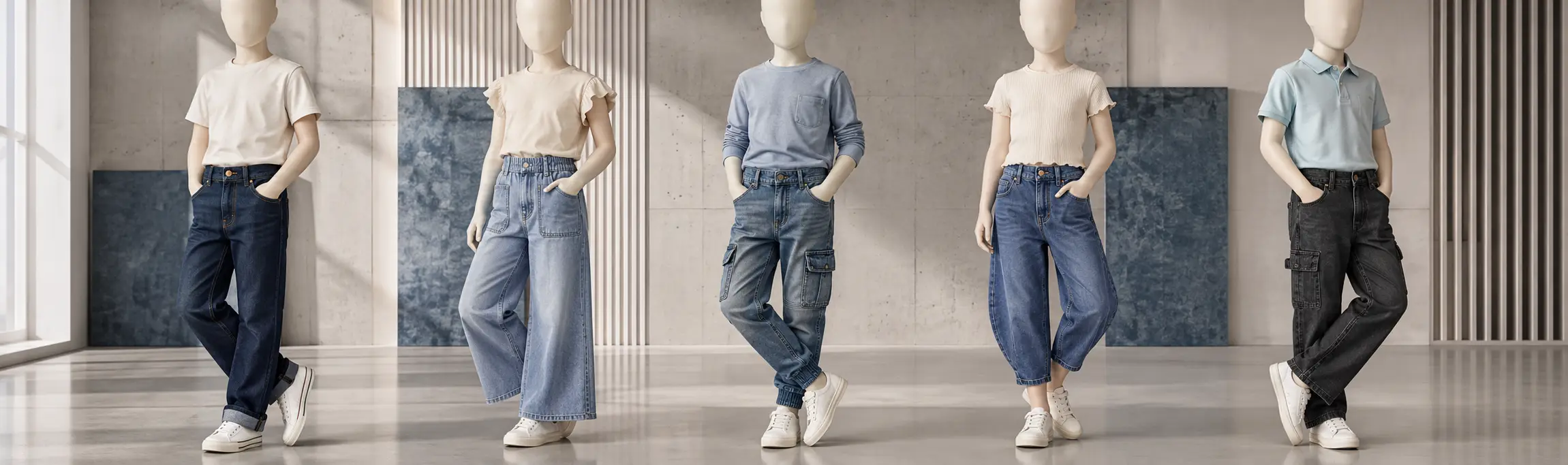
Children’s denim is no longer limited to one classic five-pocket shape. Buyers now build collections around straight, relaxed, baggy, wide-leg, bootcut, flare, skinny, carpenter, stacked, pull-on, lined, and distressed silhouettes. Each fit addresses a different combination of comfort, fashion, season, activity, and retail price.
This wider assortment changes what buyers need from a Denim Jeans Manufacturer For Kids. A manufacturer must understand how fit, fabric weight, stretch, rise, wash, hardware, and post-wash measurements work together. Applying a fashionable leg shape to an unsuitable denim quality can create poor movement, unstable recovery, or an incorrect final silhouette.
Why Kids’ Jeans Serve Several Retail Categories
Straight and tapered jeans remain dependable options for school, casual dressing, and repeat retail programs. Their familiar proportions make them suitable for dark indigo, medium-blue, black, grey, and lightly washed collections.
Relaxed and kids baggy jeans provide more room through the seat, thigh, and leg. These fits can support streetwear, utility styling, carpenter pockets, contrast stitching, pleats, or adjustable waist features. Kids wide-leg jeans use a broader silhouette from the upper leg toward the hem and may be produced at full length, ankle length, or with a controlled crop.
Children’s bootcut jeans remain closer through the thigh before widening below the knee. Flare designs create a stronger lower-leg expansion. Skinny jeans require closer shaping and stretch recovery, while stacked styles use intentional extra length to create folds above the footwear.
Winter assortments may include children’s lined jeans made with jersey, flannel, fleece, or another compatible inner layer. Colored denim, repaired distressing, raw hems, and embroidered pockets can add further seasonal variety.
Building A Balanced Core And Fashion Assortment
A commercially stable kids’ denim range usually combines repeatable basics with a smaller number of trend-driven products.
A buyer might retain straight, slim, or relaxed jeans in dark and medium indigo throughout the year. Baggy, wide-leg, flare, or stacked styles can then refresh the collection according to current fashion direction. Distressed treatments and unusual colors may be limited to selected products rather than applied across the entire order.
A balanced program may include:
- Dark-rinse straight jeans for repeat sales
- Medium-wash relaxed jeans for everyday wear
- Baggy or wide-leg jeans for fashion ranges
- Bootcut or flare jeans for girlswear collections
- Pull-on denim for younger children
- Lined jeans for cold-weather delivery
- One controlled distressed or colored-denim style
This structure helps buyers protect repeat-order potential while still offering visible variety.
Fit Trends Affect The Entire Pattern
Changing the leg shape does more than adjust the hem width. Each silhouette requires a connected pattern and fabric decision.
Baggy jeans normally need more hip, thigh, and rise ease. Wide-leg jeans require controlled width through the full leg so the shape does not collapse into an oversized straight fit. Bootcut and flare styles depend on the knee position because the lower-leg expansion must begin at the correct point.
Skinny jeans need enough stretch to support movement and sufficient recovery to prevent permanent bagging at the knees and seat. Stacked jeans require additional inseam length, but the amount must remain appropriate for the wearer’s height and footwear. Excessive fabric dragging below the heel can affect movement and garment durability.
A capable custom denim jeans manufacturer should therefore review the complete silhouette rather than modifying only one measurement.
What Changes During Bulk Kids’ Denim Sourcing
Bulk production introduces commercial minimums that may not be visible during design planning. Denim mills, washing facilities, hardware suppliers, embroidery units, and label manufacturers can each have different quantity requirements.
A single order can become highly fragmented when it contains several denim qualities, numerous washes, individual hardware finishes, and separate distress patterns.
Buyers can improve feasibility by:
- Sharing one denim quality across compatible fits
- Developing several wash levels from the same base fabric
- Using common buttons, rivets, zippers, and labels
- Limiting the first order to commercially important colors
- Separating core washes from experimental treatments
- Reusing approved materials for repeat orders
This does not mean every style should look identical. Fit, pocket design, stitching, wash intensity, and decoration can create clear differentiation even when the fabric platform is shared.
Why Denim Quotations Can Differ Substantially
Two quotations for apparently similar kids denim jeans may represent very different products.
Important cost variables include:
- Denim composition, weight, width, and stretch
- Pattern consumption
- Pocket and yoke construction
- Adjustable waist systems
- Branded buttons, rivets, and patches
- Wash complexity
- Hand scraping or grinding
- Laser artwork
- Embroidery and printing
- Lining
- Testing
- Packaging
A rinse-washed straight jean cannot be compared directly with an embroidered, lined, heavily distressed, or high-stretch product. Buyers should align the technical specification before judging which quotation offers better value.
Bangladesh’s Woven-Apparel Manufacturing Context
Bangladesh exported approximately US$38.70 billion in ready-made garments during FY2025-26. Woven apparel represented about US$18.08 billion, while knitwear contributed approximately US$20.62 billion. These figures cover the full apparel sector rather than children’s jeans alone, but they demonstrate the scale of Bangladesh’s garment-production and export infrastructure. Review Bangladesh’s Current Apparel Export Performance Through BGMEA.
This woven production base supports denim-related activities such as fabric sourcing, cutting, sewing, embroidery, washing, finishing, inspection, packing, and shipment preparation. However, national scale does not mean every factory provides equal denim expertise.
Selecting A Kids’ Denim Manufacturing Partner
Buyers should evaluate both garment construction and wet-processing capability.
Useful questions include:
- Can the supplier manage pre-wash and post-wash measurements?
- How are shrinkage and leg twist controlled?
- Does the factory understand stretch recovery?
- How are wash panels and shade bands approved?
- Are buttons, rivets, and zippers suitable for the wash process?
- How are distressed areas reinforced?
- Can the supplier develop adjustable children’s waistbands?
- How are production and wash facilities identified?
- Which inspections and tests are included?
- What minimums apply to each fabric and wash?
RYZEAL combines its own manufacturing capability with selected factories and specialist production partners. This allows straight, baggy, bootcut, flare, skinny, lined, and distressed products to be allocated according to their fabric, wash, hardware, quantity, and technical needs.
RYZEAL operates as a Bangladesh-based manufacturer and sourcing partner, not merely as a ready-stock clothing wholesaler. Buyers receive coordinated support for development, sampling, washing, inspections, packaging, and export preparation.
2. How A Denim Jeans Manufacturer For Kids Controls Fit, Wash And Safety
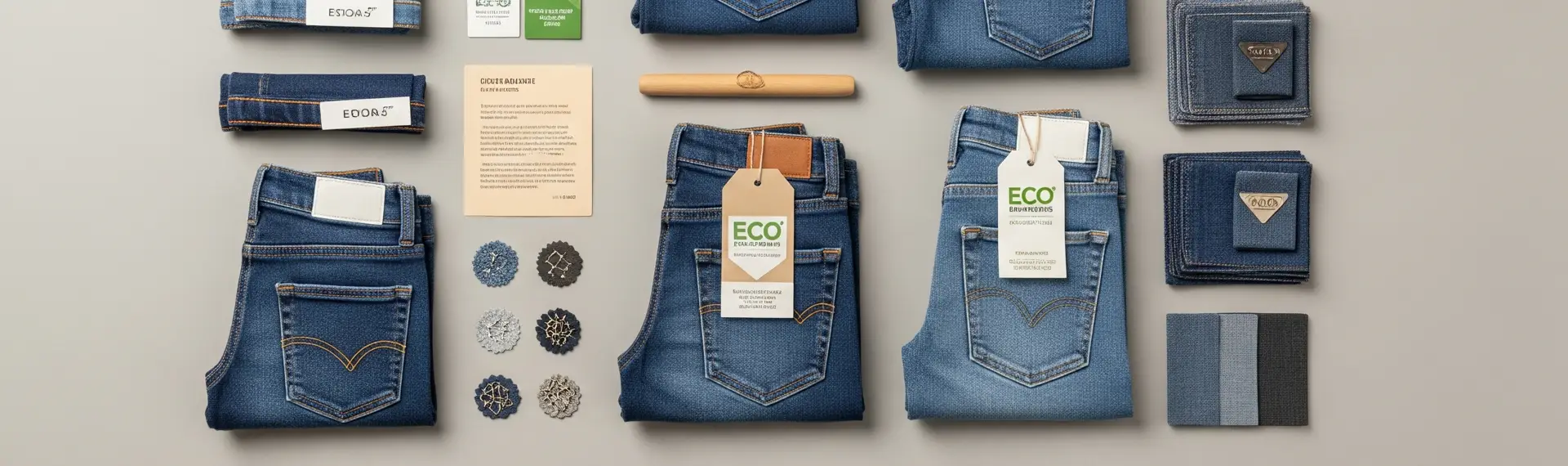
Denim quality cannot be assessed at only one production stage. A pair of jeans may measure correctly before washing and shrink beyond tolerance afterward. A wash may look attractive but weaken the fabric. Hardware can appear secure before processing but loosen or corrode after exposure to chemicals, abrasion, heat, and repeated laundering.
A reliable Denim Jeans Manufacturer For Kids must therefore connect fabric testing, pattern allowances, sewing controls, wash approval, hardware inspection, post-wash measurement, and children’s product requirements.
Building A Reproducible Kids’ Jeans Specification
A denim order should be controlled before the first fabric panel is cut. The buyer’s fit, fabric weight, color, stretch level, wash effect, trims, pocket design, thread color, and measurement chart must be clear from the beginning. If these details are not defined early, the order can face costly corrections after sewing or washing.
Denim mistakes often appear after finishing. A fabric may shrink more than expected, a wash may turn too light, a zipper may feel weak, or the waistband may not sit correctly. RYZEAL reviews these risks during development so the buyer can approve the right fabric, trims, wash direction, and sample before bulk production.
This is especially important for buyers looking for a Custom Denim Jeans Manufacturer because custom denim depends on many small decisions working together.
Fabric weight, stretch recovery and wash shrinkage control
The specification should begin with a clearly defined fit. Terms such as baggy, relaxed, flare, skinny, or stacked are not sufficient unless they are supported by measurements and construction details.
A complete jeans specification may include:
- Waistband width and construction
- Adjustable inner elastic
- Front and back rise
- Hip width
- Thigh width
- Knee position and width
- Inseam and outseam
- Leg opening
- Yoke shape
- Front-pocket curve
- Back-pocket size and placement
- Fly and zipper length
- Belt-loop dimensions
- Topstitching
- Hardware
- Denim weight and composition
- Wash standard
- Distress map
- Measurement tolerances
The buyer should also define whether measurements are recorded before washing, after washing, or at both stages.
Pre-Wash And Post-Wash Control Serve Different Purposes
Denim garments commonly change during washing. The amount of change depends on the fabric, construction, wash recipe, temperature, drying, mechanical action, and stretch content.
Cutting and sewing teams need pre-wash measurements so they can build the garment at the correct initial dimensions. The final inspection team normally needs approved post-wash measurements because those dimensions represent the product the customer will receive.
Key risks include:
- Waist shrinkage
- Reduced inseam
- Rise movement
- Leg twisting
- Changed knee position
- Narrowed leg openings
- Seam puckering
- Stretch growth
- Waistband distortion
RYZEAL can compare the fabric test, unwashed sample, washed sample, and final size chart before approving bulk patterns.
Testing Denim Strength, Stretch, And Recovery
Testing should match the product rather than follow a fixed list for every order.
Rigid denim may require evaluation of dimensional stability, tear strength, tensile strength, rubbing fastness, seam strength, skew, and appearance after washing.
Stretch denim may also require:
- Extension
- Recovery
- Growth or permanent deformation
- Repeated stretch performance
- Knee and seat bagging review
- Waistband recovery
A stated elastane percentage does not prove that the jeans will recover correctly. Fabric density, yarn construction, finishing, wash intensity, and pattern tension all affect performance.
Kids skinny jeans and fitted flare styles are particularly dependent on reliable recovery. Baggy and wide-leg jeans rely less on stretch but still need dimensional stability and seam durability.
Controlling Buttons, Rivets, Zippers, And Adjustable Waists
Children’s jeans can include tack buttons, rivets, zippers, snaps, adjustable elastic, internal buttons, patches, badges, and decorative metal components.
Each component should be suitable for the selected fabric and wash. Production checks may include:
- Button and rivet attachment
- Zipper function
- Smooth edges
- Corrosion resistance
- Coating durability
- Wash-related color change
- Internal button security
- Elastic recovery
- Patch attachment
- Pocket-corner reinforcement
Hardware should normally be evaluated on a washed garment because wet processing can affect its appearance and strength.
Managing Wash Shade And Distressing
A wash standard should describe more than “light blue” or “vintage.” The buyer and manufacturer should agree on the base shade, contrast, abrasion level, hand feel, tint, whiskers, grinding, repaired areas, and acceptable variation.
Useful approval tools include:
- Wash panels
- Sealed garment samples
- Shade bands
- Distress maps
- Placement measurements
- Approved hardware references
- Batch-comparison records
Kids ripped jeans and distressed products need additional strength review. Grinding near pocket openings, knees, hems, or seams can reduce service life. Repairs or backing patches may be added where the design requires an opening but continued reinforcement is necessary.
United States Children’s Product Requirements
General clothing textiles sold in the United States can be subject to the federal clothing flammability standard. Children’s products must also carry distinguishing tracking information on the product and its packaging to the extent practicable.
The CPSC Tracking Label Guidance explains that required information must allow details such as the manufacturer or private labeler, production location, production date, and batch or run to be identified.
Where an applicable children’s product-safety rule requires certification, the responsible US manufacturer or importer must follow the relevant testing and Children’s Product Certificate process. Requirements depend on the actual garment, components, intended age, and applicable rules.
European Labelling And General Product Safety
Textile products marketed in the European Union generally require firmly attached labels or markings showing fibre composition. EU guidance states that this requirement applies to products containing at least 80% textile fibres by weight. Review The EU Textile Fibre Labelling Requirements.
The EU General Product Safety Regulation provides a broader safety framework covering consumer products, traceability, responsible economic operators, product-risk assessment, market surveillance, and corrective action.
For kids’ jeans, safety review may include secure hardware, sharp edges, detachable components, cords, chemical restrictions, foreseeable use, and accurate product information.
Harmful-Substance And Chemical Controls
Buyers may request materials or finished products tested under OEKO-TEX STANDARD 100. Its testing requirements vary according to product use and skin contact. Product Class 1 applies to products for babies and children up to three years and carries the strictest limit values within the system.
Certification should cover the actual order scope. Denim, pocketing, thread, labels, elastic, prints, patches, and other relevant components cannot be assumed to be certified because one supplier has previously handled certified material.
Brands may also apply their own restricted-substance requirements to dyes, auxiliaries, coatings, prints, softeners, metal components, and washing chemicals.
Wastewater Control In Denim Wet Processing
Denim washing can use enzymes, bleaching agents, tints, softeners, oxidizing chemicals, and mechanical treatments. Responsible production requires facility-level controls for chemical handling, process consistency, wastewater, and sludge.
The ZDHC Wastewater Guidelines establish a globally unified expectation for sampling, testing, and reporting wastewater and sludge from wet-processing facilities in textiles, apparel, leather, and footwear.
A buyer should not accept vague claims that a wash is “eco-friendly” without understanding the process, facility controls, supporting data, and defined comparison.
Quality Inspection Does Not Replace Due Diligence
A final inspection confirms the product against agreed standards. It does not by itself prove responsible labour, environmental, or facility practices.
The OECD Guidance For Responsible Garment And Footwear Supply Chains helps enterprises identify and address negative impacts connected to their operations and supply chains. It treats due diligence as an ongoing process involving policy, risk assessment, prevention, tracking, communication, and remediation.
RYZEAL coordinates garment standards, wash approvals, facility allocation, inspection, documentation, and corrective action according to the actual order and buyer requirements.
3. How Kids’ Denim Is Evolving Across Streetwear, Everyday And Seasonal Collections
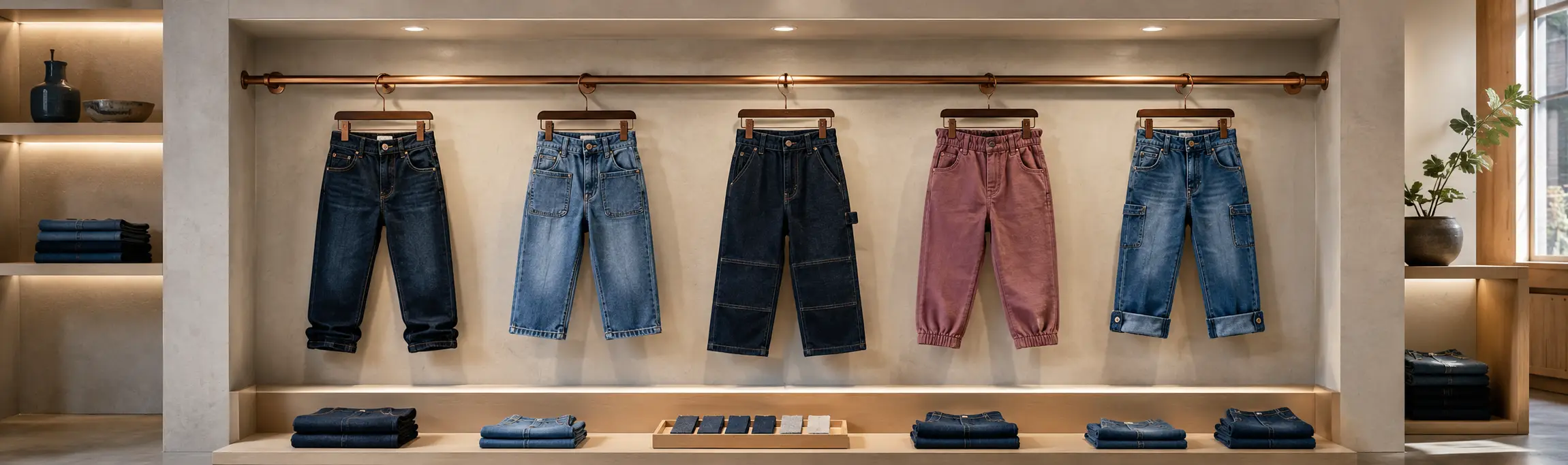
Kids’ jeans are moving in several directions at once. Classic straight fits remain commercially dependable, while baggy, wide-leg, flare, stacked, carpenter, colored, and repaired-distress designs introduce stronger fashion identities.
The opportunity for a Denim Jeans Manufacturer For Kids is not to place every trend into one collection. It is to interpret each direction through appropriate proportions, denim construction, wash, durability, and age suitability.
Straight And Relaxed Jeans Remain Commercial Foundations
Straight-leg jeans continue to serve school, weekend, travel, and everyday collections. They can be developed in rigid or comfort-stretch denim and adapted through rise, pocket shape, topstitching, and wash.
Relaxed fits provide additional thigh and seat ease without creating the full volume of a baggy style. Tapered jeans can retain room through the upper leg before narrowing toward the hem.
These core fits support repeat ordering because buyers can introduce new washes or colors without rebuilding the entire pattern direction.
Baggy And Wide-Leg Fits Change The Proportions
Kids baggy jeans use greater volume through the hip, thigh, knee, and lower leg. They may include dropped or comfort rises, utility pockets, carpenter loops, pleats, deeper yokes, and oversized back pockets.
Kids wide-leg jeans create a cleaner broad silhouette. The leg may fall almost straight from the hip or open gradually from the upper thigh. Waist and hip fit must still be controlled so the garment looks intentional rather than simply oversized.
Baggy jeans for girls may use shaped waistbands, front pleats, colored denim, embroidery, or softer fabric. Unisex versions can focus on utility details, neutral washes, and relaxed proportions.
Bootcut, Flare, Skinny, And Stacked Fits Need Separate Engineering
Children’s bootcut jeans remain relatively controlled through the upper leg and open moderately below the knee. The knee position must correspond to the wearer’s proportions or the opening will begin too high or too low.
Kids flare jeans create a more visible expansion. Fabric weight affects how the flare hangs. Very stiff denim may create an overly rigid shape, while excessively soft fabric may not preserve the intended outline.
Kids skinny jeans rely on stretch and recovery. A close pattern made from unstable stretch denim can become loose at the knees and seat or feel restrictive after washing.
Kids stacked jeans use additional length so fabric gathers above the shoes. The design should be developed around a realistic footwear reference. Excessive length below the heel can create dragging, abrasion, and movement concerns.
Colored Denim Expands Beyond Traditional Blue
Indigo remains the foundation of denim, but children’s collections increasingly use black, grey, ecru, white, brown, olive, burgundy, coral, pink, and purple.
Purple kids’ jeans may be produced through colored denim, garment dyeing, over-dyeing, or a tinted wash, depending on the desired effect. The process should be selected according to colorfastness, rubbing, shade consistency, and wash appearance.
Black denim may remain dark or be washed toward charcoal. Ecru and white styles need stain control, opacity review, and compatible pocketing. Dark colors need particular attention to dry and wet rubbing because transfer onto footwear, furniture, or other garments can affect consumer satisfaction.
Distressing Should Remain Controlled
Kids distressed jeans can include whiskers, hand scraping, laser effects, grinding, repaired rips, raw hems, patched holes, and localized fading.
The treatment should have a clear visual purpose. Distressing applied randomly or excessively can weaken the fabric without improving the design.
Risk points include:
- Front-pocket corners
- Back-pocket edges
- Crotch seams
- Knees
- Side seams
- Hems
- Belt-loop attachments
A buyer may approve different distress intensities for younger and older age groups. Repaired effects can create the appearance of damage while retaining more coverage and reinforcement than open holes.
Lined Denim Extends Seasonal Use
Children’s lined jeans can support winter, outdoor, and cold-climate programs. Possible inner layers include flannel, jersey, fleece, brushed knit, or bonded constructions.
The lining changes the fit. Additional ease may be required through the waist, hip, thigh, and leg. Waistband and seam bulk must also be reviewed.
Outer denim and lining should be tested together because different shrinkage rates can cause twisting, pulling, or an uneven hem. Thermal comfort also depends on breathability and garment weight, not only the thickness of the lining.
Material Claims Require Evidence
The global fibre market continues to expand. Textile Exchange reports that approximately 132 million tonnes of fibres were produced worldwide in 2024, up from about 125 million tonnes in 2023. Cotton remained the second-largest fibre category at approximately 24.5 million tonnes in the 2023-24 period. Read The Textile Exchange Materials Market Report 2025.
These figures provide material-market context, not proof that a particular pair of jeans uses certified or preferred cotton.
Buyers requesting organic cotton, recycled cotton, recycled polyester, or other documented materials should define:
- Required content percentage
- Certification or verification route
- Chain-of-custody documentation
- Approved claim wording
- Performance requirements
- Supplier availability
- Testing responsibility
Recycled cotton may affect strength depending on fibre quality and blend percentage. Elastane or another stretch component may still be necessary for fitted jeans. The final material must meet both claim and performance expectations.
Denim Collections Can Extend Beyond Jeans
An approved denim platform can also support jackets, skirts, shorts, dungarees, overshirts, and rompers. However, the same base fabric may behave differently when the garment shape, wash, lining, or construction changes.
RYZEAL helps buyers build coordinated denim collections while maintaining product-specific patterns, wash controls, and quality requirements.
4. How RYZEAL Solves Sourcing Risks As A Denim Jeans Manufacturer For Kids
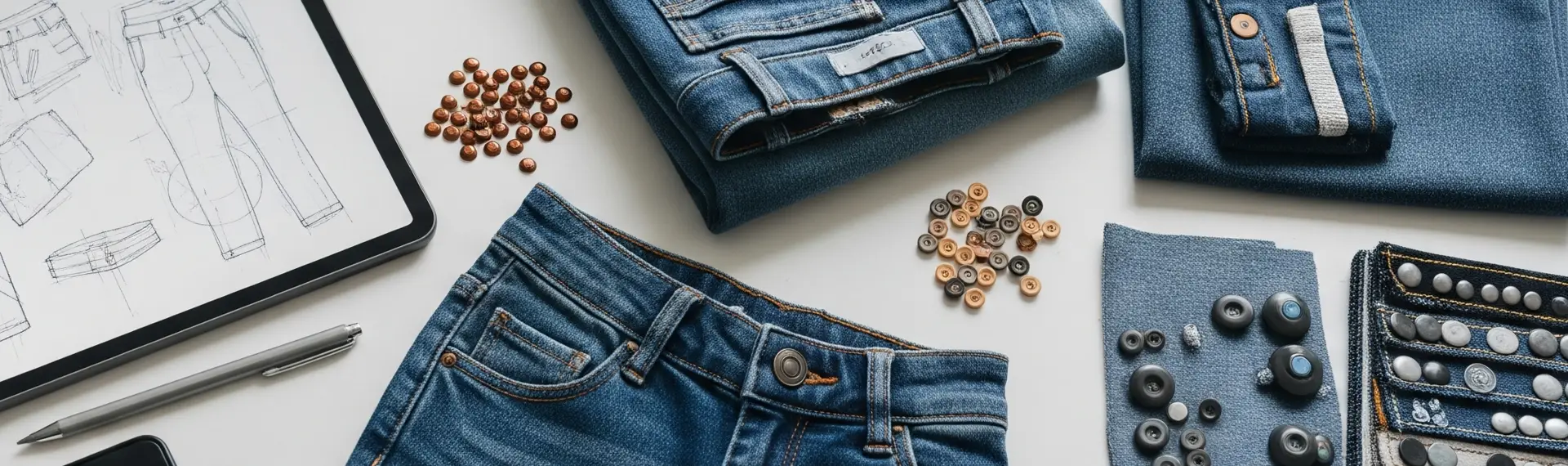
Denim sourcing problems often begin before production. The buyer and supplier may be discussing different fabric weights, stretch levels, wash effects, hardware qualities, or fit assumptions while using the same product name.
RYZEAL reduces these risks by defining the complete product, separating fit approval from wash approval, and maintaining physical and written standards throughout production.
Challenge 1: Quotations Based On Different Denim Assumptions
One supplier may calculate rigid 100% cotton denim with a simple rinse wash. Another may assume stretch denim, branded rivets, hand abrasion, laser work, testing, and premium packaging.
The prices cannot be compared accurately until the following details are aligned:
- Fabric composition
- Denim weight
- Stretch and recovery
- Fit
- Wash
- Distressing
- Hardware
- Labels
- Testing
- Packaging
RYZEAL reviews these variables before finalizing a commercial quotation.
Challenge 2: Jeans Fit Before Washing But Fail Afterward
Denim washing can change waist, rise, inseam, thigh, and leg-opening measurements. It can also affect skew, seam puckering, and leg balance.
A pattern developed without realistic wash allowance may produce a correct unwashed sample and an incorrect finished product.
RYZEAL can use:
- Fabric shrinkage results
- Trial garments
- Pre-wash measurements
- Post-wash measurements
- Washed fit samples
- Pattern corrections
- Approved tolerances
Bulk garments should be evaluated against the agreed finished specification rather than against the dimensions used during sewing.
Challenge 3: Stretch Denim Bags At The Knees And Seat
Stretch content may improve comfort, but weak recovery can cause visible bagging after movement.
Possible causes include:
- Unsuitable yarn or fibre combination
- Excessive stretch
- Low fabric density
- Aggressive washing
- Incorrect pattern tension
- Insufficient recovery
- Excessive garment heat
RYZEAL can review laboratory stretch and recovery results alongside physical fitting and movement. A fabric that performs acceptably in a loose bootcut style may still be unsuitable for skinny jeans.
Challenge 4: Wash Shade Changes Between Batches
Denim wash variation can result from:
- Different fabric lots
- Machine loading
- Water conditions
- Chemical concentration
- Processing time
- Drying
- Hand abrasion
- Tint application
A single approved image is not enough to manage these variables.
RYZEAL can work with physical wash panels, sealed samples, shade bands, recipe records, and batch comparison. The buyer should define an acceptable range because exact identical appearance may not be realistic for highly processed denim.
Challenge 5: Distressing Reduces Garment Strength
Open rips, grinding, and abrasion can weaken the jeans. Damage near pockets, seams, or the crotch may develop further during wear.
The design should define:
- Distress location
- Dimensions
- Depth
- Backing
- Repair method
- Reinforcement
- Final wash appearance
- Acceptable variation
RYZEAL can review high-stress placements and recommend backing patches, reduced abrasion, or a repaired effect where necessary.
Challenge 6: Hardware Fails Or Changes During Washing
Buttons, rivets, zippers, snaps, patches, and decorative coatings can be affected by the wash process.
Possible problems include corrosion, coating loss, loose attachment, sharp edges, color change, zipper distortion, and staining around the component.
RYZEAL’s control process may include:
- Pre-production hardware approval
- Attachment testing
- Washed garment review
- Corrosion or finish assessment
- Zipper-function checks
- Reinforcement
- Bulk component records
The approved sample and trim card should identify the exact component used.
Challenge 7: Small Orders Contain Too Many Washes
A buyer may request a moderate total quantity but divide it into several denim fabrics, shades, washes, hardware finishes, and distress treatments.
Each wash can require separate development, sampling, recipes, machine loads, shade control, and approvals.
A more efficient first order may use:
- One denim base
- Two or three commercially important washes
- Shared hardware
- Common pocketing
- Limited artwork
- One packaging format
- Planned repeat styles
RYZEAL can help the buyer preserve assortment variety through fit and wash intensity without creating unnecessary fragmentation.
Challenge 8: Bulk Production Does Not Match The Approved Sample
Sample-to-bulk variation may involve a changed denim lot, alternative zipper, different thread shade, revised wash recipe, enlarged artwork, or inconsistent distressing.
Control documents can include:
- Sealed washed sample
- Updated tech pack
- Approved denim swatch
- Wash panel
- Shade band
- Trim card
- Distress map
- Artwork approval
- Post-wash measurement chart
- Packaging manual
RYZEAL coordinates these references before cutting and washing begin.
Timely Approvals Protect The Delivery Plan
Denim orders often require several approvals. Delays in fit, wash, hardware, embroidery, distressing, or packaging can prevent production from moving forward.
A clear time-and-action plan should identify each approval, responsible party, deadline, and production dependency.
The OECD Responsible Garment Supply-Chain Framework uses a six-step due-diligence structure for identifying and addressing risks across garment and footwear operations and supply chains.
RYZEAL applies a similar practical discipline to product management: identify the risk, assess its effect, present options, record the approved action, and verify the result.
5. Building A Faster And More Traceable Kids’ Denim Supply Chain
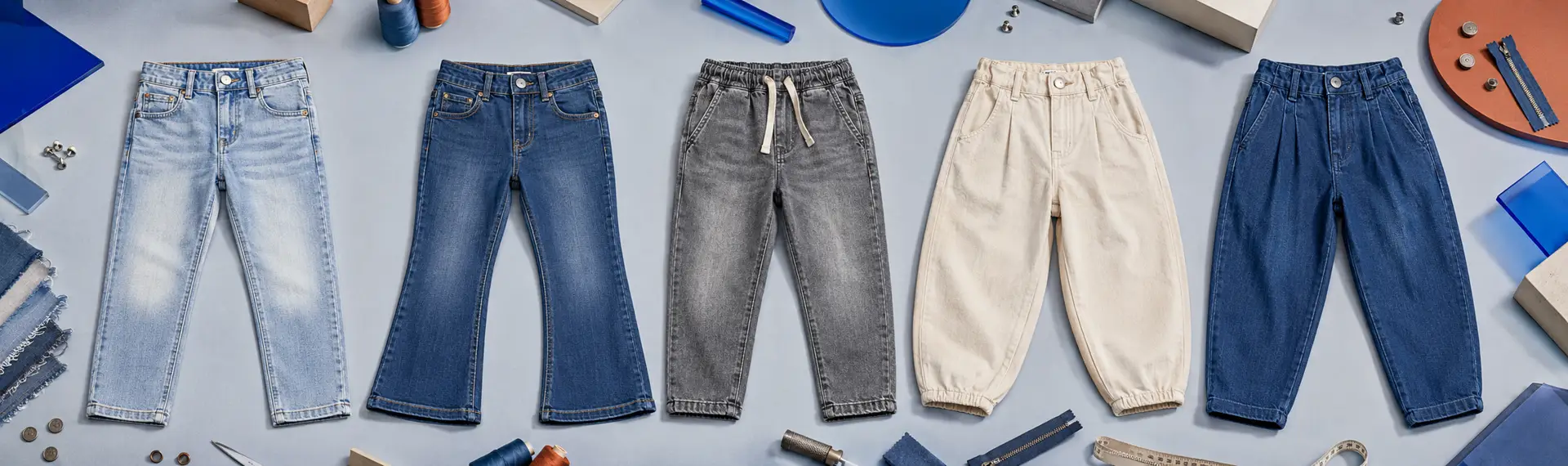
Denim development normally contains more approval stages than a basic garment order. Fit, fabric, hardware, wash, distressing, embroidery, shrinkage, and post-wash measurements must all support the same product.
Agility therefore means reducing avoidable delays without removing essential controls. For RYZEAL, a faster denim program begins with better information, correct factory allocation, organized approvals, and reliable product records.
A Complete Denim Brief Saves Development Time
A useful inquiry should define:
- Intended age group
- Fit
- Rise
- Denim composition and weight
- Stretch requirement
- Wash reference
- Distressing
- Hardware
- Sizes
- Quantity
- Branding
- Target price
- Destination
- Delivery target
Without this information, a denim jeans manufacturer may prepare a technically correct sample that does not match the buyer’s commercial intention.
A buyer requesting “baggy vintage jeans” should ideally indicate the preferred rise, thigh ease, leg width, length, denim weight, wash shade, and level of abrasion.
Fit And Wash Need Separate Approvals
A sample can have the correct wash and the wrong fit. It can also fit correctly in an unwashed condition but fail after processing.
Depending on complexity, a denim program may use:
- Proto sample
- Fit sample
- Fabric wash panel
- Washed garment sample
- Size set
- Pre-production sample
- Shipment reference
Not every order requires every sample type, but the buyer and supplier should agree on what each approval represents.
The fit sample establishes proportions and movement. The wash panel establishes surface appearance. The washed garment sample confirms how the complete pattern, construction, hardware, and process work together.
Matching Each Order With The Right Production Capability
A basic rinse-wash straight jean and a complex distressed streetwear style do not require the same production route.
RYZEAL combines its own manufacturing capability with selected partner factories and specialist facilities. Allocation may consider:
- Denim fabric type
- Fit complexity
- Order quantity
- Washing capability
- Laser or abrasion requirements
- Embroidery and printing
- Hardware
- Compliance requirements
- Capacity
- Delivery timing
This structure supports flexibility without claiming that every facility is suitable for every denim program.
Coordinating A Complete Denim Collection
A buyer may develop kids’ jeans together with denim jackets, skirts, shorts, dungarees, or rompers. These products may use different patterns or production lines but still need a shared brand direction.
Central coordination can align:
- Base denim shades
- Wash terminology
- Hardware finish
- Pocket stitching
- Labels and patches
- Size philosophy
- Artwork
- Packaging
- Inspection standards
- Shipment documentation
Physical wash references remain important because the same fabric can appear different when used in products with different seam density, panels, linings, or garment treatments.
Version Control Supports Repeatable Production
Denim product records should distinguish current and obsolete instructions.
Useful records include:
- Tech-pack version
- Pattern revision
- Pre-wash measurements
- Post-wash measurements
- Denim lot
- Wash recipe
- Shade band
- Distress map
- Hardware approval
- Embroidery file
- Test report
- Inspection finding
- Carton identification
This information helps determine what changed when a repeat order produces a different result.
Digital Product Information Is Becoming More Structured
The European Commission describes the Digital Product Passport as a digital identity card for products, materials, and components. It is intended to provide standardized information that supports sustainability, circularity, transparency, and legal compliance. Textile apparel is listed among the priority product groups under the Ecodesign for Sustainable Products Regulation.
The Commission launched the DPP Registry and its testing environment on 20 July 2026. The registry will index product identifiers and selected registration data rather than storing every piece of detailed passport information itself. Review The European Commission’s DPP Registry Information.
This does not mean every pair of children’s jeans already requires a DPP. Product-specific requirements and implementation dates depend on applicable EU measures.
Denim brands can still improve readiness by organizing:
- Fibre composition
- Fabric supplier
- Material claims
- Wash facility
- Production batch
- Chemical information
- Hardware
- Test results
- Care instructions
- Repair and durability information
- Packaging materials
These records already support repeat production, traceability, claim verification, and corrective action.
Bangladesh Supports Both Scale And Product Diversification
Bangladesh’s FY2025-26 woven-apparel exports were approximately US$18.08 billion, within total RMG exports of about US$38.70 billion. These figures demonstrate broad woven production and export infrastructure but do not represent children’s denim sales specifically. See BGMEA’s Current Export Table.
RYZEAL uses Bangladesh’s wider apparel ecosystem while selecting production routes according to the actual denim, wash, construction, compliance, and order requirements.
Resilience Requires Controlled Alternatives
A resilient denim supply chain may prepare backup options for fabric, hardware, washing, or factory capacity. However, alternatives must be technically reviewed and approved.
Practical preparation may include:
- Alternative denim swatches
- Backup hardware suppliers
- Early wash-capacity booking
- Confirmed shade tolerances
- Defined buyer-approval deadlines
- More than one capable production route
- Inline and post-wash inspection
- Complete order records
As a Denim Jeans Manufacturer For Kids, RYZEAL uses flexibility to offer informed solutions. It does not treat flexibility as permission to change fabric, wash, trims, or factories without buyer knowledge.
6. Build A Responsible Partnership With A People-First Denim Jeans Manufacturer For Kids

Denim production depends on several skilled teams. Pattern technicians create the fit, cutting teams control grain and shade, sewing operators build the five-pocket structure, wash technicians develop the finish, and quality inspectors compare measurements, strength, hardware, and appearance.
A people-first Denim Jeans Manufacturer For Kids recognizes that sewing quality, wet-processing responsibility, workplace conditions, buyer behavior, and commercial performance affect one another.
People-First Manufacturing Begins With Daily Practice
Responsible production should include:
- Safe workplaces
- Lawful employment
- Respectful treatment
- Responsible working hours
- Worker communication
- Grievance procedures
- Skills development
- Non-discrimination
- Protection from harassment
- Suitable protective equipment
These expectations should extend beyond the sewing factory. Denim washing, distressing, chemical storage, wastewater treatment, maintenance, and finishing also involve workers and facility-level risks.
Skilled Teams Protect The Denim Standard
Five-pocket jeans contain many visible details. Waistbands must remain level, yokes should align, pocket curves need symmetry, fly zippers must lie smoothly, and topstitching should remain consistent.
Stretch denim creates additional handling challenges. Incorrect tension can distort seams, while mismatched thread or needle selection may affect durability.
Wash teams also need a clear approved reference. They control shade, softness, abrasion, whiskering, tint, and batch consistency. A change in wash time or chemical concentration can alter both appearance and measurements.
Experienced inspectors can identify:
- Leg twist
- Uneven fading
- Weak distressing
- Loose rivets
- Zipper problems
- Incorrect shade
- Stretch growth
- Seam damage
- Measurement changes
A stable and trained workforce helps preserve this knowledge between first orders and repeat programs.
Wet Processing Requires Specific Responsibility
Denim washing can introduce risks connected to chemicals, heat, wet machinery, abrasion tools, dust, wastewater, and sludge.
Responsible facility management may involve:
- Chemical inventories
- Approved chemical sourcing
- Safe storage
- Worker training
- Protective equipment
- Process instructions
- Effluent treatment
- Wastewater testing
- Sludge management
- Corrective action
The ZDHC Roadmap To Zero provides industry tools related to safer chemical inputs, process management, wastewater, and reporting. Its wastewater guidance applies to discharged industrial wastewater and sludge from wet-processing facilities.
RYZEAL should not claim that every order or facility automatically participates in a specific ZDHC program. Facility status and required documentation need to be confirmed for the actual production route.
Bangladesh’s Responsible-Manufacturing Context
Better Work Bangladesh reports approximately 488 participating factories, 50 brands and retailers, and an impact reaching around 1.4 million workers, 49% of whom are women. These numbers apply to the Better Work program, not automatically to every factory in Bangladesh or every RYZEAL production partner.
Better Work also reports that more than 600 female sewing operators have received GEAR training and nearly 400 women have been promoted into supervisory roles. Its approach combines factory assessment, advisory work, training, social dialogue, gender initiatives, and business-performance improvement.
Buyers should verify the compliance and program status of the facility actually producing their jeans rather than relying on a general statement about the country or supplier network.
Audits, Certifications, And Tests Serve Different Purposes
An audit may review workplace or management conditions. A material certificate may confirm defined fibre content or chain of custody. A laboratory test assesses selected product properties. A wastewater report evaluates facility output against specified parameters.
None of these replaces all the others.
The OECD describes its garment and footwear guidance as the sector’s only government-backed responsible-business due-diligence guidance. It was developed with governments, trade unions, businesses, and civil society and provides a common process for identifying and addressing risks affecting workers, human rights, and the environment. Read The OECD Responsible Garment Supply-Chain Guidance.
Responsible sourcing therefore requires ongoing review, not a certificate collected once and left unchecked.
Buyer Purchasing Practices Affect Production Conditions
Buyer decisions can create or reduce factory pressure.
Denim-specific pressure can result from:
- Late wash approval
- Repeated fit changes
- New distressing after costing
- Excessive wash fragmentation
- Delayed hardware confirmation
- Compressed lead times
- Sudden quantity revisions
- Late payment
- Unstable forecasting
A buyer that delays approvals but retains the original shipment date may unintentionally compress sewing, washing, inspection, and packing.
Responsible purchasing includes complete specifications, realistic timing, fair change management, prompt approvals, transparent priorities, and agreed payment performance.
The supplier also has responsibilities. It should not hide capacity limits, move production without approval, substitute materials silently, or promise an impossible delivery simply to secure the order.
Transparency Should Include The Wash Facility
A denim buyer should know both where the jeans are sewn and where they are washed.
Useful transparency includes:
- Sewing-factory identification
- Wash-facility identification
- Approved subcontracting
- Denim source
- Hardware source
- Certification scope
- Chemical and wastewater documents where required
- Test responsibility
- Inspection results
- Corrective actions
- Shipment records
This information helps the buyer understand which facilities and processes materially affect the finished product.
Long-Term Partnerships Preserve Denim Knowledge
Repeat production improves when approved information is retained.
A long-term program can preserve:
- Fit blocks
- Pre-wash patterns
- Post-wash measurements
- Denim qualities
- Wash recipes
- Shade tolerances
- Hardware standards
- Pocket stitching
- Distress maps
- Packaging
- Previous corrective actions
RYZEAL becomes more familiar with the buyer’s fit, quality, pricing, and market expectations. The buyer gains a clearer understanding of fabric minimums, wash variation, hardware lead times, and production dependencies.
RYZEAL operates as a Bangladesh-based manufacturer and sourcing partner, combining its own capability with selected production facilities. The objective is not only to complete one order, but to develop a denim program that can be measured, repeated, improved, and managed responsibly.






 English
  Chinese
  French
  Dutch
Dutch  Japanese